Resilience in the Moment
Understand Why Feedback Threatens Self-Image 🪞
Expanding on your understanding of empathy, this lesson uses insights from the HBR Guide to Emotional Intelligence to explore how your self-image shapes your reactions to feedback and criticism. When your self-perception feels threatened, strong emotions can derail productive conversation. You'll learn why these reactions happen and how to handle them in ways that turn challenges into opportunities for growth and stronger leadership.
Your self-image is built from countless assumptions you've made about yourself over the years. These beliefs help you meet fundamental needs for self-esteem, competence, and appreciation from others. Naturally, few people view themselves in a negative light, such as seeing themselves as incompetent, uncaring, or disloyal. Below is a table of some self-image assumptions you may hold:
| Positive Self-Image Assumptions | Negative Self-Image Assumptions |
|---|---|
| I’m an effective manager | I sometimes miss important details |
| I care about my employees | I can come across as distant or distracted |
| I’m committed to my organization’s success | I occasionally put my own priorities first |
The challenge arises because most people construct their self-image using what we call an either/or mindset. You might think, "I'm either loyal or disloyal," or "I'm either caring or uncaring." This kind of binary thinking creates an impossible situation where any criticism threatens to flip you entirely from one category to its opposite. For example, when a colleague says, "I was really disappointed when you didn't support my proposal," your mind might leap to the conclusion: "I can't possibly be a loyal person if I don't support my peer's ideas."
If the prospect of falling short of your self-image feels intolerable, denial can become your defense mechanism. You might respond with something like, "I did support your proposal," even when evidence suggests otherwise. This reaction protects your self-image in the moment but prevents you from hearing valuable feedback that could help you grow and improve your relationships with others.
Understanding this dynamic in yourself—and recognizing it in others—can fundamentally change how you approach difficult conversations. When someone responds defensively to your feedback, you’ll recognize they might be protecting their self-image rather than deliberately being difficult. Similarly, when you notice a surge of defensiveness within yourself, you can see it as a signal that your self-image feels threatened, giving you the opportunity to respond more thoughtfully.
Recognize Defensive Reactions 🧱
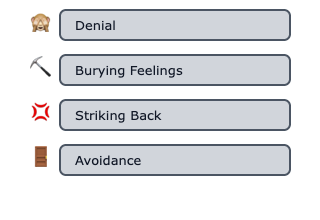
When your self-image feels threatened during challenging conversations, a range of defensive reactions can emerge. Denial is one common defense mechanism, but there are several others to be aware of. Recognizing these patterns in yourself and others helps you navigate difficult interactions more effectively:
-
Denial
You reject the feedback outright, insisting it isn’t true. For example, you might insist, "That’s not what happened," even when others recall the situation differently. This protects your self-image in the moment but blocks valuable learning. -
Burying the Feelings (Intellectualizing)
You detach from the emotional reality of the situation and respond in an overly analytical or general way. For instance, you might respond with, "Let’s just focus on the facts and keep emotions out of this," shifting the conversation away from feelings and toward analysis. This creates distance from the feedback and can make the other person feel dismissed. -
Striking Back Defensively
You respond with aggression, counter-accusations, or blame-shifting. Perhaps you might say "Well, you're the one who missed the deadline last month." This reaction escalates conflict and damages trust. -
Avoidance (Refusing to Face the Disagreement)
You try to bypass the uncomfortable conversation by steering the discussion to unrelated topics or saying something like, "We have more important things to worry about right now." While this may seem to preserve harmony, unresolved issues often resurface and erode trust over time.
When you notice these patterns, such as the urge to deny, bury feelings, attack, or avoid, you can pause and choose a more constructive response. This kind of awareness is an important first step in building genuine resilience during challenging moments.
Adopt Resilient Mindsets 🌱
Effectively navigating moments when your self-image feels challenged requires a combination of self-awareness, mental flexibility, and self-acceptance. Start by understanding your self-image—clarify the assumptions you hold about yourself, such as believing you are fair, competent, or supportive—so you can recognize when defensiveness is likely to arise. This self-knowledge acts as an early warning system, helping you catch emotional reactions before they take over.
It’s also important to adopt a "both/and" mindset rather than falling into either/or thinking. Remind yourself that everyone is a blend of strengths and areas for growth; you can be a valuable contributor while still having specific skills to improve. This perspective makes it easier to accept feedback without feeling like your entire self-worth is on the line.
Finally, accepting imperfection as a natural part of being human allows you to learn from mistakes rather than deny or dwell on them. When you acknowledge your missteps and focus on doing better next time, you build true resilience and show others you are open to growth. Together, these approaches create the psychological flexibility needed to handle challenges to your self-image, maintain your emotional balance, and strengthen your relationships with others.
Let's observe how these strategies play out in a real conversation between a manager and their supervisor:
- Emily: Tom, I've noticed in the last few team meetings that you tend to cut people off mid-sentence. It's creating some frustration among the team members.
- Tom: What? I don't cut people off! I always make sure everyone has a chance to speak.
- Emily: I understand this might be hard to hear, but I observed it happen three times in yesterday's meeting alone.
- Tom: Maybe if the team could get to their points faster... Actually, let me pause. I'm feeling defensive because I pride myself on being an inclusive leader.
- Emily: I appreciate you noticing that. What's coming up for you?
- Tom: I guess I can be a good listener most of the time, but get impatient when I'm stressed. I’ll work on catching myself in those moments.
Notice how Tom initially responds with denial ("I don't cut people off!") and starts to shift blame ("maybe if the team could get to their points faster"). However, he catches himself, acknowledges his defensiveness, and identifies which self-image assumption feels threatened—being an inclusive leader. By adopting a "both/and" mindset, he recognizes he can be generally good at listening while still having room for improvement in specific situations. This shift transforms a potentially destructive conversation into a constructive planning session for his development.
In summary, understanding your self-image and recognizing defensive reactions are key steps toward building real-time resilience. As you move forward, you’ll have the opportunity to practice these skills in upcoming exercises—by identifying your own self-image assumptions, spotting defensive reactions in workplace scenarios, and coaching others through moments when their self-perception feels threatened. These practical applications will help you handle challenging feedback and support others more effectively in the workplace.
