Practice Self-Compassion
Practice Self-Compassion 🫶
Self-compassion is a complementary approach to resilience that transforms how you treat yourself during difficult times, offering a proactive framework for emotional recovery and growth. While resilience helps you maintain equilibrium when your self-image is threatened, self-compassion addresses the way you respond to your own setbacks—often with much harsher self-criticism than you would show a friend in the same situation.
Self-compassion is closely linked to emotional resilience and has been shown to help you soothe yourself, learn from mistakes, and stay motivated, while also reducing anxiety, stress, and shame. This lesson draws from the expertise of Christopher Germer as presented in the HBR Guide to Emotional Intelligence, which highlights self-compassion as a key factor in effective leadership and well-being.
In this lesson, you’ll explore the three essential components of self-compassion: mindfulness, common humanity, and self-kindness. By learning how to activate these skills when you need them most, you’ll create the psychological conditions for genuine growth and sustained high performance. Treating yourself with the same kindness you’d show a friend isn’t self-indulgence, but a leadership superpower that models emotional intelligence and supports your well-being.
Recognize and Reframe Struggles 🔄
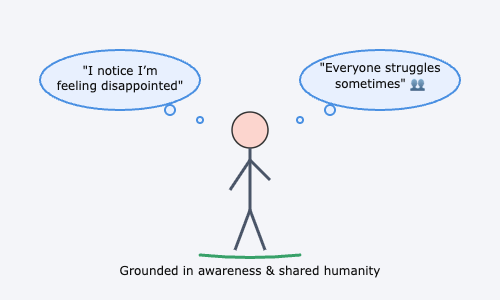
Mindfulness and common humanity are two essential components of self-compassion, and they are most effective when practiced together. Mindfulness is the foundation: you can’t offer yourself kindness unless you first recognize that you’re struggling in the moment. When things go wrong, many people either become overwhelmed by the problem or try to push difficult feelings away. Both responses make it challenging to respond with compassion.
Imagine your boss has just dismissed your request for a promotion after you successfully led a critical project. Your mind might race with thoughts like "They don't value my work" or "Maybe I’m not as good as I thought." Before you can respond constructively, pause and notice what’s actually happening. Acknowledge your emotions by naming them: "I notice I’m feeling angry" or "Self-doubt is arising." This mindful naming creates distance between you and your feelings, anchoring you in the present moment. When you catch yourself spiraling into self-criticism, try translating those judgments into simple observations: "This is a moment of disappointment" or "I’m experiencing frustration right now." This shift reduces the intensity of your emotions and creates space for a more balanced response. You can also ground yourself in sensory experience—feeling your feet on the floor, noticing your breath, or observing sounds around you—to stay connected to reality rather than getting lost in worst-case scenarios.
Once you’ve recognized your struggle, the next step is to reframe it through the lens of common humanity. Most of us hide in shame during our worst moments, believing we’re uniquely flawed or the only ones struggling. This isolation amplifies suffering and blocks us from the support and perspective we need to recover. Understanding common humanity means recognizing that suffering and imperfection are universal human experiences. When you make a mistake in a presentation, miss a deadline, or receive harsh feedback, remind yourself that countless others have faced similar situations. That colleague you admire for their composure has likely experienced their own moments of self-doubt and setbacks. The executive you see as endlessly confident has also felt the sting of rejection and the weight of failure.
Instead of thinking "Why am I the only one who can’t get this right?" try reflecting, "This is hard for everyone who’s learning to navigate organizational politics" or "Many managers struggle with giving developmental feedback." This isn’t about excusing poor performance—it’s about recognizing that struggle is inherent to growth and that perfection isn’t achievable or even desirable.
By combining mindfulness and common humanity, you create the space to observe your emotions without judgment and to remember that you’re not alone in your struggles. This dual awareness transforms setbacks from evidence of personal inadequacy into proof that you’re engaged in meaningful, challenging work.
Respond with Self-Kindness 💛
Self-kindness is the third component of self-compassion and involves treating yourself with the same warmth and understanding you'd naturally extend to others. This isn't about making excuses or avoiding accountability; rather, it's about creating an internal environment that supports learning and growth instead of one that breeds paralysis and self-defeat.
When you face a setback, notice your internal dialogue. If you wouldn't say it to a respected colleague, don't say it to yourself. Replace harsh self-criticism like "I'm incompetent" with the supportive language you'd use with a friend: "This didn't go as planned, but you gave it your best effort" or "You're learning something important here, even though it's painful." This shift in self-talk isn't just feel-good fluff—research shows it fundamentally changes how your nervous system responds to stress.
Self-kindness can take many forms beyond supportive self-talk:
- Place a gentle hand over your heart when you notice you're struggling. This physical gesture activates your caregiving system.
- Take a brief walk.
- Make yourself a cup of tea.
- Listen to music that soothes you.
These aren't indulgences or distractions; they're strategic interventions that help you return to a psychological state where you can address challenges effectively.
The self-compassion break provides a practical framework for activating all three components in challenging moments. When your boss dismisses your promotion request, instead of spiraling into anger or self-doubt, pause and acknowledge how you feel: "This is really disappointing. I'm feeling angry and hurt." Then you recognize the common humanity: "Requesting a promotion after expanding my skills is reasonable, and anyone would feel disappointed by this response." Finally, you offer yourself kindness: "This is a tough moment. What do I need right now to take care of myself?" This simple practice transforms emotional reactivity into thoughtful response, allowing you to write that compelling promotion proposal from a place of clarity rather than threat.

Let's observe how this approach plays out in a real conversation between two managers after a difficult meeting:
- Nova: I completely bombed that presentation. I can't believe I forgot the budget slides in front of the entire leadership team.
- Marcus: That’s tough, but everyone makes mistakes—remember when I mixed up the client names last quarter? What are you feeling right now?
- Nova: Embarrassed and disappointed in myself.
- Marcus: Anyone would feel that way. What would you say to me if our roles were reversed? Try giving yourself that same kindness before you follow up.
Notice how Marcus helps Nova recognize and name her emotions (mindfulness), reminds her that mistakes are a common experience (common humanity), and encourages her to treat herself with the same kindness she’d offer a colleague (self-kindness). This brief exchange shows how self-compassion can quickly shift self-criticism into a more supportive and constructive mindset.
Many ambitious professionals dismiss self-compassion, fearing it will undermine their drive to succeed. Yet self-compassion doesn't mean lowering your standards or becoming complacent. Instead, it's about changing how you motivate yourself and replacing the harsh internal critic with an encouraging internal mentor. This approach not only feels better but actually produces better results, as you're more likely to take risks, learn from failures, and persist through challenges when you know you'll treat yourself with kindness regardless of the outcome.
In the upcoming exercises, you'll practice recognizing and naming emotions in moments of pressure, connecting your struggles to the shared human experience, and developing a repertoire of self-kindness responses you can deploy when you need them most. These practical applications will help you internalize self-compassion as a reliable resource for resilience, transforming how you navigate professional challenges while modeling emotional intelligence for your team.
