Meet Deliverables and Follow Through
Meet Deadlines as a Team ⏳
Every team has goals and deadlines. To meet them, it’s important to manage your time and set clear priorities. Many people think tasks will take less time than they actually do, which can lead to missed deadlines. To avoid this, start by making a list of everything you need to do and decide which tasks are most important. For example, if you have to finish a report and answer emails, ask yourself which one needs to be done first.
One simple way to set priorities is to use a priority matrix. Draw a box with four squares and label them:
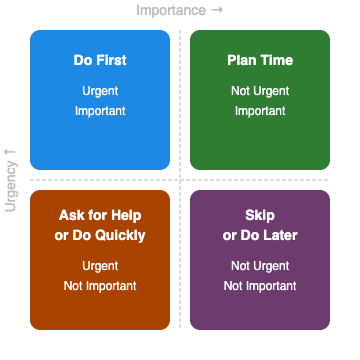
- Urgent and Important (do these first)
- Important but Not Urgent (plan time for these)
- Urgent but Not Important (do quickly or ask for help)
- Not Urgent and Not Important (do last or skip)
Here is an example: If you have to finish a report for a meeting tomorrow (urgent and important) and also want to organize your files (important but not urgent), focus on the report first.
You can also use a calendar or checklist to block out time for each task, like, “I’ll work on the report from 9 to 11, and answer emails after lunch.” This helps you stay focused and makes sure you have enough time for each task.
If you’re asked to do something new but you’re already busy, be honest about your workload. You can say, “I’m working on the report right now. Should I pause that to help with this, or finish the report first?” This way, you protect your time and make sure the most important tasks get done.
By planning your time, using a priority matrix, and being clear about what you can handle, you help your team meet deadlines and keep projects on track.
🗺️ Make a Simple Plan and Communicate Clearly
To meet deadlines as a team, it’s important to talk openly about your progress and any challenges you face. If you notice that a task is taking longer than expected or you run into a problem, let your team know as soon as possible. This way, everyone can work together to find a solution and adjust plans if needed.
For example, instead of waiting until the last minute, you might say, “I’m having trouble with this research and might need an extra day. Can anyone help, or should we adjust the deadline?” Sharing updates early gives the team time to help, share ideas, or change the schedule so nothing gets missed.
When you talk about challenges, be specific about what’s happening and what you need. For example:
- “The information I need isn’t ready yet, so I can’t finish my part today. Should I start on something else, or does anyone have an update?”
- “I’m stuck on this step. Can someone show me how to do it, or should we ask for help?”
Here’s how a team conversation might sound:
- Marcus: I’m running into a problem with the project summary and might not finish today.
- Jessica: Thanks for letting us know. What’s the issue?
- Marcus: I’m missing some details from the last meeting. If I get them, I can finish by tomorrow.
- Jessica: I have those notes—I’ll send them now. Let’s check in tomorrow to make sure we’re back on track.
Notice how Marcus communicates the problem early (giving Jessica time to adjust), provides specific details about the challenge, and offers a solution. This transforms a potential crisis into a manageable situation where the team can make informed decisions together.
By communicating early and clearly about deadlines and challenges, your team can solve problems faster, avoid surprises, and keep projects moving forward.
Demonstrate Reliability 🤝
Showing your team that you are reliable means doing what you say you will do, every time. This builds trust and helps the whole team succeed. Being reliable isn’t about being perfect—it’s about being consistent and following through on your promises.
For instance, if you say, “I’ll send the notes by the end of the day,” make sure you actually send them. If you promise to help with a task, do your part on time. Even small actions, like replying to messages when you said you would, show others they can count on you.
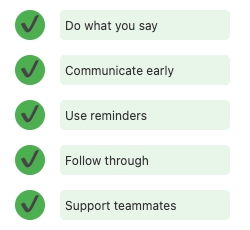
To stay reliable, use simple systems to keep track of your tasks. Write down your commitments, set reminders, and check your to-do list each day. If you realize you might miss a deadline, let your team know early and suggest a new plan, “I need more time to finish this section. I can have it ready by tomorrow morning. Will that work?”
Over time, being consistent with your work and your communication helps your team trust you with bigger responsibilities. Teams work best when everyone knows they can depend on each other to do their part, big or small.
By working together, communicating clearly, and supporting each other, your team can meet deadlines and handle challenges as a group. In the next activities, you’ll practice making team plans, sharing updates, and offering support to teammates. These skills will help you build trust and get things done together.
