Assign Responsibilities Clearly and Fairly
Make Responsibilities Clear for Everyone 📋
When you’re working on a team, it’s important that everyone knows exactly what they’re supposed to do. Clear responsibilities help avoid confusion and make sure nothing gets missed. If people aren’t sure who is doing what, tasks can get forgotten or two people might do the same thing by accident.
When each person understands what they need to do, they can focus on their work instead of wondering if someone else is supposed to do it. A simple way to do this is to talk as a team and agree on who will do each task. For example, instead of saying, “Someone should send the email,” you can say, “Basim, can you send the email to the group by Friday?” This way, everyone knows who is in charge of what and when it needs to be done.
You can also write down the responsibilities in a shared document or a simple list so everyone can check it later. This helps everyone remember what they agreed to do, even if the project takes a while.
Here’s how a clear conversation might sound:
- Jessica: Let’s make sure we all know what we’re working on. Marcus, can you take notes during our meeting?
- Marcus: Sure, I can do that and I’ll share them with everyone by tomorrow.
- Jessica: Great! Nova, could you collect everyone’s ideas for the poster by Friday?
- Nova: Yes, I’ll gather the ideas and send them to the group.
This makes it easy for everyone to know what’s happening and who is responsible for each part. Clear responsibilities help the team avoid confusion and make sure nothing gets missed.
💪 Match Tasks to People’s Strengths and Time
It’s helpful to use a strengths-based approach when giving out tasks. This means thinking about what each person is good at and what they enjoy doing. When people use their strengths, the team does better and everyone feels more confident. For example, if someone likes organizing things, they might enjoy making a schedule. If another person is good at talking to others, they could help with group discussions.
It’s also important to do a quick capacity check-in before assigning tasks. This means asking how busy everyone is and making sure no one has too much on their plate. If someone already has a lot to do, it’s okay for them to say, “I’m a bit busy right now. Can someone else help with this task?” This way, no one feels overwhelmed, and the work is shared fairly.
By talking openly about what people like to do (strengths-based approach) and how much time they have (capacity check-in), the team can make sure everyone is set up for success.
Here’s a simple way to keep track of everyone’s strengths and availability:
| Team Member | Strengths | Current Tasks | Availability |
|---|---|---|---|
| Lebo | Organizing 🗂️ | Make schedule | 🟢 Available |
| Sol | Talking to people 💬 | Group discussion | 🟡 Some room |
| Casey | Design 🎨 | Poster ideas | 🔴 Full |
This visual helps everyone quickly see who is best for each task and who has time to help, making it easy to use both the strengths-based approach and capacity check-in.
Check Understanding and Share Updates Clearly 📣
Even if you carefully assign responsibilities, things can still go wrong if expectations aren’t clear. It’s important to talk about not just what needs to be done, but also how you’ll know it’s done well, when it should be finished, and what help or resources are available. A friendly way to make sure everyone understands is to ask team members to repeat back what they’re working on, or write it down together. This helps catch any confusion early and keeps everyone on the same page.
You can use a simple progress timeline to keep your team on track:
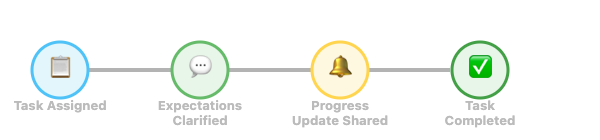
It’s also helpful to share updates as you go. You can do this by sending a quick message, updating a shared list, or giving a short update at your next meeting. If something changes or you need help, let the team know as soon as possible. This keeps everyone in the loop and makes it easier to solve problems together.
For instance, you might say, “I’m running a bit late on my part, but I’ll finish by tomorrow,” or “I finished my task! Let me know if anyone needs help.” Open and honest updates help the team stay connected and work better together.
By making responsibilities clear, matching tasks to people’s strengths and time, and checking understanding, your team can work smoothly and support each other. In the upcoming activities, you’ll get to practice these skills and see how they help teams succeed.
