Winning Over Your New Boss
Winning Over Your New Boss 🏆
Getting a new boss can feel like starting a new job all over again. Whether you're the one who's new to the organization or your boss is the newcomer, the stakes are exceptionally high. Research shows that executive turnover can reach 33% when new leadership arrives, nearly double the normal rate.
In the HBR Guide to Managing Up and Across, Lew McCreary emphasizes that this transition period brings both anxiety and opportunity. While fresh leadership will inevitably bring unpredictable changes, it also opens doors for you to establish yourself as a valuable contributor who can be counted on to perform.
Prepare to Meet the New Boss
Your first meeting with a new boss feels like a make-or-break moment, and the temptation to lead with your personal agenda can be overwhelming. However, you should be careful not to arrive at that initial meeting being too eager.
Instead, the most effective approach is to prepare for the first meeting with some simple guidelines in mind:
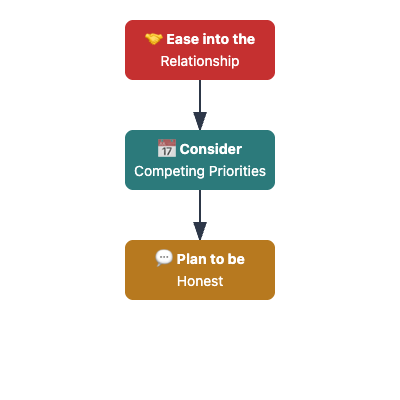
- Ease into the relationship: Take an incremental approach and allow trust and understanding to build naturally over time. Pick only a few vital issues to cover early on that will help you lay the groundwork for an effective alliance. The goal is to avoid overwhelming them while still demonstrating your value and competence.
- Consider competing priorities: Consider others’ claims on their attention. Plan to take account of how other key stakeholders might affect their agenda, and highlight how your issues fit into those overall priorities. Take account of how other key stakeholders might affect their agenda, and thoughtfully highlight how your issues fit into those overall priorities.
- Be candid from the beginning: Most leaders understand the difficulty of speaking truth to power, and yet they must depend at first on relative strangers for honest appraisals. Plan to provide helpful candor on some key aspect of the new boss’s agenda. Authenticity becomes your greatest asset in these early interactions.
Navigate the First Meeting Effectively 🧭
During those critical first meetings, your primary job is to become a keen observer of your new boss's style and preferences. It is critical to watch for key indicators that will shape all future interactions. Does your new boss prefer short or long conversations? Do they want a buffet of options or one best recommendation? Do they respond better to hard data or soft insights? These observations should fundamentally shape how you present yourself and your ideas going forward, allowing you to communicate in ways that resonate with their natural preferences.
| Preference Area | What to Watch For | How to Adapt |
|---|---|---|
| Communication Style | Short vs. long conversations | Match their preferred style |
| Decision-Making | Options vs. recommendations | Present info accordingly |
| Data vs. Intuition | Hard data or soft insights | Emphasize what they value |
Rather than simply seeking your boss's judgment on your existing ideas, you should focus on genuine collaboration. You can help your boss form opinions on issues of importance to both of you. For instance, if you believe the group has grown too risk-averse, begin a broader discussion about risk rather than pushing a specific solution. Share relevant anecdotes about how the group has dealt with risk in the past, and then ask about their experiences and ideas. This collaborative approach helps establish you as a thinking partner, not just someone looking for approval, and it demonstrates your strategic thinking capabilities.
Additionally, accommodating your boss's preferences extends far beyond communication style to encompass systems and processes. Your new boss has inherited systems and processes tailored to their predecessor's quirks. The more quickly you can learn about how they would like to be supported, the faster you can help develop new systems that work for them. For example, if their style is to delegate, proactively suggest a regular weekly meeting to review assignments and workloads. Let them know what sorts of tasks you're best suited to take on and keep them consistently apprised of your bandwidth.
Help Your New Boss Get Up to Speed 🚀
If your boss is new to the organization, they have significant catching up to do, and you can make this process dramatically easier and more efficient. Here are three specific ways to help:
- Save them some time: To save your boss time, be generous with what and whom you know. Help identify colleagues whose expertise will help them meet their goals, and share the unwritten rules and informal networks that make organizations actually function.
- Save them some trouble: When it comes to saving your boss trouble, focus on sharing shortcuts through the administrative mazes that drive every newcomer crazy. This institutional knowledge is invaluable and positions you as an indispensable ally in their success. Moreover, since being new is essentially a job unto itself, look for opportunities to save them work as well. If you see something on their plate that you can take on or help with, step up without being asked.
- Save them some work: For instance, suppose your boss has been asked to honor their predecessor's speaking commitment at an industry conference, and it's clear they're not happy about going. Since you know your way around the presentation material, volunteer to fill in, demonstrating both initiative and support.
Here's how this might play out in a real conversation between a manager and their new boss:
- Victoria: I spent an hour yesterday trying to get my laptop to connect to the printer on the third floor. Is there a help desk number I should call?
- Chris: Maybe I can save you some time. Dan in IT is the unofficial expert for all printing issues—he'll fix it in five minutes. Just email him directly rather than going through the help desk ticket system.
- Victoria: That's helpful, thanks. Speaking of systems, I noticed the expense report process seems pretty complex.
- Chris: Yes, it can be overwhelming at first. Jessica in Finance created an Excel template that automates most of the calculations. She's happy to share it and walk you through it—would you like me to set up a quick 15-minute meeting with her?
- Victoria: That would be great. Are there other shortcuts like this I should know about?
- Chris: Definitely. I've put together a one-page list of key contacts and workarounds that will save you hours each week. Should I send it to you after our meeting?
Notice how Chris doesn't overwhelm Victoria with information but responds to her specific pain points with targeted solutions, while also offering additional help without being pushy. This demonstrates the value of institutional knowledge while respecting the boss's time and autonomy.
The upcoming role-play sessions will give you the opportunity to practice these essential skills for winning over a new boss. You'll experience crafting that crucial first communication, navigating initial meetings while observing and adapting to your boss's style, and sharing the institutional knowledge that makes you an invaluable partner in their success.
