Fooled by Experience
Don't Let Experience Fool You 🧠
We naturally rely on experience to guide our decisions. The problem with that, though, as researchers Emre Soyer and Robin M. Hogarth from the HBR Guide to Critical Thinking explain, is that relying on “lessons learned” from experience can be a trap. Experience feels like a trustworthy guide, but it’s full of blind spots and distortions. What happened before doesn’t always tell you how things will play out next time, and the conclusions you draw may not actually be true.
One of the most important distinctions in critical thinking is separating how well you made a decision from how well it turned out. These two things seem like they should be the same, but they're not. We love to judge decisions by their results. If a risky move pays off, we call it smart; if it flops, we call it a mistake. But this plays tricks on our minds. When we reward outcomes instead of smart decision-making, we fall into outcome bias and miss what really matters: the process behind the choices.
Take this example of outcome bias in action:
- Matt: I'm feeling good about my onboarding approach. Tanner ramped up faster than anyone expected, so I'm planning to use the same process for our next hire.
- Simone: That’s great that Tanner is doing well! But what specifically about your process do you think made the difference?
- Matt: I mean, it worked, didn’t it? They're already contributing to major projects.
- Simone: They are, but Tanner also came in with five years of industry experience. Would the same approach work for someone more junior?
- Matt: I hadn’t really thought about that. I guess I assumed the process was solid because the outcome was good.
- Simone: It might be worth separating what you did well from what Tanner brought to the table—so you know what to actually repeat next time.
Matt assumes the outcome is proof of a great process, but Simone makes him pause and think deeper. Without this questioning, you end up copying what “worked” and ignoring what really influenced the result. It’s easy to fall for the illusion that the last winner has the formula, especially since success stories get all the spotlight while failures quietly disappear. This creates a warped sense of control: you end up mimicking what you see on the surface, without understanding the true reasons underneath.
Recognize How Experience and Feedback Get Distorted 🤔
Think about how you actually find out “what happened” at work. Your information gets filtered through three big lenses: the environment, the people around you, and your own mind.
-
Your business environment makes outcomes impossible to miss but hides the story behind them. You know who succeeded or failed, but you rarely see what truly shaped those results. Prevention never gets the same attention as a dramatic fix. It’s much easier to notice someone who puts out a fire than someone who made sure it never started.
-
Your advisers can unintentionally (or intentionally) steer you wrong. People often want to keep things positive, avoid uncomfortable conversations, or stay in your good graces. This means feedback can get filtered, softened, or cut off entirely—especially if you hold authority. Groupthink and politeness keep problems hidden and make it difficult for dissenting opinions to surface.
-
Your own thinking introduces powerful distortions. It’s natural to remember wins more than losses, search for evidence that fits your beliefs, and spot patterns that aren’t really there. Memory is unreliable, and personal experience often comes from tiny, unrepresentative samples. When something turns out well or badly, it’s easy to assume you “should have seen it coming,” but that’s just hindsight bias. Even seasoned experts can be fooled by these mental shortcuts.
Learn Smarter from Experience 🧑🏫
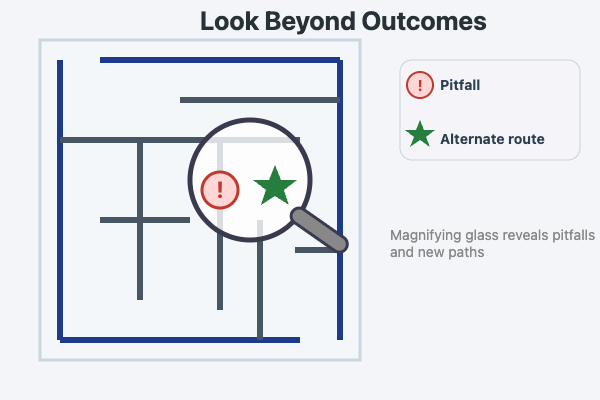
Just like making your way through a maze, learning from experience isn’t as simple as just following the obvious path. The filters and blind spots described above can lead you in circles if you aren’t careful. Recognizing these traps is just the beginning; what matters is how you deliberately navigate around them. You can’t escape these filters, but you can outsmart them.
Search for failures and near misses. Don’t just study success. Seek out stories where things went wrong or almost went wrong, because these experiences can teach you what wins never can. Talk openly about setbacks and close calls—sometimes the best lessons come from what didn’t make the highlight reel. Making space for these conversations helps your team spot patterns and prevent repeat mistakes.
Pursue prevention. Recognize and celebrate the people who point out risks, not just those who fix problems. Create ways for people to safely speak up about weak spots before they turn into real disasters.
Invite real disagreement and challenge your own conclusions. If everyone always agrees with you, you may be overlooking important gaps in your reasoning. Encourage honest debate and welcome diverse perspectives that challenge your assumptions. When you draw lessons from experience, go a step further by asking yourself, “How could I be wrong?” Actively look for counterexamples and imagine what could have gone badly and why. This approach helps uncover blind spots and leads to stronger, more reliable decisions.
Lose focus. Sometimes, following a random lead or new hunch opens doors you wouldn’t expect. Let yourself notice things outside your main focus as a way to spot fresh opportunities.
Experience is a powerful teacher, but it’s easy to be misled by what you see on the surface. By looking beyond outcomes, recognizing how feedback and memory get distorted, and deliberately expanding what (and who) you learn from, you set yourself up to make smarter decisions. Next, you’ll get hands-on practice spotting these hidden filters in real-world scenarios and learn how to help others dig deeper than their own “lessons learned.” This is how you turn experience into true wisdom.
