Navigate Friction Between Different Working Styles
Notice and Appreciate Different Working Styles 🧩
In the previous lesson, you explored how teams with similar strengths can develop blind spots and miss important opportunities. But what happens when you work with people whose strengths are completely different from yours? Some people like to plan every detail before starting, while others prefer to jump in and figure things out as they go. Some teammates like to talk things through, while others like to think quietly before sharing ideas. These differences can sometimes feel confusing or even frustrating, but this friction is actually helpful for the team.
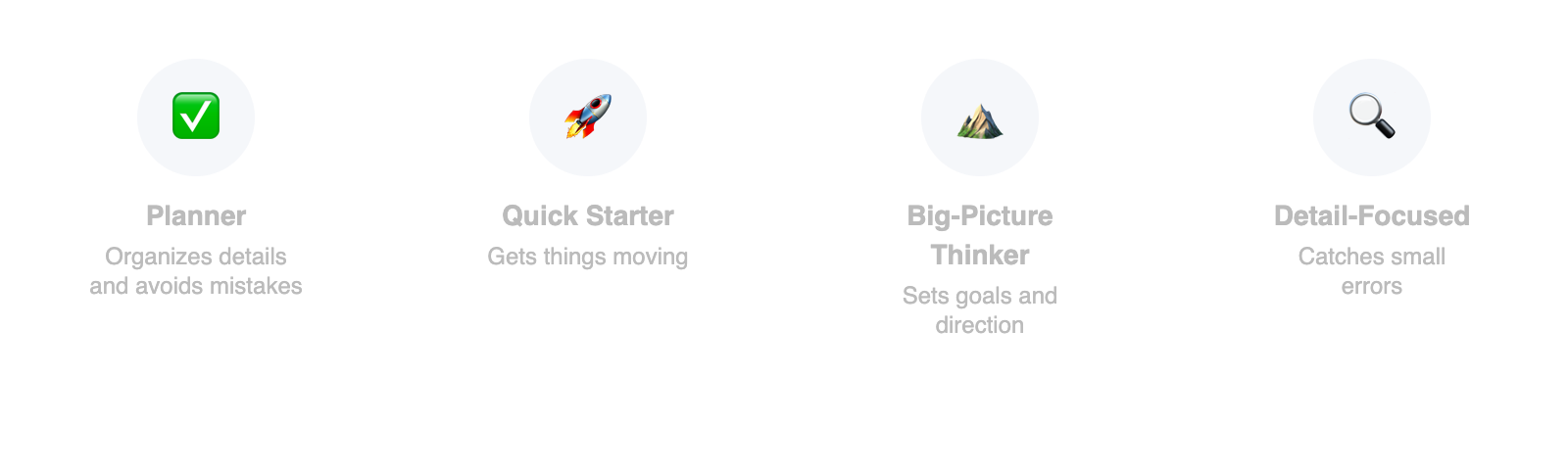
For example, imagine you like to make quick decisions, but your teammate wants to talk about every option first. Or maybe you like to focus on the big picture, while someone else pays close attention to small details. Instead of thinking, “Why are they doing it that way?” try to notice what each style brings to the team. Planners help the team avoid mistakes, while quick starters help the team move forward. Big-picture thinkers help set goals, while detail-focused teammates make sure nothing is missed.
By appreciating these different styles, you can see that everyone’s way of working is valuable. Teams do their best work when they use all these strengths together.
🤔 Stay Curious When You Feel Friction
Sometimes, when people on your team do things differently than you would, it’s easy to feel annoyed or even get upset. For example, you might get frustrated if a teammate asks a lot of questions about your idea, or feel rushed if someone wants to move ahead before you’re ready.
When you notice this tension, try to stay curious instead of getting defensive. For example, if a teammate questions your plan, instead of saying, “It’s fine, just trust me,” you could ask, “What are you worried about?” or “Can you tell me more about your idea?” This helps you understand where they’re coming from and shows respect for their perspective.
Here’s how a curious conversation might sound:
- Nova: I think we should try a new way to organize our project.
- Milo: I’m not sure. What makes you think that will work better?
- Nova: I noticed we missed a few steps last time, so I thought a new plan might help. What do you think could go wrong with my idea?
- Milo: Maybe we could test it on a small part of the project first, just to be safe.
In this conversation, Nova and Milo use curiosity and open questions to understand each other’s ideas. By listening and suggesting a small test, they turn their different working styles into a practical solution.
By asking questions and listening, you can turn disagreements into chances to learn from each other.
Use Differences to Solve Problems Together 💡
The best teams use their different working styles to find better solutions. When you notice that people have different ideas or ways of working, try to combine them instead of picking just one. Here are a few instances of when this could occur:
- If one person wants to try something new and another wants to stick with what’s worked before, suggest testing the new idea on a small part first.
- If someone likes to plan and someone else likes to act quickly, agree to make a simple plan before starting, then adjust as you go.
- If a teammate likes to talk things out and another prefers to write, use both methods to discuss ideas together, and then write down the plan.
By blending different ideas, your team can come up with creative solutions that work for everyone. Remember to celebrate when your team turns a disagreement into a good result—this means you’re using everyone’s strengths!
When you notice and appreciate different working styles, stay curious during disagreements, and look for ways to combine everyone’s strengths, your team can solve problems more effectively. Next, you’ll get to practice these skills through activities and real-life scenarios. You’ll learn how to spot different working styles, respond with curiosity, and use team differences to find creative solutions together.
