Identify Shared Strengths and Blind Spots
Welcome to the Course 🎉
Welcome to Leverage the Team’s Strengths! Working on a team is about more than just getting along—it’s about using everyone’s best skills and making sure the team can handle any challenge. In this lesson, you’ll learn how to spot what your team does well, notice where you might be missing something, and find ways to bring in new ideas. These skills will help you work better with others, solve problems, and make your team stronger.
By the end of this lesson, you’ll know how to:
- Notice what your team is good at
- Spot areas where your team might be missing something
- Bring in different ideas to help your team grow
These are important skills for anyone starting out in the workplace and will help you feel more confident working with others.
🕵️ Notice Team Strengths and Blind Spots
Every team has things they do really well. Maybe your team is great at planning, coming up with creative ideas, or paying attention to details. When everyone has similar strengths, it can feel easy to work together. You might finish tasks quickly, agree on decisions, and understand each other without much explanation.
But when teammates all think the same way, your team might miss important things. For example, if several teammates love planning, they might spend too much time making perfect plans and not enough time taking action. Or if a few teammates are very creative, they might come up with lots of ideas but forget to check if they’re practical. These are called blind spots—areas your team doesn’t notice because you’re all focused on the same things. That’s why it’s important to have teammates with different perspectives and mindsets—when people think in different ways, your team is more likely to catch mistakes, spot new opportunities, and come up with better solutions together.
Here’s a simple example:
- Milo: I think we should make a detailed plan before we start.
- Nova: I like having a plan too, but sometimes I wonder if we spend too much time planning and not enough time actually doing.
- Milo: That’s true. I just worry we’ll miss something important if we don’t plan everything out.
- Nova: Maybe we could try starting sooner and adjust our plan as we go. That way, we can catch problems early and not get stuck in planning.
In this example, Milo’s strength is careful planning, while Nova brings a different perspective by noticing that too much planning can slow the team down. By sharing their different opinions, they help each other spot a blind spot and find a better balance between planning and taking action.
To help your team do even better, try to notice when you’re all thinking the same way. If your team keeps having the same problems or missing the same kinds of opportunities, you might have a blind spot. Paying attention to feedback from others, such as new team members or people from other groups, can help you see what you might be missing.
Bring in New Ideas and Perspectives 💡
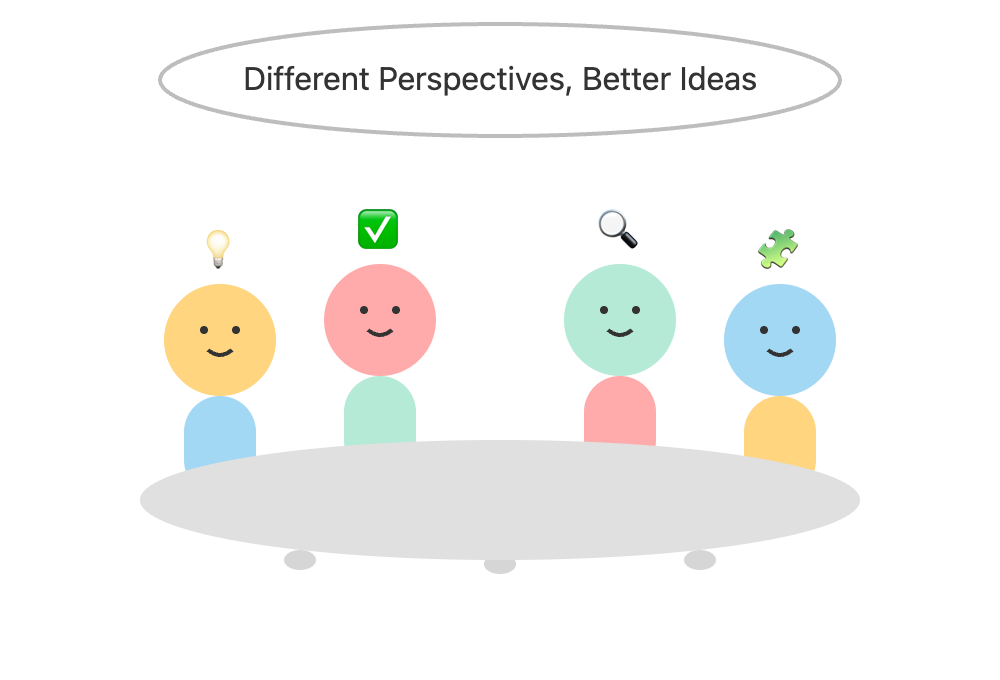
Teams do their best work when they have different kinds of thinkers. If everyone has the same background or way of working, it’s easy to miss out on new ideas. That’s why it’s important to look for different perspectives.
You can do this by:
- Asking people with different experiences for their opinions
- Inviting new team members to share what they notice
- Listening to feedback from other teams, customers, or anyone who sees your work from the outside
When someone shares an idea that’s different, try to listen and ask questions instead of saying, “That won’t work.” For example, you can ask, “Can you tell us more about your idea?” or “What made you think of that?” This helps everyone feel comfortable sharing and can lead to better solutions.
You can also try simple activities to bring in new ideas, like:
- Having someone play the role of “devil’s advocate” to ask tough questions
- Doing a “pre-mortem,” where you imagine what could go wrong and plan for it
- Working with another team that has different strengths
The goal isn’t to change everything your team does well, but to make sure you’re not missing out on good ideas or important details. When you welcome different perspectives, your team can spot problems sooner, find better solutions, and keep growing. In the next activities, you’ll get to practice noticing team strengths, spotting blind spots, and bringing in new ideas. These skills will help you and your team do your best work together!
