Leverage Complementary Strengths
See Differences as Team Strengths 🌟
Every team is made up of people who are good at different things. Some people are great at coming up with new ideas, while others are good at organizing details or making sure things get done on time. Instead of seeing these differences as problems, you can use them to help your team do better work.
For example, imagine you’re working on a group project. One teammate is great at analyzing numbers and finding patterns, while another is really good at explaining things clearly to others. If the numbers person worked alone, they might have lots of data but struggle to share it in a way everyone understands. If the communicator worked alone, they might give a great presentation but miss important details from the data. But together, they can find useful information and make sure everyone understands it.
When you notice what each person is good at, you can ask for help or offer your own strengths. For example:
- “You’re really good at making slides. Can you help with the presentation?”
- “I’m good at finding information. I can do the research part.”
By using everyone’s strengths, your team can do things that would be hard for one person to do alone.
🔀 Mix Different Approaches for Better Results
Complementary strengths is when people have different skills and styles, but work well together. For instance, some like to brainstorm and think of lots of ideas, while others like to make a plan and follow steps. Both ways are helpful, and the best results come when you use them together.
Using complementary strengths gives your team the advantage of more ideas, better planning, and stronger results. Imagine someone on your team is great at talking to people and building relationships, while another person enjoys working with numbers and checking details. Together, they can help the team connect well with others and also make smart, informed choices.
You can use the Idea-to-Action framework to get the best from everyone:
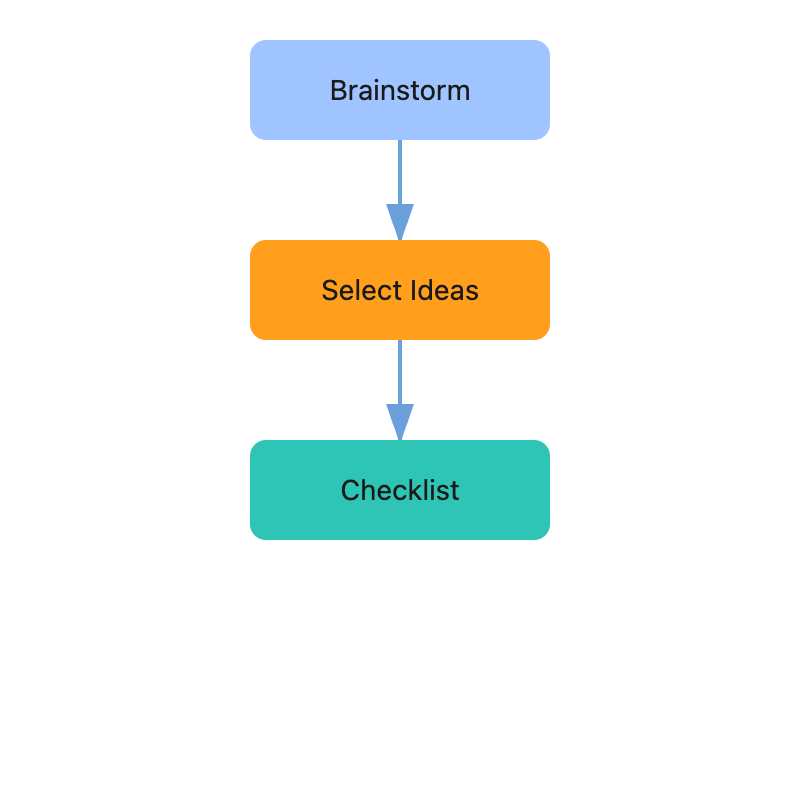
- First, brainstorm together: “What would make someone feel welcome on their first day?” (This uses creative strengths.)
- Next, choose a few ideas that fit the rules and are easy to do. (This uses planning and organizing strengths.)
- Finally, make a checklist: “Who will do what, and when?” (This puts the plan into action.)
By mixing creative thinking with planning, and using everyone’s complementary strengths, your team can come up with new ideas and make sure they actually happen. This helps your team do better work and learn from each other along the way.
Turn Differences Into Team Advantages 🚀
When you work with people who have different strengths, you can help each other and learn new things. Instead of trying to do everything yourself, you can ask for help and offer your own skills. This makes the team stronger and helps everyone do their best.
For example, if you’re good at making slides but find it hard to organize information, you might say, “Can you help me organize these points? I’ll make the slides look great.” Or, if you notice a teammate is having trouble with something you’re good at, you can offer to show them your approach.
Here’s how a simple team conversation might go:
- Milo: I’m not sure how to organize these files. Has anyone done this before?
- Nova: I can help! I actually like organizing things. Maybe you can help me with the writing part later?
- Milo: That sounds great. I always get stuck figuring out where to put things, but I’m happy to help with writing.
- Nova: Perfect! Let’s start by sorting the files into folders. I’ll show you how I usually do it.
By working together and using everyone’s strengths, your team can solve problems faster and do better work. Over time, you’ll learn new skills from each other and become more confident working with all kinds of people.
When you use everyone’s unique strengths, your team can achieve more than any one person could alone. In the next activities, you’ll practice noticing strengths, combining different ways of working, and helping your teammates. These skills will help you feel more comfortable and successful in any team.
