Choose Who to Learn From
Find Different Kinds of People to Learn From 🧑🤝🧑
When you want to understand a problem or make a good decision, it helps to hear from more than just one type of person. If you only talk to people who think like you, you might miss something important. Imagine you’re trying to decide if your group should start a new project. If you only ask your closest friends, you’ll probably get answers that sound a lot like your own.
To get a full picture, try to find people with different experiences and viewpoints. Here are three types of people you might look for:
- People directly involved: These are the people who are affected by the problem or decision. For example, if you’re thinking about changing how your team works, talk to team members who will have to use the new process.
- People with special knowledge: These are experts or people who know a lot about the topic, even if they aren’t directly involved. For example, if you’re thinking about using a new tool, talk to someone who has used it before or knows how it works.
- People with a different perspective: These are people who see things differently because of their background, role, or experience. For example, if you’re a student, ask a teacher or someone from another class. Or, if you’re excited about an idea, talk to someone who might be more cautious or skeptical.
By talking to a mix of these people, you’ll get a wider range of ideas and avoid missing important details.
🧩 Match What You Need to Know With the Right Person
It’s easy to ask the people you know best, but they might not always have the answers you need. Instead, think about what you want to learn, and then find the person who can really help. When you are thinking about who to ask, it helps to know the difference between knowledge and experience. Someone with knowledge knows the facts or theory—they might have read about it or learned it in a class. Someone with experience has actually done it in real life and knows what really happens, including the surprises and challenges.
Both are useful, but they give you different kinds of answers. For example, a financial advisor might know a lot about saving money, but someone who’s retired early can tell you what it’s really like. Or, a person who writes about teamwork might know the theory, but a manager who’s led a team through tough times knows what happens day-to-day.
When you’re looking for answers, try to find people with both knowledge and real experience. That way, you get the full story. A simple way to do this is to write down what you want to know. Next to each question, write the type of person who would know the answer. Finally, try to find and talk to those people to help make your decision.
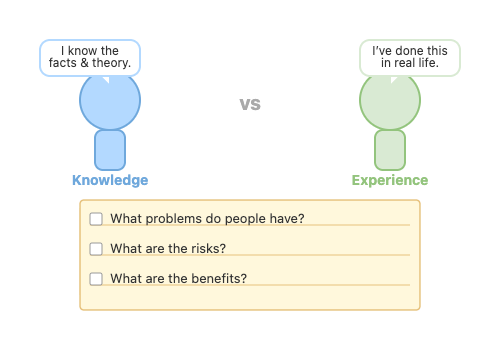
For example:
- Question: What problems do people have with our current process?
Who to ask: People who use the process every day. - Question: What are the risks of making this change?
Who to ask: Someone who has tried a similar change before. - Question: What are the benefits?
Who to ask: Someone who has seen the positive results.
This way, you make sure you’re getting information from people who really know what they’re talking about.
Avoid Hearing Only One Side 🙉
It’s natural to talk to people who agree with you or who are easy to reach. But if you only hear from one group, you might miss out on important information or make a decision that doesn’t work for everyone.
Here’s how this can happen:
- Nova: I’ve talked to three people about switching to a four-day work week for our team, and they all love the idea!
- Ryan: That’s great! Who did you talk to?
- Nova: Some friends in similar roles. They all said it would boost productivity and morale.
- Ryan: Interesting. Those are all people with jobs like yours. What about talking to someone that has different responsibilities?
- Nova: Oh... I hadn’t thought about that.
- Ryan: Maybe also check with someone who tried it and went back to five days? They might know about challenges we haven’t seen yet.
Notice how Nova talked to people who were similar to her, and Ryan helped her realize she was missing other viewpoints. By making sure you hear from different types of people, you’ll make better decisions and avoid surprises later. This helps you see the whole picture, not just one side.
When you need to make a decision or understand a problem, it’s important to hear from a variety of people with different experiences and perspectives. In the next activities, you’ll practice identifying the types of people you should talk to for different situations and matching questions to the right sources of knowledge or experience. You’ll also get a chance to plan who you would reach out to in a real scenario, helping you build the habit of gathering diverse perspectives before making decisions.
