Gather Diverse Information and Data
Gather Different Kinds of Information 🧩
When you need to make a decision or solve a problem, it’s important to get information from more than one place. If you only look in one spot, you might miss something important or get a one-sided view. Think of it like putting together a puzzle—you need pieces from different places to see the whole picture.
There are a few main types of sources you can use:
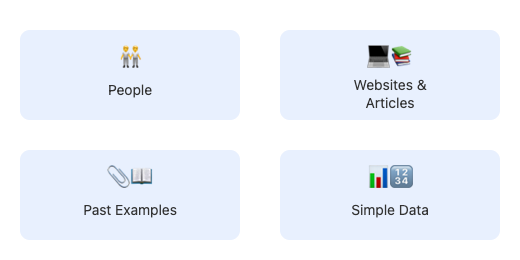
- People: Ask others for their experiences or opinions. For example, you might talk to someone who’s done something similar before.
- Websites and Articles: Look up facts or expert advice online or in books. Make sure the sources are trustworthy.
- Past Examples: Think about what happened in similar situations before. What worked? What didn’t?
- Simple Data: Find numbers or facts that help you understand the situation, like survey results or sales numbers.
Here’s an example: Imagine you want to decide if you should start a new hobby. You might ask a friend who already does it to hear about their experience, read a beginner’s guide online to get expert tips, think about a time you tried a new hobby before to see what you learned, and look up how much time or money it usually takes so you know what to expect. By using all these different types of information, you’ll have a much clearer idea of what starting the hobby will really be like.
By mixing these different types of information, you get a fuller, more accurate picture than if you just relied on one.
🔍 Compare What You Find
After you gather information from different places, it’s time to see how they match up. This is called comparing and contrasting your sources. Sometimes, different sources will agree, and sometimes they’ll say different things. Both are useful!
When sources agree, you can feel more confident that the information is solid. For example, if two different articles and a friend all say a certain hobby is easy to start, that’s a good sign.
But when sources disagree, don’t ignore it! This can help you spot things you might not have thought about. Maybe one person says a hobby is relaxing, but another says it’s actually stressful for beginners. Or maybe the data shows it costs more than you expected, even though your friend said it was cheap. These differences help you see the full picture and prepare for surprises.
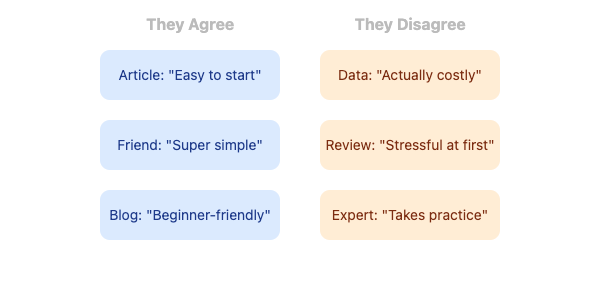
A simple way to compare and contrast is to make a list of what each source says. Notice where they agree (that’s your strong info) and where they don’t (that’s where you might need to look deeper or ask more questions).
Avoid Relying on the Easiest or Most Familiar Source 🚦
It’s normal to want to use the first answer you find or ask someone you already know. But if you only use the easiest or most familiar source, you might miss out on important details or other viewpoints.
Here’s how this can look in a real conversation:
- Nova: I'm thinking about switching careers to become a graphic designer. My cousin says it's super easy to get freelance work.
- Ryan: That's exciting! Has your cousin worked as a graphic designer?
- Nova: No, but she follows a lot of designers on Instagram who seem really successful.
- Ryan: What if we looked at some other sources too? Maybe talk to someone who's actually made that career switch, or check job market data for designers in your area?
- Nova: I guess I was just taking the easy route... I haven't really looked beyond what my cousin told me.
- Ryan: Let's also find someone who tried it and struggled—they might share pitfalls your cousin's Instagram feed wouldn't show you.
Notice how Ryan gently challenges Nova to expand beyond her single, convenient source. He's not dismissing her cousin's input but encouraging her to supplement it with direct experience, data, and even contrasting perspectives. This approach transforms a decision based on secondhand social media impressions into one grounded in diverse, relevant information.
To avoid missing out, try to:
- Ask more than one person, especially if they have different experiences.
- Check more than one website or article.
- Look for facts or data, not just opinions.
- Think about what you might be missing—what other type of source could help?
By gathering information from different places, comparing what you find, and not just picking the easiest answer, you’ll make smarter choices and avoid common mistakes. In the upcoming practice exercises, you'll work through real scenarios where you'll identify different source types, compare conflicting information, and push beyond easy answers to find valuable insights. These hands-on activities will help you develop the discipline to gather information like a skilled investigator rather than a casual browser, setting you up for better decisions in every area of your life.
