Use the Correct Measurement Units
Introduction 🎉
Welcome to Use the Correct Measurement Units! In the first two lessons, you learned to tell perimeter, area, and volume apart by what they physically measure, and then you practiced counting linear segments, square tiles, and cubes to find those measurements. At that point, we used generic "units" as placeholders. In real life, though, measurements need specific labels like feet, square meters, or cubic centimeters. A bare number on its own can be confusing, or even costly, if someone reads it the wrong way.
In this lesson, you will learn to:
- Match each measurement type to the correct kind of unit (linear, square, or cubic).
- Attach the proper real-world label, including the correct exponent, to a numerical answer.
- Explain why each unit type fits its measurement, based on the number of dimensions involved.
Imagine a friend texts you: "The answer is 12." Twelve what? If you are fencing a garden, 12 feet of fencing is very different from 12 square feet of sod or 12 cubic feet of soil. All three use the number 12, but the unit label tells the reader which kind of measurement we are talking about. Without the right label, the number is incomplete.
This is why choosing the correct unit is not just a formality — the label carries real information about whether we measured a boundary, a surface, or a space. Getting it wrong can lead to ordering the wrong amount of material, buying the wrong size container, or misunderstanding a building plan entirely. Think of the unit label as the noun that gives a number its meaning.
🌍 Real-World Unit Names
Up to now, you have been counting generic "units." In practice, every measurement starts from a base length, a standard distance that people agree on. Here are some of the most common ones:
| Base Length | Abbreviation | Common Use |
|---|---|---|
| Inch | in | Small objects, screen sizes |
| Foot | ft | Room dimensions, fencing |
| Meter | m | Building plans, athletics |
| Centimeter | cm | Paper sizes, body measurements |
Each of these is a linear unit, meaning it measures a single straight distance. When you need to express area or volume, you build on these same base lengths by adding an exponent. For example, the base length foot becomes for area and for volume. The base length never changes; only the exponent does.
🏡 Labeling Perimeter with Linear Units
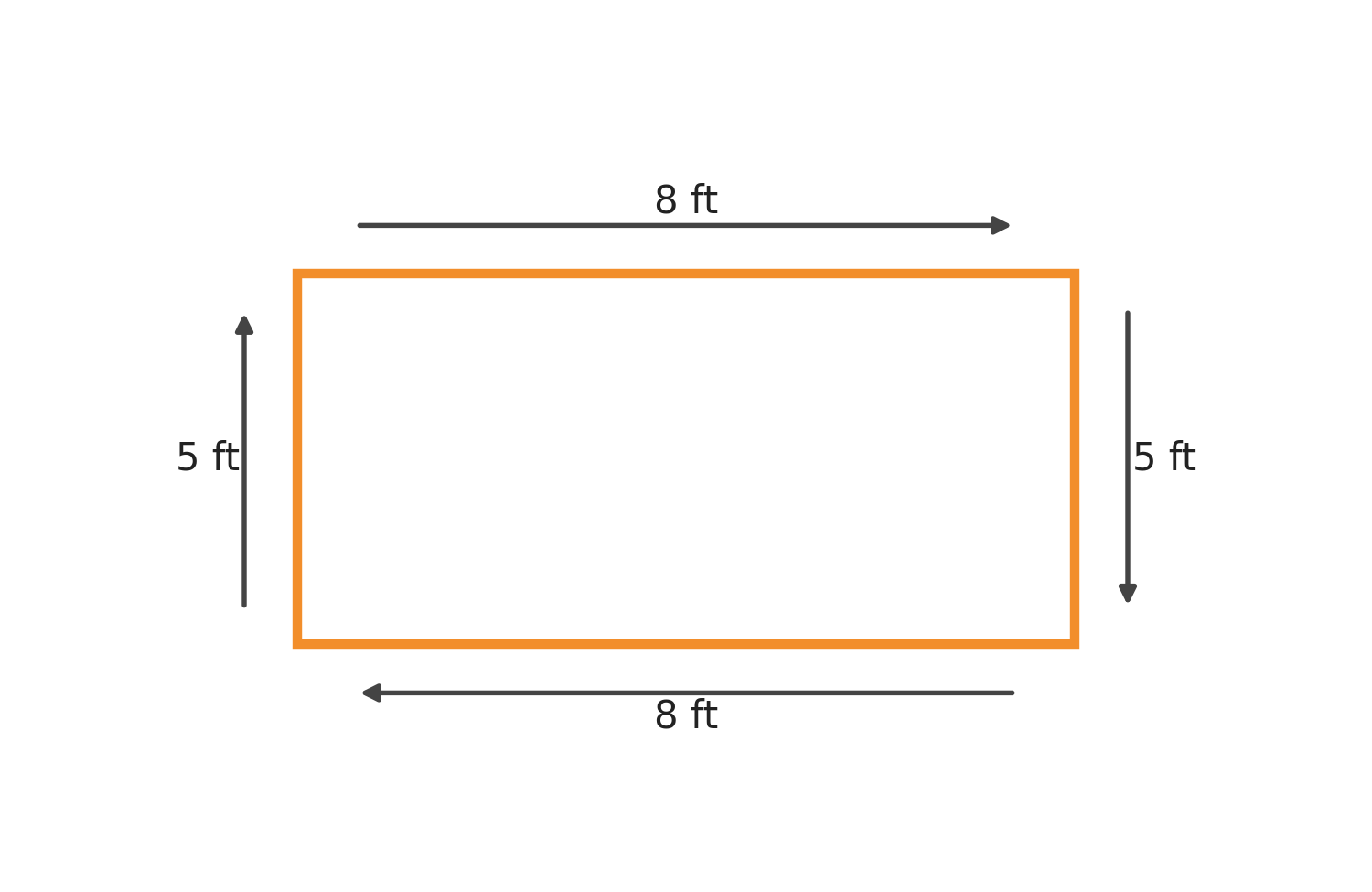
Perimeter measures the total distance around a shape’s boundary. Imagine tracing the outside edge and measuring how far that path goes. Because that path is one-dimensional, perimeter is reported in linear units: the base length with no exponent, such as ft, m, cm, or in.
It does not measure a surface or a space, so the label should not be square or cubic. If you measure the fence around a garden in feet, the total distance is simply in ft. A unit like ft is the same as , but the exponent 1 is usually left off.
🧱 Labeling Area with Square Units
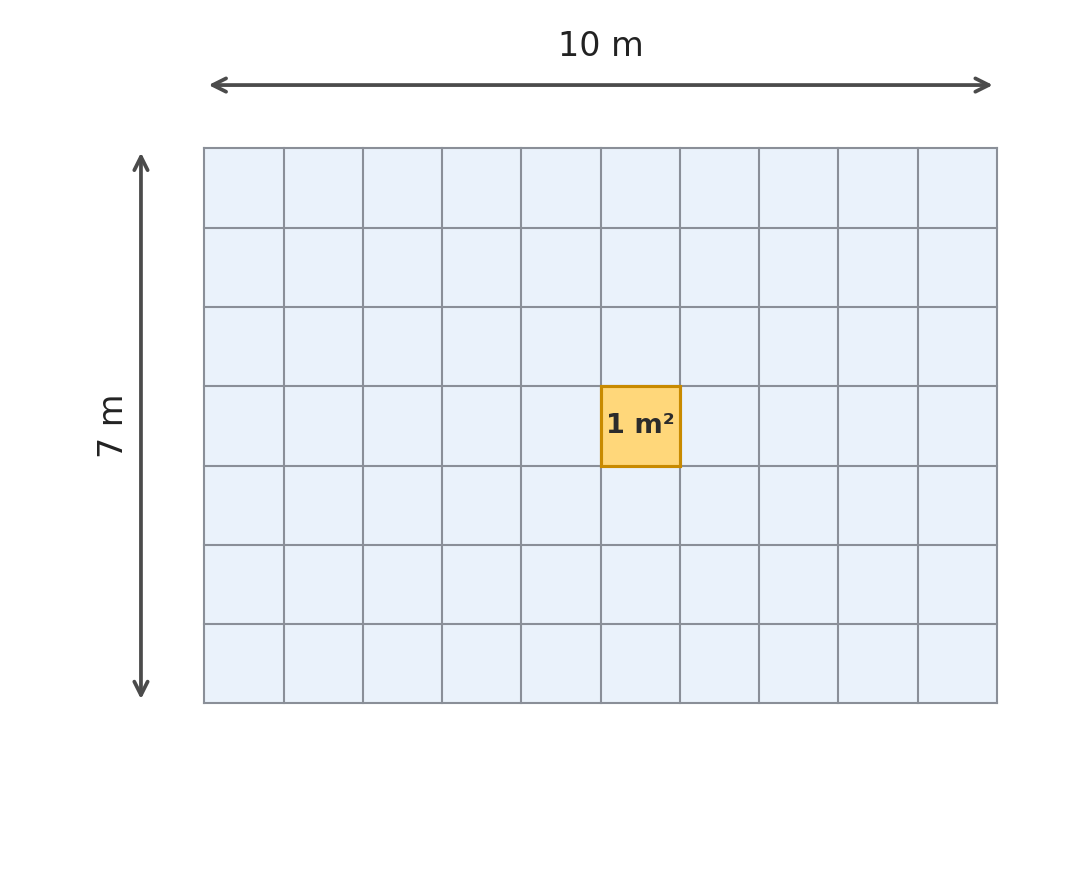
Area measures how much flat surface a shape covers. Imagine covering a shape with equal square tiles and counting how many fit inside. Because a surface stretches in two directions—length and width—area is reported in square units.
These use the base length with an exponent of 2, such as , , , or . For example, the floor of a room is measured in square meters (). Why square? Each unit tile is a square defined by two side lengths, which is why the unit carries the exponent 2.
🗃️ Labeling Volume with Cubic Units
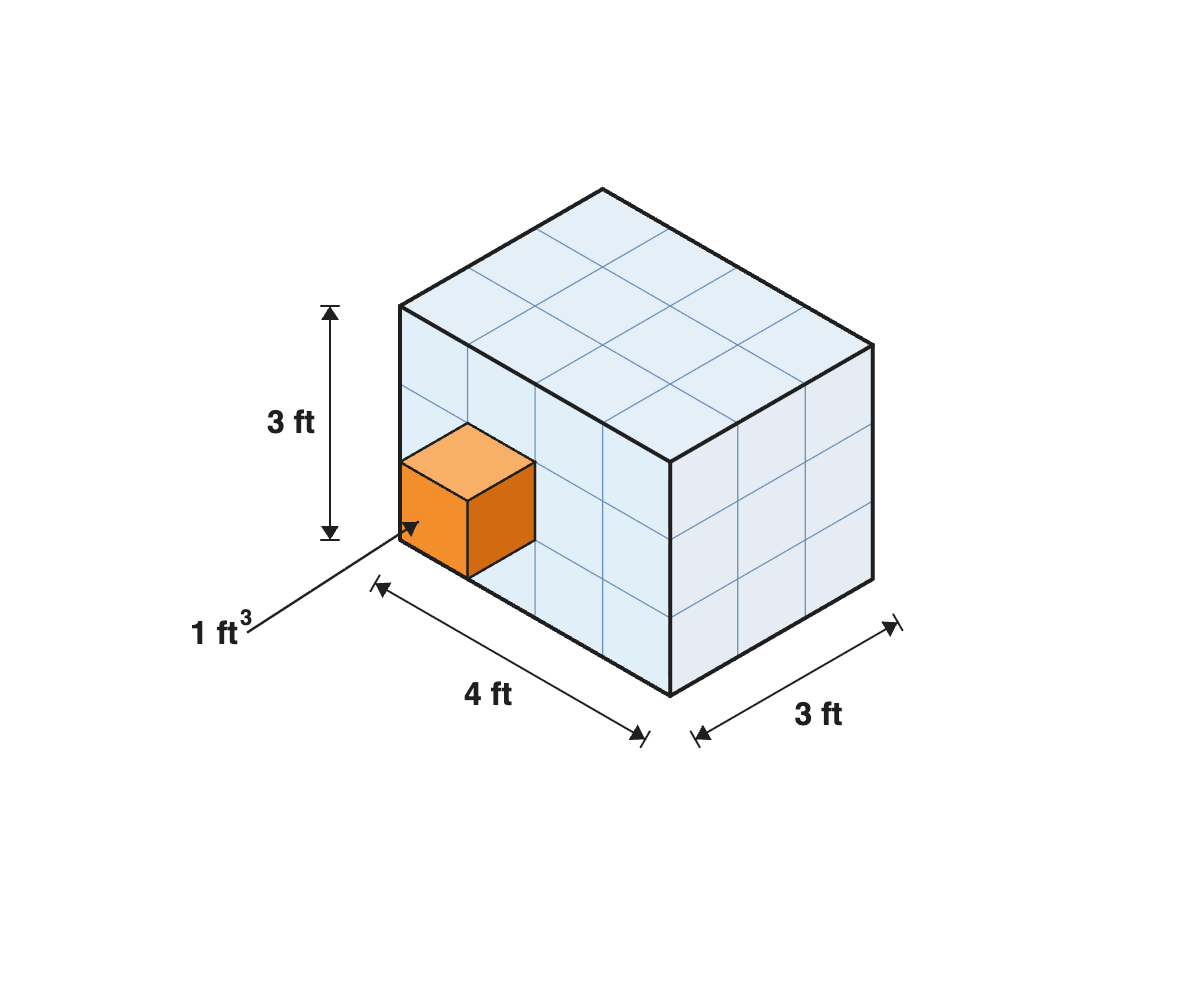
Volume measures the amount of space inside a three-dimensional solid. Imagine filling a container with equal unit cubes and counting how many fit inside. Because a solid stretches in three directions—length, width, and height—volume is reported in cubic units.
These use the base length with an exponent of 3, such as , , , or . A label like cubic centimeters () represents a cube that takes up space in all three dimensions. The exponent 3 tells the reader you are measuring a 3D space rather than a flat surface or a simple distance. Note that some real-world volume units (like liters, gallons, or cups) are already 3D by definition and do not use an exponent.
💡 What the Exponent Tells You
The small exponent in a unit label isn't there to make you do extra math—it just tells you exactly what kind of space the unit measures. It represents the number of dimensions involved in the measurement:
- No exponent (like ft) measures a 1D distance or length.
- An exponent of 2 (like ) measures a 2D flat surface.
- An exponent of 3 (like ) measures a 3D filled space.
If you ever forget which exponent to use, just think about the space you are measuring. A boundary line has one dimension, a surface has two, and a container has three. The exponent should always match that number.
🔍 Catching Common Labeling Mistakes
Even after understanding the logic, it is easy to slip up. Here are the most frequent errors to watch out for:
- Leaving off the small number for area or volume Writing when you mean makes it sound like a length instead of a space. Always check: Did I measure a surface or a space? Then I need an exponent.
- Using the wrong number. Labeling an area answer as suggests a volume. If the problem asked about covering a wall, the correct label is .
- Mixing base units. If the length is in meters and the width is in centimeters, convert to one unit before multiplying. A label like "m·cm" does not exist as a standard unit.
A quick self-check habit: after solving a problem, ask yourself, "Is my answer about a boundary, a surface, or a space?" Then confirm that your exponent is 1, 2, or 3 accordingly.
Conclusion and Next Steps
In this lesson, you moved from counting generic units to attaching real-world labels with the correct exponent. Perimeter is always reported in linear units like ft or m, area uses square units like or , and volume uses cubic units like or . The key takeaway is that the exponent is not just notation — it tells you the number of dimensions you are measuring: 1 for a boundary, 2 for a surface, and 3 for a space.
Up next, you will put this knowledge to work in a set of practice exercises. You will match measurements to their unit types, choose the correct label for given problems, fill in missing vocabulary, and explain in your own words why the exponent matters. Let's see how confidently you can label your way through each challenge!
