How to Cope with a Conflict-Averse Boss
How to Cope with a Conflict-Averse Boss 🤐
Working for a boss who avoids conflict at any cost can be one of the most frustrating management challenges you'll face. While some bosses are too aggressive or controlling, the conflict-averse boss creates a different kind of dysfunction—one where problems fester, decisions get delayed, and your team operates without the resources or direction needed to succeed.
Anne Field writes in the HBR Guide to Managing Up and Across that these managers fear confrontation so deeply that they'll sacrifice team effectiveness just to avoid uncomfortable conversations. The result is a workplace where productivity declines, vendor relationships deteriorate without accountability, and critical issues remain unaddressed while everyone pretends everything is fine.
The key lies not in transforming your boss into someone who embraces conflict, but rather in making necessary discussions more comfortable and productive by carefully adjusting your approach to match their temperament.
Focus on Problem-Solving 🛠️
When dealing with a conflict-averse boss, your primary strategy should be to reframe conflicts as problem-solving exercises rather than confrontations. You can apply the following steps:
- Focus on the identifying the problem, not making it personal by focusing on the people.
- Frame the situation as problem-solving to dial down the focus on conflict.
- Offer solutions by proposing specific, concrete suggestions on how to move forward.
- Document in writing the mutually agreed upon next steps so your boss can approve.

Here's how this approach might play out in practice:
- Victoria: Ryan, do you have a minute to talk about our team meetings?
- Ryan: Sure, what's on your mind? Is everything okay with the team?
- Victoria: The team's fine, but I've noticed our weekly meetings have been running long—about 30 minutes over time for the past three weeks. I think it's because we don't have a structured agenda.
- Ryan: Oh, I hadn't really noticed. Do you think people are unhappy with the meetings?
- Victoria: I think everyone just wants to be heard, which is great, but without structure, we're not getting to action items. What if I created a standard agenda template and collected topics from everyone beforehand?
- Ryan: That sounds really helpful actually. I've been meaning to add more structure but haven't had the time.
- Victoria: Perfect! I'll draft something this week and send it to you for feedback. We can test it out next Monday and see if it helps us stay on track.
- Ryan: That would be wonderful. Thanks for taking the initiative on this.
Notice how Victoria never mentions specific people or complaints—she focuses entirely on the process issue of time management and offers to solve it herself. This makes Ryan feel supported rather than criticized, and he's able to agree without feeling like he's entering into any conflict.
Make Conflict More Comfortable Through Strategic Framing 🖼️
Your conflict-averse boss may never embrace confrontation, but you can make difficult conversations more palatable by carefully framing issues in business terms rather than personal ones. You can accomplish by using "what if" questions to explore potential problems without directly stating that something is wrong.
The effectiveness of this approach relies on using gentle lead-ins that signal you're not trying to create conflict. Use phrases such as:
- "I might be off base here, but..."
- "This might sound like a crazy idea, but..."
These phrases give your boss psychological space to engage without feeling threatened.
Gather Evidence and Put it in Writing 📝
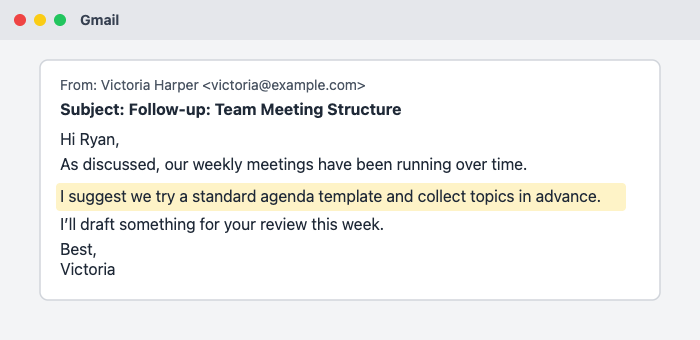
When working with a conflict-averse boss, written documentation becomes your most powerful tool for driving necessary changes. By putting your concerns, suggestions, and evidence in writing, you give your boss time to process information without the immediate pressure of responding in person. Additionally, this creates a paper trail that protects both of you—your boss can't claim ignorance of issues, and you have documentation of your attempts to address problems professionally.
The art of written communication with a conflict-averse boss requires strategic presentation of evidence that makes action inevitable. The goal is to make the situation so clear and well-documented that even a conflict-averse boss recognizes that continuing to avoid the issue creates more risk than addressing it directly.
You can also propose structured debates or feedback sessions with clear ground rules that make conflict feel safer and more manageable. For instance, you might suggest implementing a devil's advocate rotation in team meetings where one person is assigned to respectfully challenge ideas—turning potential conflict into an expected, structured part of the process. This gives your conflict-averse boss a framework for allowing healthy debate without feeling like they're permitting or encouraging actual conflict.
In your upcoming role-play sessions, you'll practice these techniques for working with conflict-averse managers—from reframing confrontations as problem-solving exercises to documenting evidence that makes action unavoidable. These scenarios will help you develop the skills to achieve necessary outcomes despite your boss's reluctance to engage in difficult conversations, ultimately making you more effective in navigating this common workplace challenge.
