You Can't Manage Emotions Without Knowing What They Really Are
Distinguish Emotions from Feelings 🧩
Building on your foundation in emotional intelligence, it’s important to explore a crucial distinction highlighted by psychologist Art Markman in the HBR Guide to Emotional Intelligence—the difference between feelings and emotions. While most people use these terms interchangeably, understanding the difference gives you the power to pause between what you feel and how you respond.
Feelings are raw physical sensations that emerge directly from your motivational system. You tend to feel good when you’re making progress toward your goals and bad when you’re not, with the intensity of these feelings reflecting how engaged you are in a situation. Think of feelings as unprocessed data from your body, such as a tightness in your chest, butterflies in your stomach, or a surge of energy that has not yet been labeled or understood.
Emotions are your brain’s interpretation of these raw feelings. Your mind uses context, considering what is happening around you, to translate physical sensations into named emotions like fear, pride, frustration, or joy. For example, if your heart races before a presentation, you might interpret that as anxiety. If your heart races after receiving great news, you might interpret it as excitement. The same physical feeling can become entirely different emotions depending on your interpretation.
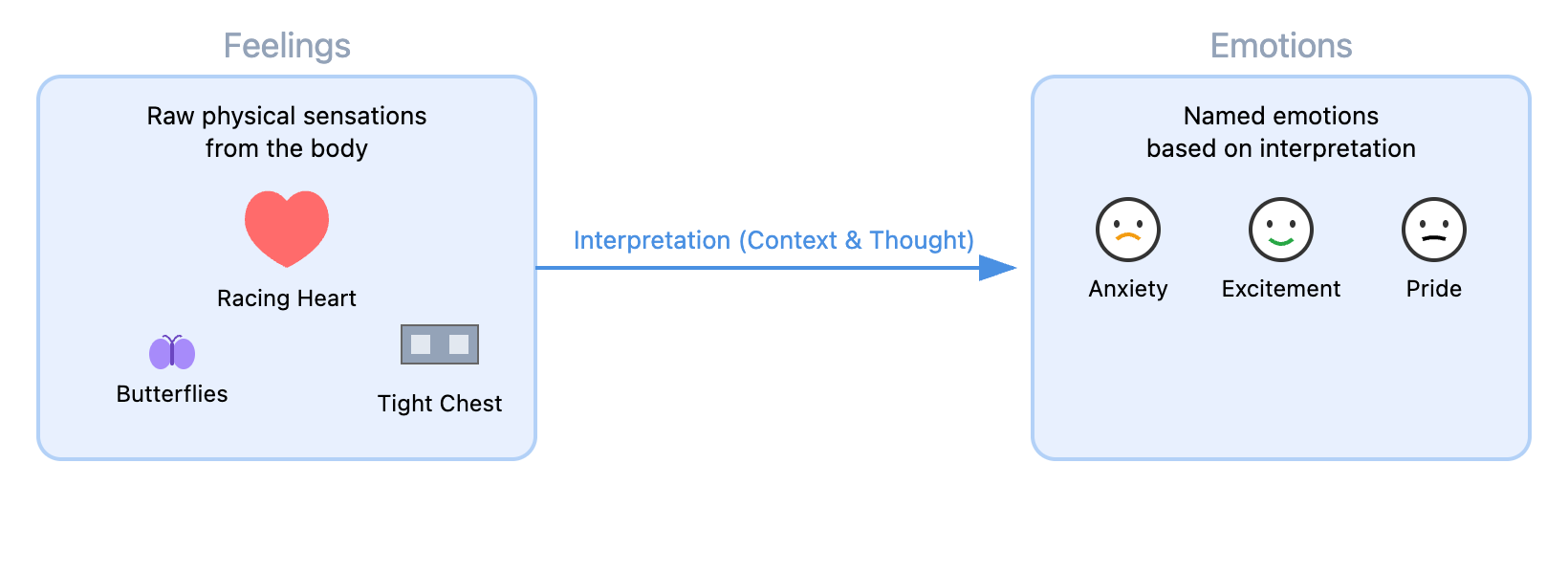
Most of the time, this interpretive process happens automatically and accurately. But in complex situations, especially at work, it’s not always so clear-cut. For example, if you have a tense conversation with your spouse before work, you might carry unresolved negative feelings into your day. Later, during a team meeting, you may feel irritated when a colleague suggests changes to your project. The negative feeling inside you might actually be leftover stress from your morning, but your brain interprets it as frustration with your colleague. This misinterpretation can lead to unnecessary conflict, strained relationships, or poor decisions. Recognizing the difference between feelings and emotions empowers you to question your initial interpretations and respond more thoughtfully.
Identify Triggers and Root Causes of Your Emotions 🌋
Emotions provide valuable information about the state of your motivational system, yet many people try to power through their negative feelings rather than understanding them. Avoiding emotional awareness can leave you moving forward blindly, potentially heading in the wrong direction without even realizing it.
When you experience negative feelings, try the following steps to gain clarity:
- Take five or ten minutes for yourself during the day.
- Find a quiet space where you can sit alone.
- Breathe deeply to help reduce the intensity of your feelings and create mental space for clearer thinking.
This isn’t about meditation or emptying your mind; it’s about setting the stage for emotional clarity.
Once you've calmed your immediate physiological response, begin reflecting on the day's events with curiosity rather than judgment. Pay attention to how different thoughts influence what you're feeling. Ask yourself which particular events increase or decrease the intensity of those feelings. For example, you might discover that your anxiety spikes not when deadlines approach in general, but specifically when you haven't received clear expectations from your manager. This insight transforms a vague feeling into a specific, actionable issue—the need to seek clarity on expectations.
Let's observe how this process of identifying triggers plays out in a workplace conversation:
- Meredith: I can't stand these product review meetings anymore. Marcus keeps shooting down every idea I present. I'm so frustrated with him!
- Dan: When you say you're frustrated, what are you actually feeling in your body right now?
- Meredith: My chest feels tight, and I’ve had this churning in my stomach since this morning after an argument at home.
- Dan: Maybe some of that stress is carrying over and making things with Marcus feel worse than they are.
Dan helped Meredith notice the difference between her physical feelings and her initial frustration with Marcus. By tracing the real trigger back to her morning stress, Meredith can now respond with more self-awareness instead of reacting impulsively.

