Welcome to the Course 📣

Welcome to Building Emotional Intelligence Foundations! Throughout this course, you will discover how to harness the power of emotions—both yours and others'—to become a more effective and authentic leader. This journey will transform not just how you work, but how you experience and navigate the complex human dynamics of professional life.

Over the coming lessons, you'll explore four essential areas that build upon each other. You'll begin by establishing a strong foundation—understanding what emotions really are and developing a richer vocabulary for recognizing and expressing them. From there, you'll strengthen your capacity for empathy while building resilience to maintain your own well-being under pressure. As you progress, you'll master self-management techniques that help you channel emotions productively, even in challenging situations. Finally, you'll learn to lead with emotional intelligence by shaping team culture and navigating difficult dynamics with confidence and grace.

In this lesson, you’ll get a clear understanding of what emotional intelligence really means and why it matters for effective leadership. Drawing on key concepts from the HBR Guide to Emotional Intelligence, you'll break down its core components, explore how each one appears in real workplace situations, and discuss both the benefits and potential pitfalls of developing these skills. You’ll also see how emotional intelligence goes beyond simply being “nice” or “in control,” and why balancing different skills is key to leading authentically and effectively.

Understand Emotional Intelligence and Leading by Feel 🧠💖

Emotional intelligence is your ability to recognize, understand, and respond to emotions, both your own and those of others, in ways that guide your thinking and actions as a leader. Emotionally intelligent leaders are attuned to the emotional undercurrents in their teams and use this awareness to navigate complex situations. For example, when you sense tension or uncertainty in a meeting, you know when to pause and address concerns before moving forward. When you notice your own stress rising, you can take a step back and choose a thoughtful response rather than reacting impulsively.

The business case for developing emotional intelligence is compelling. Leaders who are skilled at reading and responding to emotions create environments where people feel heard and valued, which leads to higher engagement, stronger trust, and better performance. When conflicts arise, these leaders address not just the surface issues but also the underlying emotions, preventing small misunderstandings from escalating into major problems.

Emotionally intelligent leaders are especially attuned to the emotional undercurrents within their teams. Much like a radar, they pick up on subtle cues—such as body language, tone, or shifts in energy—and use this awareness to guide their actions in real time.
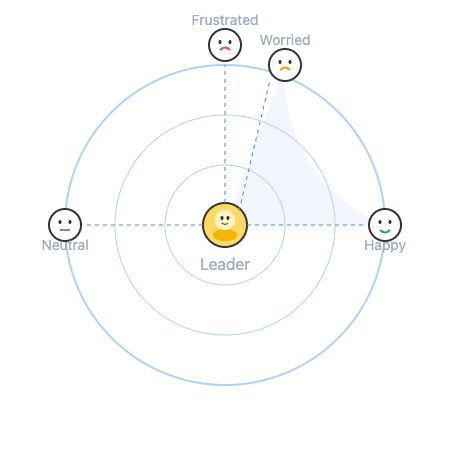
Emotional Radar depicting a Leader reading the room

Most importantly, building emotional intelligence is a continuous process. Each small improvement in your ability to notice and respond to emotions, whether in yourself or others, compounds over time and makes you a more effective and authentic leader. This ongoing growth transforms not just your own leadership but the entire dynamic of your team.

The Double-Edged Nature of Self-Awareness ⚖️

Self-awareness is the foundation of emotional intelligence, and it’s especially important for leaders. The most effective leaders are tuned in to their own emotional states and recognize how those feelings might shape their actions and decisions. Instead of ignoring or bottling up emotions, they notice what they’re experiencing and consider how it could affect their interactions. For example, catching yourself feeling frustrated before a meeting gives you a chance to pause and reset, so your mood doesn’t spill over into the conversation.

Self-awareness doesn’t mean constantly analyzing yourself or replaying every moment. It’s more about checking in with yourself in the moment and using what you notice to guide your behavior. Leaders who do this well respond thoughtfully rather than react impulsively, and they create a space where others feel comfortable sharing their own perspectives and emotions. This kind of practical, in-the-moment self-awareness helps you stay grounded and focused on your team, instead of getting stuck in unhelpful self-criticism or overthinking.

Here are some do's and don'ts to help you practice healthy self-awareness as a leader:

DoDon’t
Notice your emotions as they ariseIgnore or suppress your feelings
Pause and reflect before respondingReact impulsively
Ask yourself what you can learn from your emotional reactionsJudge yourself harshly for having emotions
Check in with yourself at key moments (before meetings, after feedback)Overanalyze or replay every interaction
Use your emotions as information to guide your actionsLet emotions dictate your behavior without reflection
Stay curious about your own triggers and patternsGet stuck in rumination or self-criticism
Redirect your focus outward to your team after checking in with yourselfStay inwardly focused and disconnected from others
Acknowledge your emotions openly when appropriatePretend to be unaffected or emotionally neutral
The Danger of Over-Relying on Any Single Skill 🪜

Every emotional intelligence skill has its limits and can become a liability if overused or applied without considering the situation. Even strengths like empathy, optimism, or emotional control can actually undermine your effectiveness if they dominate your leadership style. The problem isn’t having strong skills—it’s using them automatically, without thinking about what each unique situation really needs. Think of it like this: a hammer is a great tool, but not every problem is a nail. The key is having the judgment and flexibility to choose the right approach for each moment.

Consider empathy, often heralded as essential for modern leadership. When balanced appropriately with other skills, empathy helps you understand your team's perspectives and build lasting trust. Yet unchecked empathy can paralyze decision-making and prevent necessary accountability. You might avoid delivering critical feedback because you fear hurting someone's feelings, or you might absorb others' emotional burdens to the point of personal burnout. A manager might begin with understanding by saying, "I understand you're overwhelmed," but stop there when the situation demands more. For example, "I understand you're overwhelmed, and we still need to meet this deadline. How can I support you in getting there?" True leadership requires both compassion and clarity about expectations.

Here's how this balance might play out in a real conversation between a manager and their direct report:

  • Jessica: Ryan, I know you’ve got a lot on your plate lately—how are you holding up?
  • Ryan: Honestly, I’m overwhelmed. The reorg and my mom being sick are making it hard to focus.
  • Jessica: I’m sorry you’re dealing with so much. I want to support you, but we do need the client presentation finished by Friday. What’s the biggest hurdle right now?
  • Ryan: The data analysis. I can’t get uninterrupted time.
  • Jessica: Let’s block off your calendar tomorrow morning for deep work, and I’ll handle any urgent issues. Does that help?
  • Ryan: Yes, that would make a big difference.
  • Jessica: Great. Let’s check in tomorrow afternoon and adjust if needed. And if anything changes with your mom, just let me know.

Notice how Jessica demonstrates empathy by acknowledging Ryan's struggles, but doesn't stop there. She balances her understanding with accountability for the deadline and moves quickly into problem-solving mode. This blend of emotional intelligence skills meets both the human and business needs of the situation.

Sign up
Join the 1M+ learners on CodeSignal
Be a part of our community of 1M+ users who develop and demonstrate their skills on CodeSignal