Strengthen Relationships Through Empathy
Understand and Value Different Perspectives 🌍
Empathy means trying to see things from someone else’s point of view, even if it’s different from your own. It’s a bit like looking through a different pair of glasses—you might see things you didn’t notice before. Everyone on a team has their own background, experiences, and ideas. When you take time to understand where others are coming from, it helps everyone work together better and feel respected.
For example, if a teammate suggests a new way to do something, your first reaction might be to stick with your own idea. But empathy means pausing and asking about their thinking. You could say, “I hadn’t thought of it that way. Can you tell me more about why you think this would work?” This shows you care about their opinion and are open to learning something new.
Here’s a simple conversation between two teammates with different ideas:
- Natalie: I think we should move forward with the project next week, even if everything isn’t perfect yet. It’s important to start getting feedback.
- Dan: That makes me a bit worried. What if there are problems that make us look unprepared?
- Natalie: I understand why you’re concerned about making a good impression. What specific issues are you most worried about?
- Dan: Mostly that if something goes wrong, it could be hard to fix and people might lose trust in us.
- Natalie: That’s a good point I hadn’t fully thought about. What if we did a small test run first with just a few people? That way we can get feedback but keep the risk low.
- Dan: That could work. If there’s a problem, it won’t affect as many people, and those who join early usually understand it’s a test.
Notice how Natalie listens to Dan’s concerns and works with him to find a solution that fits both of their needs. This is what empathy looks like in action.
💪 Support Each Other During Tough Times
Teams go through ups and downs, sharing successes and weathering storms together. When someone is having a hard time, showing empathy means listening and offering support, not just jumping in with advice or trying to fix things right away. Sometimes, just knowing someone cares makes a big difference.

If a teammate says they’re stressed or struggling, try to listen first. You can say, “That sounds tough—do you want to talk more about it?” This helps them feel heard and understood. If you want to help, ask what they need: “Is there anything I can do to support you right now?” Even small gestures, like checking in or offering to help with a task, can show you care.
Remember, you don’t have to have all the answers. Just being there and listening can help your teammate feel less alone.
Build Connection in Everyday Moments 💬
Empathy isn’t just for big problems—it’s something you can show every day in small ways. You can use the simple “Notice, Ask, Appreciate” approach to help build stronger relationships with your teammates.
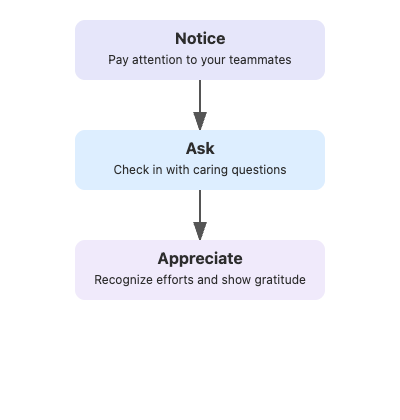
- Notice: Pay attention to your teammates as people. Look for small changes, like if someone seems quieter than usual, or remember things they’ve shared, like an upcoming event or something important to them.
- Ask: Check in with caring questions. If someone mentioned they had a big event, you can ask, “How did it go?” Or if you notice someone seems down, you can say, “You seem a bit quiet today. Is everything okay?” These small actions show you care about them as a person, not just as a colleague or teammate.
- Appreciate: Show gratitude and recognize their efforts. When someone helps you or does something well, thank them specifically: “Thanks for helping me with that report! I really appreciated it.” Noticing and recognizing each other’s efforts helps everyone feel valued.
By practicing “Notice, Ask, Appreciate” in your daily interactions, you help create a team where everyone feels seen, respected, and included.
By understanding different perspectives, supporting each other during tough times, and connecting in everyday moments, you help create a team where everyone feels respected and included. The upcoming activities will help you apply empathetic responses in various team situations, building your confidence in creating deeper, more meaningful professional relationships.
