Integrating Multi-Channel Experiences
The Integration of Multi-Channel Experiences
Last unit you gave every asset a buyer state and a touchpoint. That work is necessary but not sufficient, because a buyer never meets your assets one at a time in a lab. They scroll past a paid social ad, half-attend a webinar, skim three nurture emails, then talk to a sales rep, all inside the same week. If those channels run as separate campaigns, the buyer feels every seam. This unit is about wiring them into one experience.
See your channels as a system, not a pile
Before you integrate anything, diagnose what you actually have. The fastest test: pick one real buyer and trace their path across channels in order. If each touch repeats the same message, reintroduces a problem the buyer already accepted, or ignores what they just did, you have a pile of parallel campaigns wearing a shared logo. A true demand generation system is different: every channel knows what came before it and sets up what comes next.
- Ryan: Paid social, the webinar, and nurture all hit their numbers last quarter, so we're covered, right?
- Nova: Individually, sure. But I followed one account through all three, and each one talked to them like it was day one.
- Ryan: So the webinar didn't build on the ad, and the emails didn't build on the webinar.
- Nova: Right. Five channels, five cold starts. The buyer did the connecting work we should have done.
- Ryan: Then the fix isn't more volume, it's making each channel pick up where the last one left off.
Notice the shift: the problem was never performance per channel, it was the missing connective tissue between them.
Wire the touchpoints into a reinforcing progression
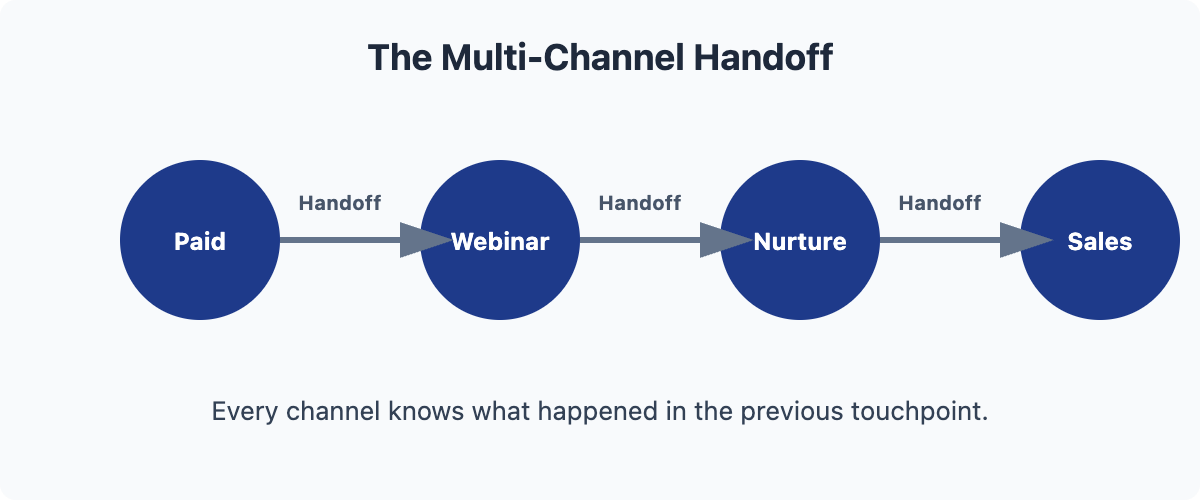
Once you can see the gaps, integration becomes a matter of defining handoffs. For each touchpoint, name three things: where the buyer enters it, what it assumes they already know, and what it hands to the next channel. Mutually reinforcing means channel B is built on the assumption that channel A happened. Retargeting picks up webinar registrants who did not attend. Nurture emails reference the specific idea the webinar planted rather than restarting the education. Sales enablement arms the rep with exactly what the buyer has already seen, so the conversation advances instead of repeating. Customer advocacy proof resurfaces at the decision point where doubt peaks. Wherever you cannot name the handoff, you have found the break the buyer feels.
Orchestrate the sequence to compound psychological influence
Integration says the channels connect. Orchestration adds timing and order so each touchpoint reinforces the psychological state the previous one created. Map the sequence to the buyer's changing state across problem recognition, consideration, decision, and retention, then let behavior trigger the next move: webinar attendance starts one nurture track, a no-show starts another, and a pricing-page visit fires objection-handling proof instead of another awareness ad. Done well, influence compounds, because each touch deepens belief rather than resetting it. The discipline is specifying what fires, when, and why in psychological terms, so the sequence is buildable rather than aspirational.
The single takeaway: a multi-channel program earns its results when the channels stop running in parallel and start handing the buyer forward, with timing that compounds influence instead of resetting it. This is where it gets concrete. You'll first spot the difference between cohesive and fragmented channel combinations, then draft an integrated experience your operations team could actually build, and finally walk that sequence through live with a teammate. Before your next campaign, try tracing one real buyer end to end and marking every place a channel makes them start over.
