Everyday Distance Problems
Introduction
Welcome back to Real-World and 3D Applications! This is our fourth lesson in the course, and we have covered a lot of ground already. In the first three lessons, we learned to test whether side lengths form a right triangle, recognize Pythagorean triples on sight, and build perfect square corners on a job site with the 3-4-5 rule. All of that groundwork was leading to the skill we tackle today: solving everyday distance problems with the Pythagorean theorem.
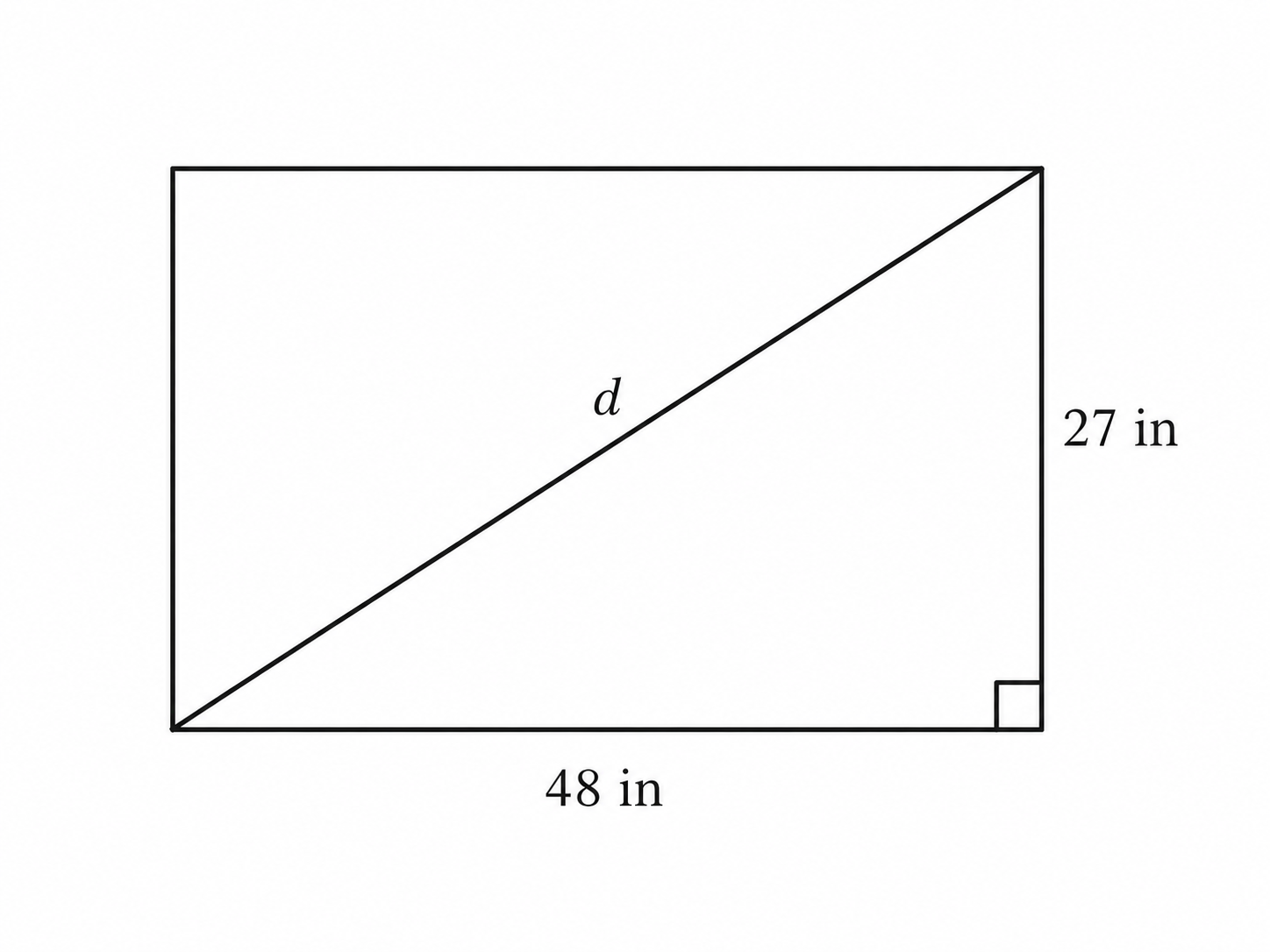
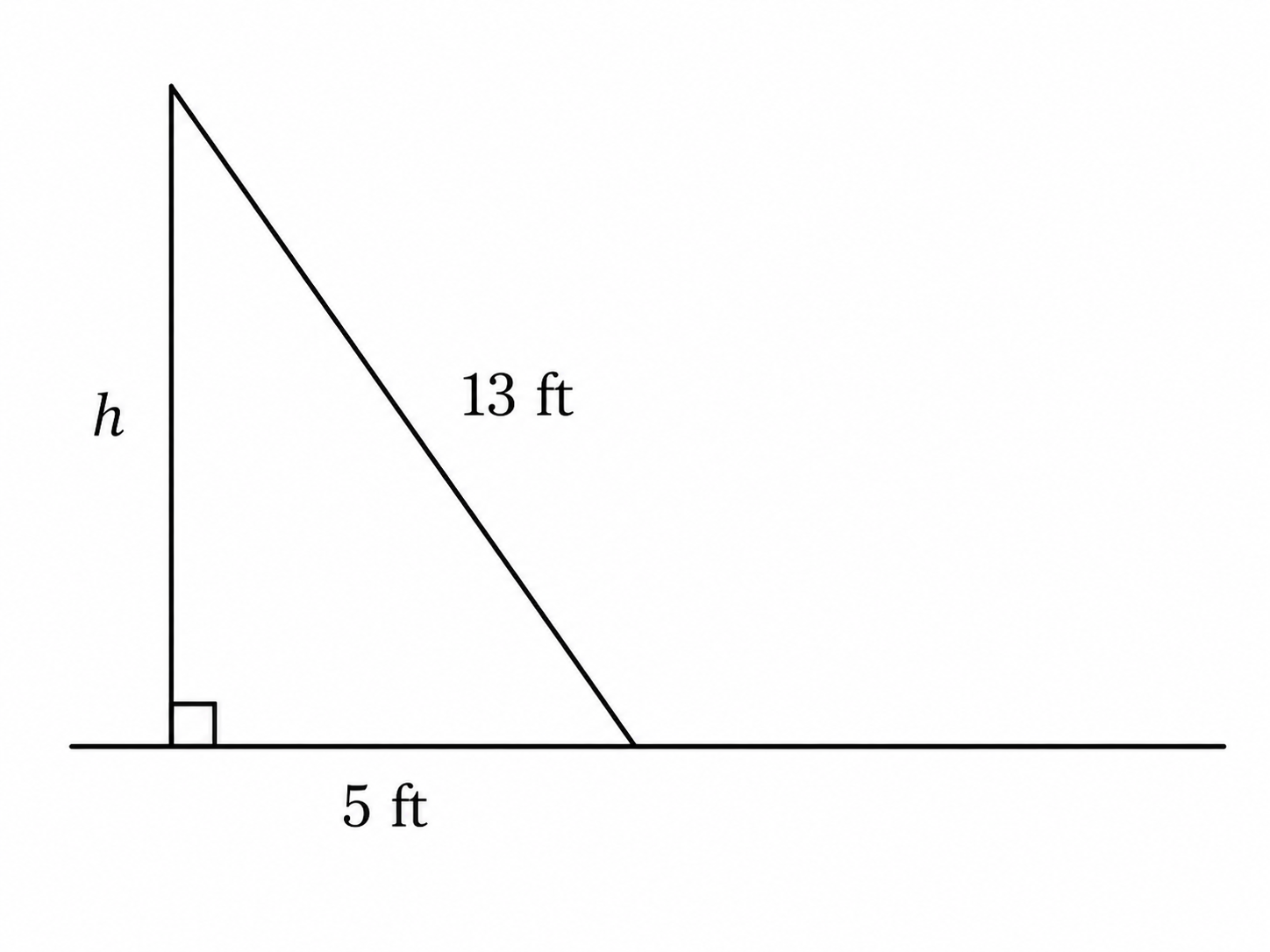
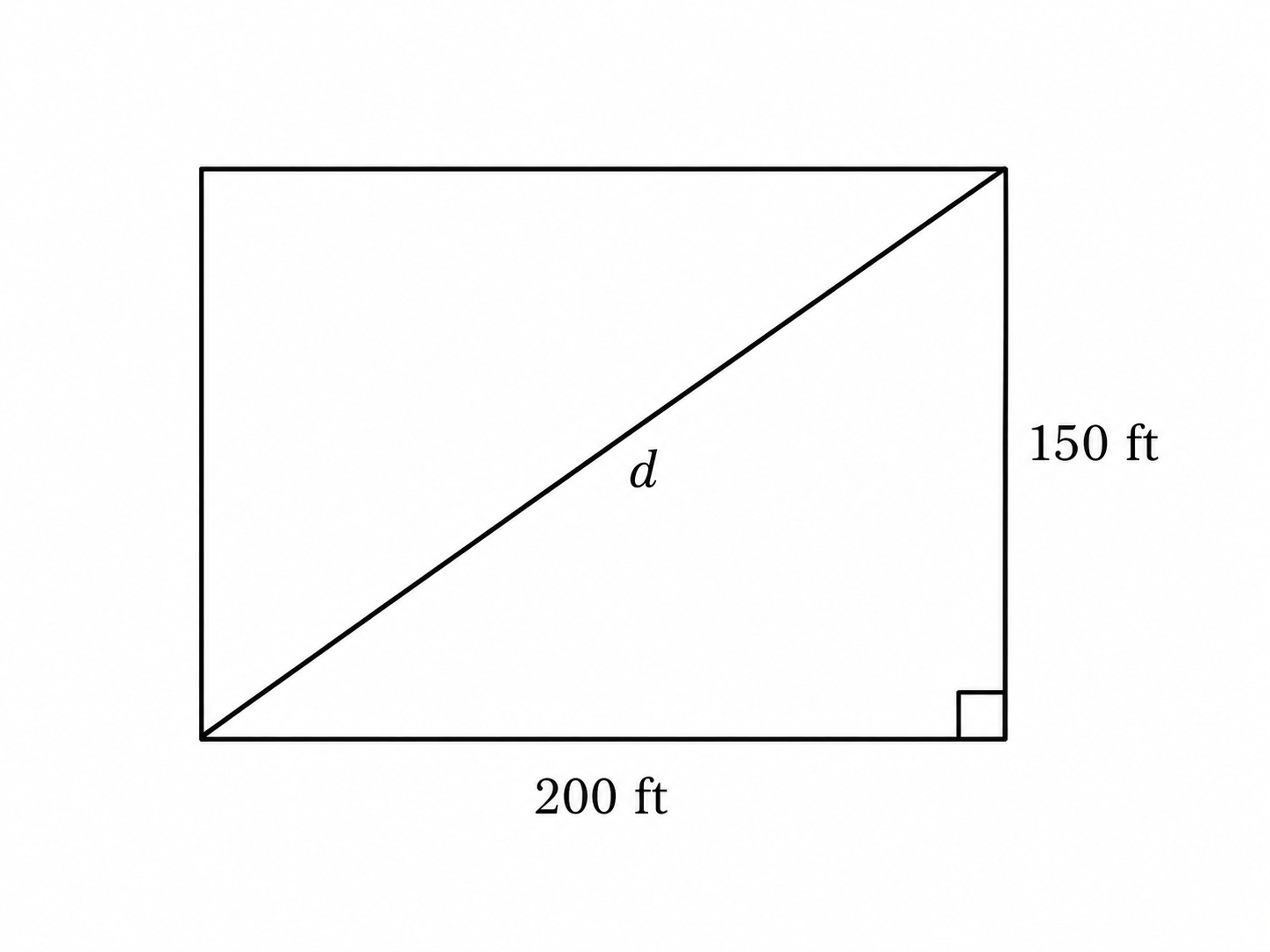
In this lesson, we will take three familiar situations — a ladder leaning against a wall, the diagonal of a TV screen, and a walking shortcut across a rectangular space — and turn each one into a labeled right triangle. From there, finding the unknown distance is a direct application of what we already know.
Spotting the Hidden Right Triangle
Many objects and spaces we encounter every day already contain a right angle. A wall meets the ground at 90 degrees. A television screen has 90-degree corners. A rectangular parking lot does too. Whenever that 90-degree angle is present, a right triangle is hiding in the scene, waiting for us to draw it.
The key insight is that we are not inventing triangles from thin air. The right angle is already part of the real-world setup, and our job is simply to recognize it, label the three sides, and let the theorem do the rest. Once you start looking for these hidden right triangles, you will notice them everywhere.
The Modeling Step: From Words to a Triangle
Translating a word problem into a solvable equation follows a consistent three-step process:
- Find the right angle. Look for the 90-degree angle in the situation — a wall on flat ground, the corner of a screen, or the corner of a rectangular field.
- Label the sides. Identify which measurement is the hypotenuse (the side opposite the right angle, always the longest) and which two measurements are the legs.
- Choose the method. If the unknown is the hypotenuse, add the squares of the two legs and take the square root. If the unknown is a leg, subtract and then take the square root.
Once these three decisions are made, the rest is arithmetic. Let's see the process in action with three common scenarios.
Example: The Diagonal of a TV Screen