Emotional Decision Drivers
The Emotional Foundation of Decision-Making
The last unit ended with a buyer finally recognizing a problem. But recognition is only the ignition. What actually powers the decision that follows is something most B2B marketers systematically underweight: emotion. In this unit you'll examine why emotional responses sit beneath even the most spreadsheet-driven purchase, how to read them under a buyer's rational language, and how to build content that answers both layers at once.
How Emotion Precedes and Shapes Rational Analysis
We like to believe B2B buying is coldly rational, but decades of behavioral science say the emotion fires first. Antonio Damasio's research showed that people with damage to the brain's emotional centers, despite fully intact reasoning, became unable to make even simple decisions. Emotion isn't the enemy of analysis; it's the trigger that makes analysis possible. Daniel Kahneman's framing runs parallel: a fast, intuitive System 1 reacts before the slower, deliberate System 2 builds a justification for that reaction.
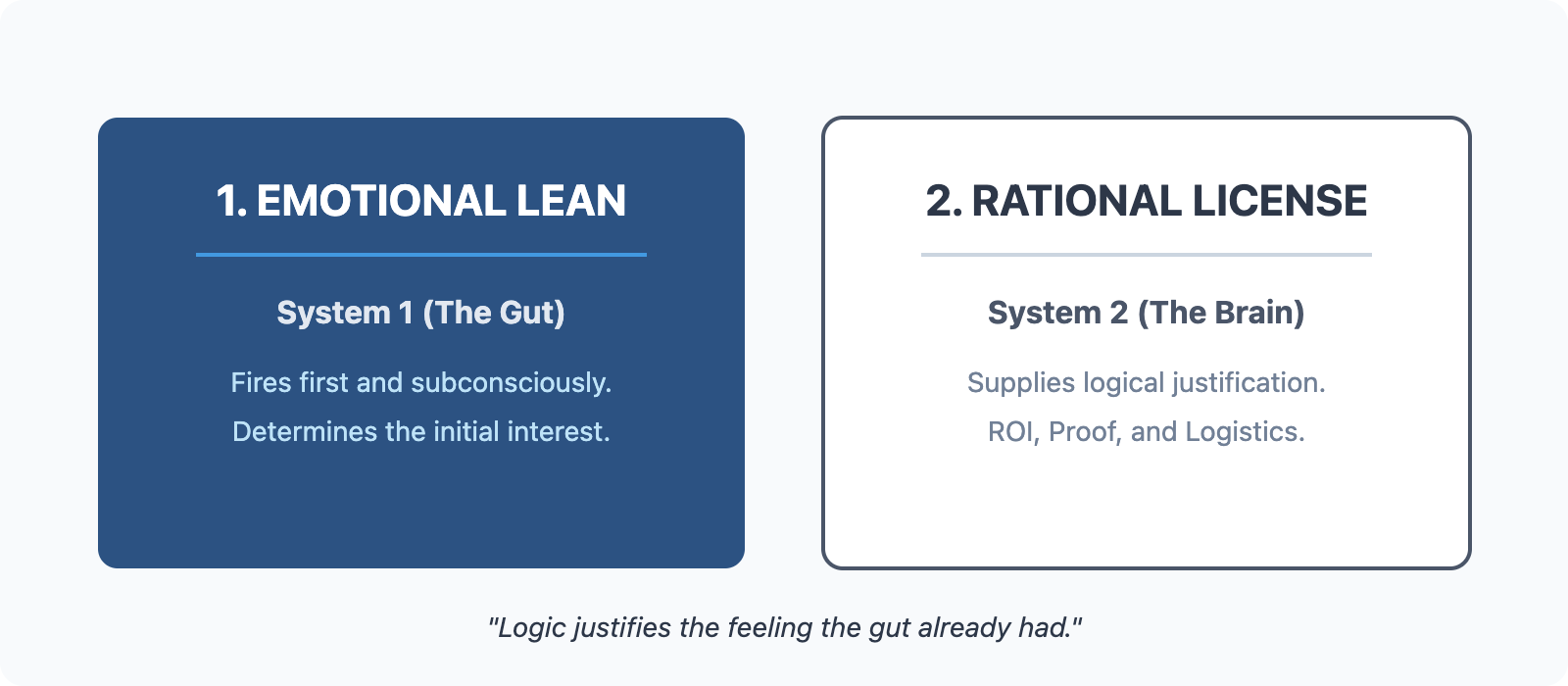
For a demand generation practitioner, the implication is blunt. When a buyer encounters your category, they feel something first (curiosity, anxiety, skepticism, relief) and then assemble the logic that supports that feeling. The ROI model, the vendor comparison, the security checklist: these are frequently post-hoc rationalizations of a lean the buyer's gut already had. Your logic doesn't create the lean. It licenses it.
- Natalie: The committee said they need clearer ROI before they'll move, so let's just add another cost-savings slide.
- Dan: Maybe. But they sat through the entire ROI webinar and still stalled. If numbers were the blocker, that deck would have closed them.
- Natalie: So the ROI ask isn't really about the numbers?
- Dan: It's the safe thing to say out loud. What they can't say is they're scared the rollout blows up and it's their name on it.
- Natalie: So more math won't move them. Proof it won't fail will.
Notice the stated rationale was real but incomplete; the emotion was quietly doing the steering.
Reading the Emotional Drivers Behind Stated Rationale
The skill here is diagnostic. Take the stated rationale seriously, but don't stop there. Look for a mismatch between what the buyer says they need and how they actually behave. When a committee that just consumed a thorough ROI case still insists "we need clearer ROI," the words point at economics while the behavior points at fear: fear of implementation failure, career risk, low confidence in internal capacity to execute.
The discipline is to tie each suspected emotional driver to an observable signal (engagement data, the questions they ask, where they go quiet) so you're interpreting evidence rather than projecting a story. Hold two truths at once: the rational requirement is genuine, and an emotion is shaping which requirement they choose to emphasize. Dismiss the ROI ask and you look tone-deaf; take it at face value and you keep feeding a hunger that was never really about numbers.
Reframing Content to Serve Both Emotion and Reason
Once you can see both layers, the mistake to avoid is choosing between them. Logic-first marketers pile on more proof; the "emotion matters" crowd drifts soft and vague. Neither works alone. The move is sequence: validate the emotion first so the buyer feels understood, then supply the rational proof that lets them defend the decision internally.
For the implementation-fear example, that means naming the risk openly ("most teams worry the rollout will stall halfway") and then answering it with concrete evidence: peer implementation timelines, a named support model, a phased go-live. The emotion opens the door; the evidence walks them through it. Strong demand content does both in a single breath, because the buyer needs permission to feel confident and ammunition to justify that confidence to their committee.
The takeaway to carry: buyers feel first and justify second, so your content has to earn the feeling before it can win the argument. Next you'll run a quick pattern-spotting check, sorting buyer statements into emotional drivers, rational analysis, or cases where emotion is quietly steering the stated rationale, which sharpens the eye you'll need for the deeper audit and live reframe that follow.
