When Your Boss is Terrible at Leading Meetings
When Your Boss Is Terrible at Leading Meetings 😵💫
The challenge of participating powerfully in meetings led by a boss who struggles with meeting management is both subtle and critical. As Paul Axtell explains in the HBR Guide to Making Every Meeting Matter, you don’t have to be a passive victim of ineffective meetings. Instead, you can become an active agent of positive change, regardless of your role.
There are three practical ways to do this: offer support to your boss before, during, or after meetings; make specific requests for what you need to be effective; and take responsibility for elevating the experience of other participants. This approach lets you address problems without blame, shifting the dynamic from criticism to collaboration. Even if your boss isn’t immediately receptive, these actions plant seeds for improvement and help create more productive, inclusive meetings for everyone.
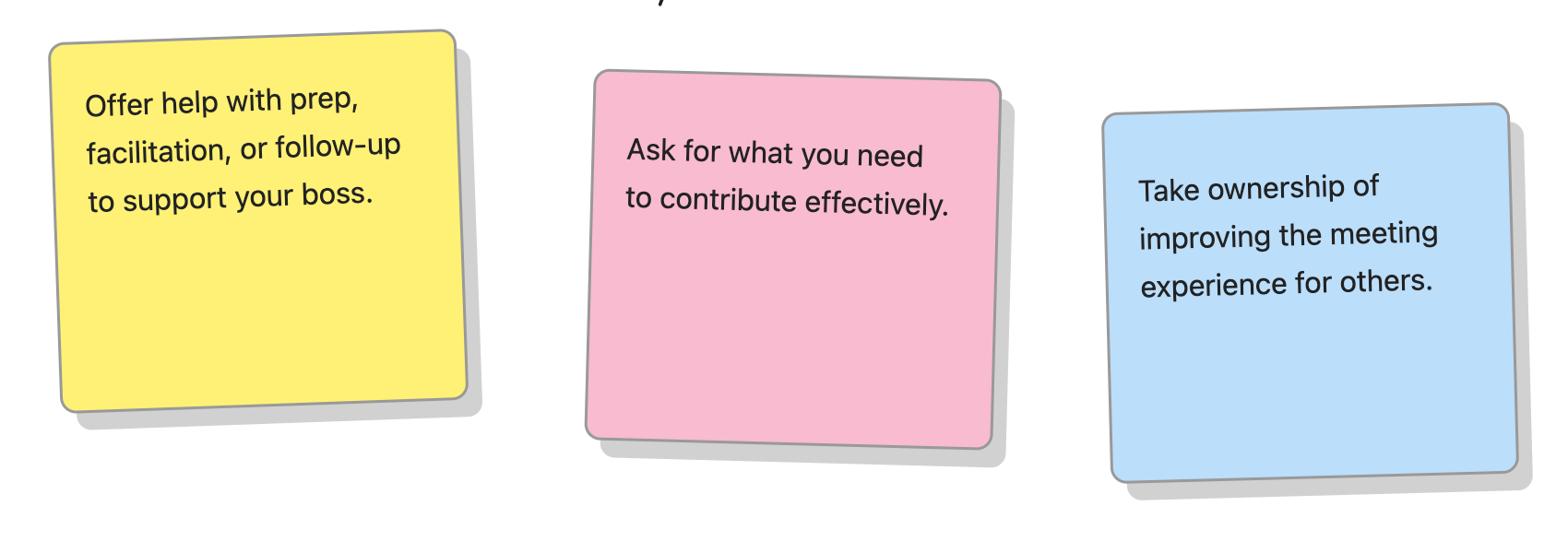
Offer Support and Request What You Need to Be Effective 🤝
When your boss struggles with meeting management, you can make meetings more effective by offering concrete support and making specific requests for what you need.
- Offer support by identifying what’s missing and volunteering to help, such as preparing draft agendas or tracking action items. For example: "Sipho, I’d be happy to collect agenda items from the team and prepare a draft for your review." This frames your help as an enhancement, not a criticism.
- You can also make specific, constructive requests: "For budget topics, I’d appreciate seeing the agenda ahead of time so I can prepare." Or, if discussions are unfocused: "Before we start, could you clarify what input you’re looking for and what outcome you want?" Always request clarity on next steps: "Could we confirm what actions will be taken and by when?"
Here’s how this supportive approach sounds in practice:
- Jessica: Nova, I noticed our last few meetings ran over time and some action items got lost in the shuffle. I was thinking about how we could make our meetings even more productive.
- Nova: Yeah, I've been swamped lately. It's hard to keep track of everything.
- Jessica: I completely understand. You're juggling so many priorities! What if I collected agenda items from the team beforehand and created a draft for you to review? That way you could focus on the strategic discussions.
- Nova: Hmm, I usually just cover what comes up...
- Jessica: Of course, and we'd still have flexibility for that. This would just give us a starting structure. I could also capture action items on the whiteboard during the meeting so nothing gets missed.
- Nova: Actually, that could be helpful. Let's try it for the next meeting and see how it goes.
- Jessica: Great! I'll send you a draft agenda by Thursday for Monday's meeting. And if it doesn't work well, we can always adjust or go back to the current approach.
Notice how Jessica frames her help as support, not criticism, and gives Nova an easy way to say yes or no. If your boss declines your offer, respond graciously: "No problem. If you change your mind, let me know. I just want to help." Even if your suggestions aren’t accepted right away, you’re planting seeds for improvement. The goal is to enhance team effectiveness, not to fix your boss. By combining support with clear requests, you help create meetings where everyone can contribute and succeed.
Elevate Others: Invite Quiet Voices & Track Commitments 🌟
We often enter meetings focused on ourselves, but shifting that focus to others is a simple and powerful way to add value and make a real impact.
There are several practical ways to elevate others in meetings:
| Action | Example Phrase | Intended Impact |
|---|---|---|
| Invite quiet voices | "I'd really like to hear Dani's perspective on this since they have the route analysis data." | Surfaces valuable insights from quieter members |
| Represent absent colleagues | "Spencer couldn't join us today, but she asked me to share her concern about the timeline impact on her team." | Ensures all perspectives are considered |
| Track commitments publicly | "Let me write that action item on the whiteboard so we all have it captured." | Increases accountability and shared understanding |
Start by observing who has not yet participated in the conversation and might have something valuable to contribute. Quieter team members often possess crucial insights but struggle to find openings in chaotic discussions. A simple invitation—like, "I'd really like to hear Dani's perspective on this since they have the route analysis data"—can unlock critical information that would otherwise remain unshared. Consider especially those who are affected by decisions but haven't voiced their concerns or ideas; these are often the people whose buy-in is most crucial for successful implementation.
Additionally, think about colleagues who might not be able to attend and would benefit from representation in the meeting. Before the meeting, reach out to absent colleagues and ask, "Is there anything you'd like me to bring up or any perspective you want represented?" This ensures important viewpoints aren't lost due to scheduling conflicts. During the meeting, you might say, "Spencer couldn't join us today, but she asked me to share her concern about the timeline impact on her team." This keeps absent stakeholders connected to the decision-making process and demonstrates your commitment to inclusive collaboration.
Another powerful way to elevate others' experience is to track commitments publicly during the meeting. When someone makes a commitment, write it on a whiteboard or flip chart visible to everyone. This serves multiple purposes: it validates the person making the commitment, creates accountability, and ensures everyone leaves with the same understanding of next steps. You're not taking over the meeting; you're providing a service that helps everyone succeed.
This perspective requires trusting your instincts—sincerity trumps all conversational skills. When you genuinely care about making meetings work better for everyone, that authenticity comes through, whether you’re helping overwhelmed colleagues or supporting group work. If your boss feels you’re overstepping, navigate carefully by saying, "I'm just trying to help capture everyone's valuable input so we can make the best decisions. I absolutely respect that you're leading this meeting, and I'm here to support you." The key is to acknowledge their authority while making it clear your actions serve the group’s interests, not your own agenda.
By elevating others' experiences, you create an environment where everyone can contribute their best thinking, regardless of your boss's meeting management skills. The ripple effects of this approach extend far beyond individual meetings, building a culture of mutual support and effective collaboration. In our upcoming practice tasks, you'll practice these supportive techniques in realistic scenarios. You'll learn to offer help without triggering defensiveness, request what you need diplomatically, and elevate quiet voices while managing potential confrontation with your boss. These practical exercises will prepare you to transform even the most chaotic meetings into productive working sessions.
