Profiling Customer Segments
Profiling the People Inside Your Segment
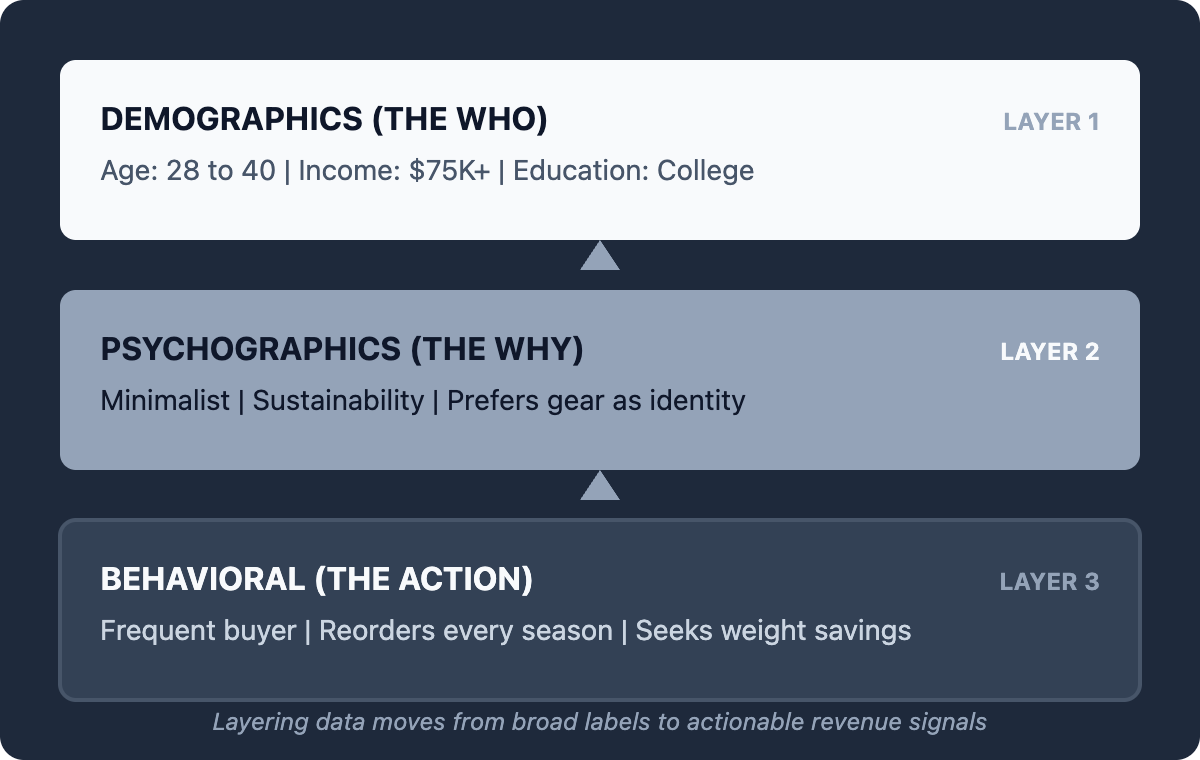
You've already done the hard work of picking a segment worth your budget. But "ultralight backpackers" or "first-time home cooks" is still a label, not a person you can write an ad to. To target, message, and spend with precision, you profile the people inside that segment using three layers of variables: demographic, psychographic, and behavioral. Each layer answers a different question, and each makes your targeting sharper than the last. Work them in order and you move from a vague group to a specific human your creative team can actually picture:
Demographics: Defining the Base Segment
Start with demographic variables: age, gender, income, and education. These are the observable facts about who someone is, and they're your base layer for one practical reason: they map directly onto the targeting filters you already use in ad platforms. When you set an audience to "25 to 34, college-educated, household income above $75K," you're acting on demographics.
The catch is that demographics tell you who but never why. Two 30-year-olds with the same income and degree can want completely opposite things. So treat this layer as a frame, not a finished picture. It narrows the field and gives you something measurable to build on, but if you stop here your messaging stays generic. Define the base, then keep going.
Psychographics: Deepening the Profile
The next layer, psychographic variables, covers attitudes, interests, opinions, and lifestyles. This is where you learn why your segment buys: what they value, how they see themselves, what they care about beyond your product category. Demographics might tell you a buyer is 32 and earns well; psychographics tell you she's minimalist by conviction, distrusts flashy brands, and plans her weekends around being outdoors. That difference turns a generic ad into one that feels written for her.
- Natalie: Our base audience is 28 to 40, urban, higher income. That's the targeting set.
- Ryan: Right, but that same profile fits both our buyers and people who'd never touch us.
- Natalie: So what separates them?
- Ryan: The ones who convert see gear as identity, not just function. They follow sustainability creators and resent overpackaged products.
- Natalie: Then that attitude is the hook, not the age band. We lead the creative with the values.
Notice how the demographic stayed the same, but the psychographic insight gave them something to actually say.
A word of discipline here: psychographics are easy to invent. "They probably value authenticity" is a guess dressed up as data. Anchor every attitude or lifestyle claim to real evidence (survey responses, social listening, interviews), not a flattering stereotype.
Behavior: Surfacing the Most Actionable Segments
The final layer, behavioral variables, is the most actionable because it's based on what people actually do rather than who they are or what they say. Three signals matter most. Usage patterns tell you how often and how intensely someone engages: a daily user and an occasional dabbler need different messages. Benefits sought tell you what job they hire your product to do, whether that's saving time, signaling status, or sheer reliability. And loyalty tells you whether they're repeat buyers worth retaining or brand-switchers you can win, each calling for a different play.
Behavior outranks the other layers for spend decisions because it correlates most tightly with revenue. Someone who already buys frequently and seeks a specific benefit is a far safer bet than someone who merely fits the demographic. When you layer behavior on top of demographics and psychographics, a broad segment collapses into a precise, fundable sub-segment: not "outdoor enthusiasts" but "frequent buyers who choose us for weight savings and reorder every season."
The takeaway is that profiling works in layers: demographics define who, psychographics explain why, and behavior reveals what they do and points most reliably to where you put budget. You'll practice each layer in turn, starting with a quick matching exercise to lock in the demographic signals, then a live conversation to layer on psychographics, and finally a written analysis to pin down the behavioral sub-segment. Next time someone hands you a flat demographic profile, make a habit of asking the two follow-ups that unlock it: why do they buy, and what do they actually do?
