Welcome to Leading with Emotional Intelligence! Drawing on insights from the HBR Guide to Emotional Intelligence and the work of leading experts like Amy Gallo, this course will equip you with practical strategies to lead with empathy, self-awareness, and resilience—even in the face of difficult behaviors.
In this lesson, you'll learn how to recognize passive-aggressive behavior, understand the underlying motivations, and respond in ways that protect your emotional well-being and maintain team productivity. You'll discover how to manage your own reactions, identify the root causes of challenging dynamics, and address issues constructively. These are skills that are essential for any emotionally intelligent leader.
Working with a passive-aggressive colleague can be one of the most frustrating challenges. These are the coworkers who might agree to something in a meeting but then act differently afterward, who avoid eye contact in the hallway, or who insist that "everything’s fine" even when their actions suggest otherwise. While everyone occasionally makes passive-aggressive remarks, ongoing patterns of this behavior can create a toxic environment that requires careful handling.
The first step in dealing with passive-aggressive behavior is to focus on your own reactions. When someone denies there’s a problem or suggests you’re overreacting, it’s natural to feel defensive or irritated. However, reacting emotionally often plays into the dynamic and can escalate the situation. Instead, take a moment to pause, stay calm, and choose a measured response. This approach allows you to maintain your professionalism and demonstrate emotional intelligence, even when faced with challenging behavior.
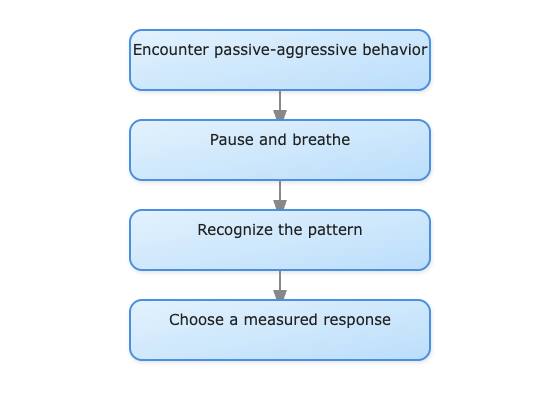
When someone talks over you in a meeting or sends a curt email, the most effective response is to pause before reacting. Take a deep breath, recognize the pattern for what it is, and choose a measured response rather than a reactive one. This approach not only maintains your professional credibility but also prevents the situation from escalating into unproductive conflict.
Protecting yourself emotionally and professionally requires systematic documentation and strategic communication. Start by tracking specific behaviors so you have concrete examples if needed—after all, it's hard to argue with facts. After meetings, send follow-up emails documenting agreements and next steps, ensuring clarity about responsibilities and deadlines. Copy others on important communications to create transparency and accountability. Additionally, avoid letting the passive-aggressive person speak for you or represent you in meetings where their behavior might undermine your message or relationships.
If you must work together with a passive-aggressive colleague, try to do it in a group setting where they're likely to be on better behavior due to social pressure. Make sure you're meeting your commitments and deadlines regardless of their behavior, so their actions can't undermine your performance. This combination of emotional regulation and practical safeguards creates a buffer between you and the passive-aggressive behavior while maintaining your professional standards.
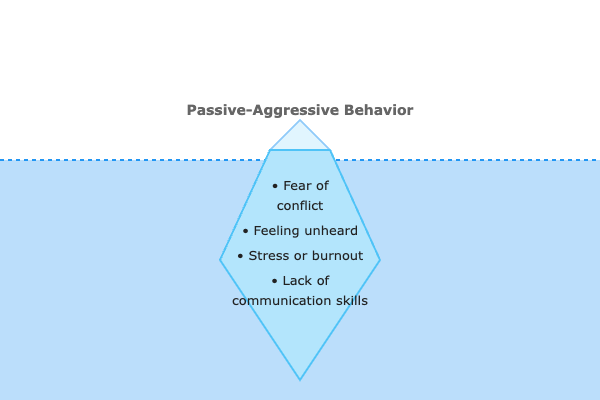
Before addressing the behavior directly, take time to understand what might be motivating it. People act passive-aggressively for various reasons that often have little to do with you personally. They might be afraid of conflict, feel overlooked for recognition, be overwhelmed by workload stress, or simply lack the communication skills to express disagreement directly. Understanding these potential triggers helps you respond more effectively and with greater empathy.

Try to look beyond the surface of passive-aggressive behavior and consider what message your colleague might be trying to communicate. Is there an underlying concern or disagreement that they don’t feel comfortable expressing openly? For example, they might think the current project approach isn’t working, or they may disagree with team goals but don’t feel safe sharing their perspective directly. By focusing on the possible business issue behind their behavior, rather than the way it’s delivered, you can move closer to resolving the real problem instead of just reacting to the symptoms.
It’s also important to reflect on your own role in the situation. Ask yourself if there’s anything you might be doing that contributes to the dynamic. Have you unintentionally made it difficult for others to speak up, or could your communication style be triggering defensive reactions? Sometimes, even well-intentioned leaders can send mixed signals or avoid uncomfortable topics, which can lead to misunderstandings or tension.
You don’t have to handle this situation on your own. Check in with trusted colleagues to get their perspective and see if they’ve noticed similar patterns. Approach these conversations thoughtfully, asking questions like, "How did you interpret Layan's comment in the meeting?" This helps you gather additional viewpoints without falling into gossip. By collecting input from others, you can better determine whether you’re dealing with an isolated incident or a recurring issue that needs to be addressed.
Once you've managed your own emotions and understood the underlying dynamics, you can address the situation constructively. Here are some key steps to follow:
- Focus on substance, not style: Pay attention to the actual concerns or ideas being raised, rather than how they are delivered.
- Use non-blaming language: Avoid accusatory or judgmental words. Instead, describe what you observed and how it impacts the team or project.
- Acknowledge valid points: If your colleague has made a good point, recognize it, even if it was delivered in a less-than-ideal way. For example, you might say, "You raised an important point in our last meeting. Here’s what I understood from your comments."
- Invite collaboration: Frame the conversation as a joint effort to solve a problem, rather than a confrontation. This helps shift the dynamic from opposition to partnership.
- Implement accountability strategies: Use clear documentation, meeting notes, and agreed-upon action items to ensure everyone is on the same page and responsible for their commitments.
By following these steps, you can help turn negative energy into productive dialogue and create a more positive, accountable team environment.
Here's how an effective conversation might unfold when addressing passive-aggressive behavior constructively:
- Simone: Marcus, I wanted to talk about the client presentation timeline. In Tuesday's meeting, I heard you mention you'd handle the market analysis section by Friday. Is that still the plan?
- Marcus: I never said I'd do the market analysis. That's not how I remember it at all.
- Simone: I appreciate you clarifying that. Maybe I misunderstood. What I'm concerned about is making sure we deliver a great presentation. The market analysis is critical. What approach do you think would work best to get it done?
- Marcus: Well, I think the whole timeline is unrealistic anyway. No one asked me if Friday was even possible.
- Simone: That's a valid point about the timeline. You're right that we should have discussed feasibility. What timeline would work better for you, and how can we ensure the client still gets what they need?
- Marcus: I could probably get it done by Monday if I had access to the latest research data.