The 90-Day Speaking Growth Plan
The 90-Day Speaking Growth Plan
In the previous unit, you practiced responding to crises in real time by delivering composed responses and controlling your vocal tone. In this unit, you will learn to build on those skills by creating a sustainable system to ensure your progress continues after the course ends. Confidence is developed through deliberate, repeated practice over weeks and months rather than in a single workshop. This 90-day plan helps you wire speaking practice into your daily rhythms using a Habit Loop and accountability systems. By committing to this structure, you transform high-intensity techniques into consistent professional habits.
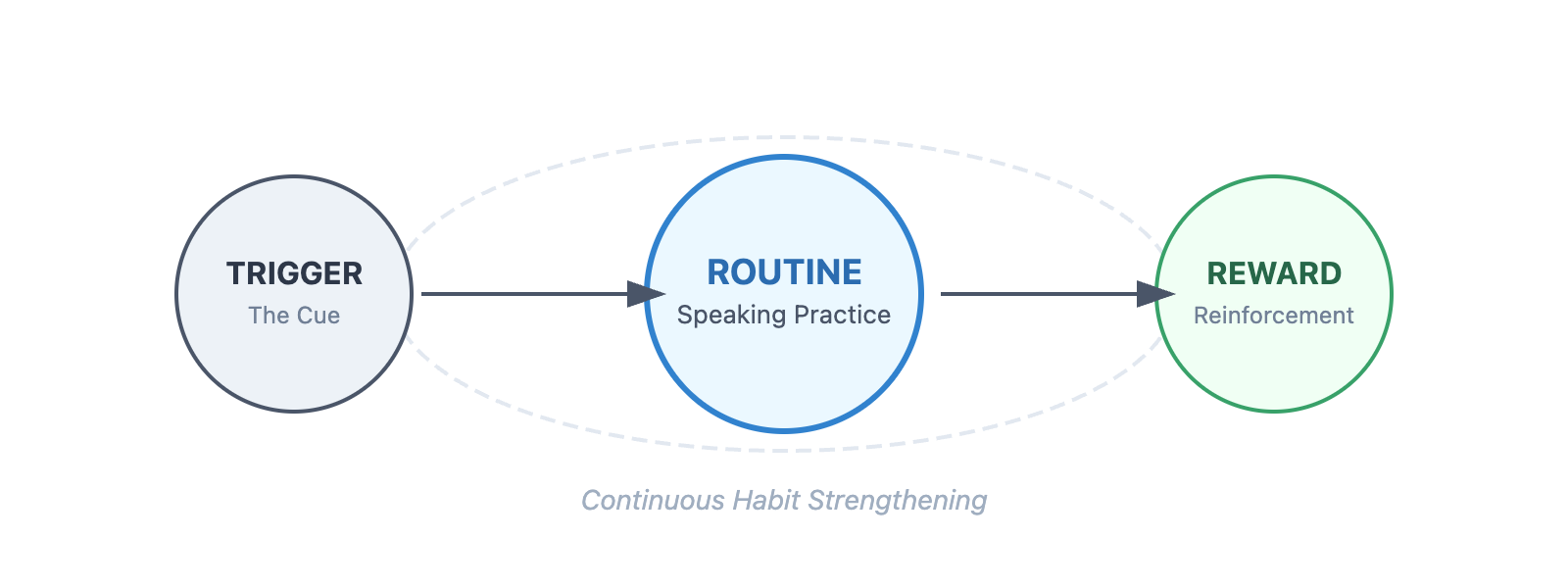
Confidence is built through deliberate, repeated practice over months rather than in a single workshop. The biggest obstacle to long-term growth is consistency rather than a lack of knowledge. You can overcome this by engineering a Habit Loop consisting of a Trigger, a Routine, and a Reward. A Trigger is an existing event that serves as a cue, while the Routine is the specific behavior you attach to it. Finally, a Reward provides the positive reinforcement needed to make the habit stick over time.
Setting Weekly Micro-Goals for Speaking Opportunities
Weekly micro-goals are small challenges that push you slightly beyond your current comfort zone. The most effective goals make you a little nervous but remain achievable, such as asking a specific question in a meeting. Every presentation or update is an opportunity to be intentional about your communication instead of operating on autopilot. A useful structure is to set your goal every Monday and review your progress every Friday. This rhythm creates a built-in feedback cycle that keeps you learning from your own daily experiences.
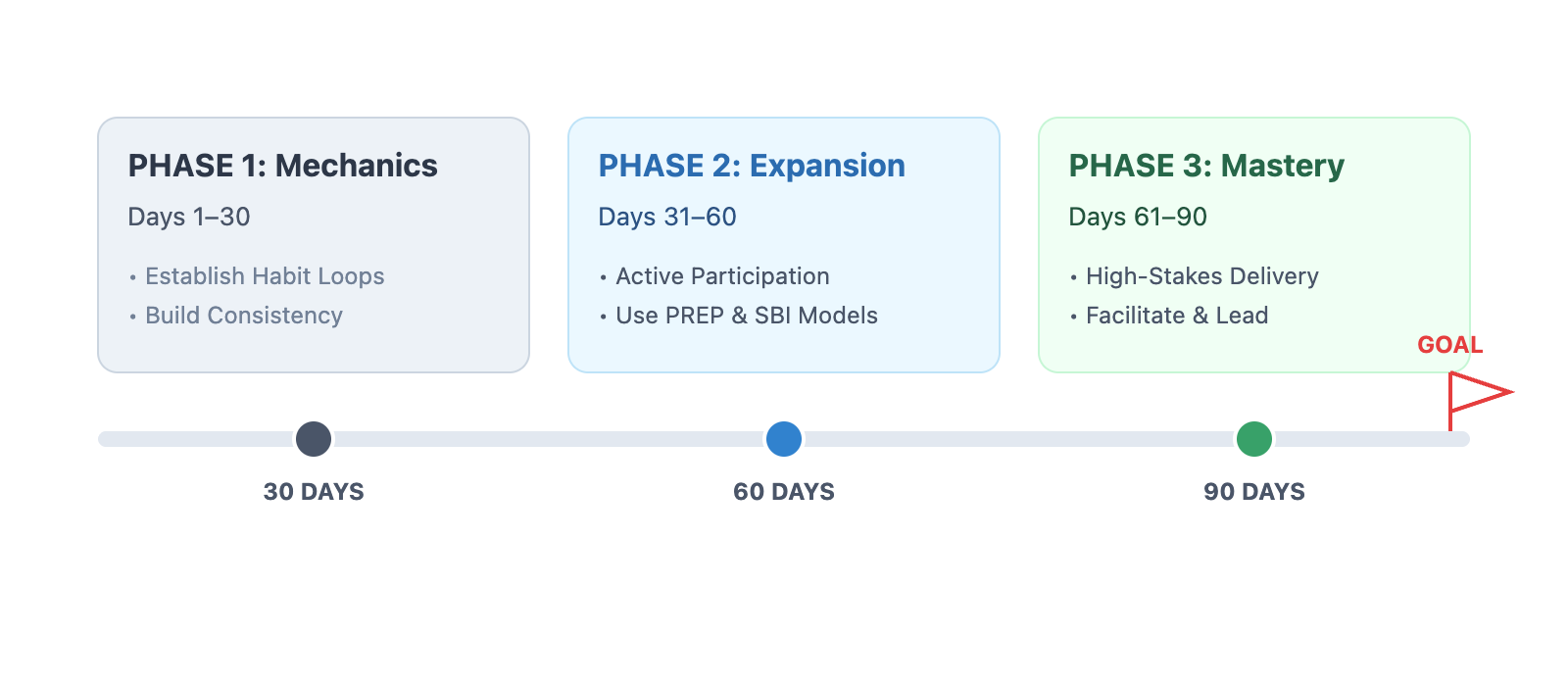
The 90-day plan is structured into three distinct phases of expansion to ensure steady progress. The first 30 days focus on internal mechanics and establishing your Habit Loop to build a foundation of consistency. During days 31 through 60, you expand into active participation by applying frameworks like PREP or SBI in low-stakes meetings. The final 30 days shift toward mastery, where you take on higher-stakes opportunities such as leading presentations or facilitating brainstorms. This phased approach prevents burnout while ensuring your comfort zone steadily grows.
Here is what a Monday check-in between two colleagues using this system might sound like:
- Natalie: So what is your micro-goal for this week?
- Ryan: I want to practice signposting during Wednesday’s project review. Last week I noticed people zoning out, so I am going to use clear transitions like "First" and "More importantly" to see if it holds their attention.
- Natalie: That is specific. I like it. Mine is to actually pause after asking a question in my one-on-ones instead of jumping in to fill the silence.
- Ryan: That is a tough one. How will you know if it worked?
- Natalie: If my colleagues start giving me longer, more thoughtful answers instead of just agreeing with whatever I say. I will jot down what I notice on Friday and we can compare notes.
- Ryan: Deal. Friday check-in, same time.
Notice how both colleagues chose a single, specific behavior tied to a real event on their calendar. They named what they would do, when they would do it, and how they would evaluate the result. Equally important, they committed to reporting back to each other, which leads directly into the final piece of the 90-day plan.
Building an Accountability System for Long-Term Mastery
An accountability system provides the external structure needed to keep you on track when internal discipline falters. The most effective method is finding an accountability partner to whom you can report your weekly goals and results. Beyond a partner, you should build in milestone checkpoints at the 30, 60, and 90-day marks to assess your trajectory. These checkpoints prevent the illusion of growth and force you to gather evidence of your actual progress. Finally, attach a meaningful reward to your 90-day milestone to associate long-term discipline with positive outcomes.
Up next, you will step into a role-play where you articulate your personal 90-day growth plan aloud, explaining your goals, your structure, and how you will measure success. This is your chance to practice the very skill this unit is about: casting a clear, compelling vision for your own development and holding yourself to it.
