Understand Boundary, Surface, and Space
Introduction 🎉
Welcome to Foundations of Geometric Measurement! This is the very first lesson of the course, so you are right at the starting line. Throughout this course, you will explore how to measure shapes and objects in ways that are practical and useful in everyday life.
In this lesson, you will learn to:
- Describe perimeter, area, and volume in plain language by connecting each measurement to its physical meaning: boundary, surface coverage, or filled space.
- Recognize when each measurement matters by matching real-world situations to perimeter, area, or volume.
- Explain your choice clearly so you can look at a situation and say whether it involves going around an edge, covering a surface, or filling a space.
3️⃣ Three Questions, Three Measurements
Imagine you are looking at a raised garden bed in a backyard. Depending on what you need to do, you might ask very different questions about it:
- How far is it around the edge? Maybe you want to add a decorative wood trim or a small fence around the border.
- How much surface does it cover? Maybe you want to know how much weed-control fabric you need to lay across the top.
- How much space is inside? Maybe you are checking how many bags of soil it will take to fill it up.
Each question points to a different kind of measurement. The first asks about a boundary, the second about a surface, and the third about an enclosed space. These three types of measurement are the foundation of this entire course, so let's look at each one closely.
🖼️ Perimeter: The Distance Around
Perimeter is the total distance around the boundary of a flat (two-dimensional) shape. Think of it as the length of the "fence" that surrounds a region.
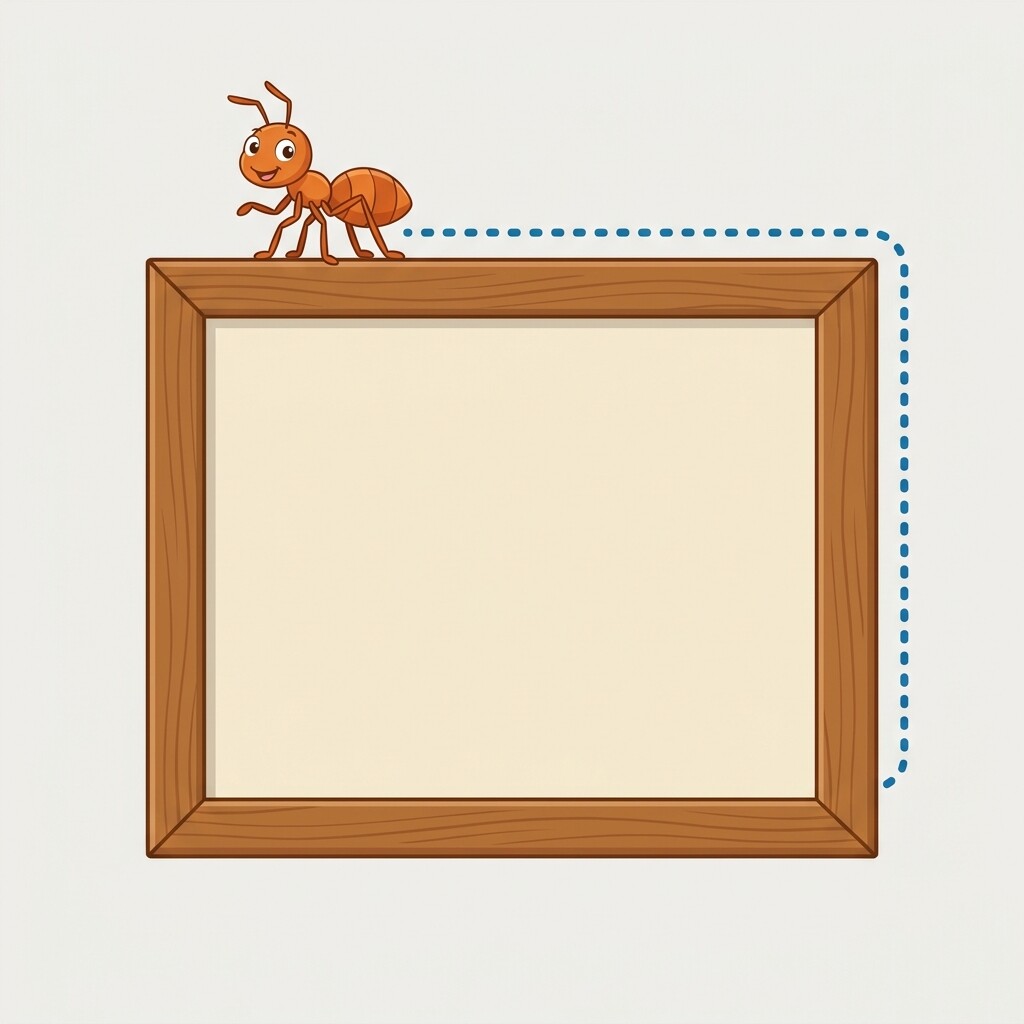
A helpful way to picture this: imagine an ant walking along the exact edge of a picture frame. The total distance the ant travels to get all the way back to where it started is the perimeter. It does not matter what is inside the frame — perimeter only cares about the outer edge.
Here are a few everyday situations where perimeter is exactly what you need:
- Installing a fence around a backyard
- Sewing lace trim around the border of a tablecloth
- Measuring how much baseboard to buy for a room
Notice that in every case, you are measuring a boundary or an outline. If the task involves going around something, perimeter is the right measurement.
🟦 Area: The Surface Covered
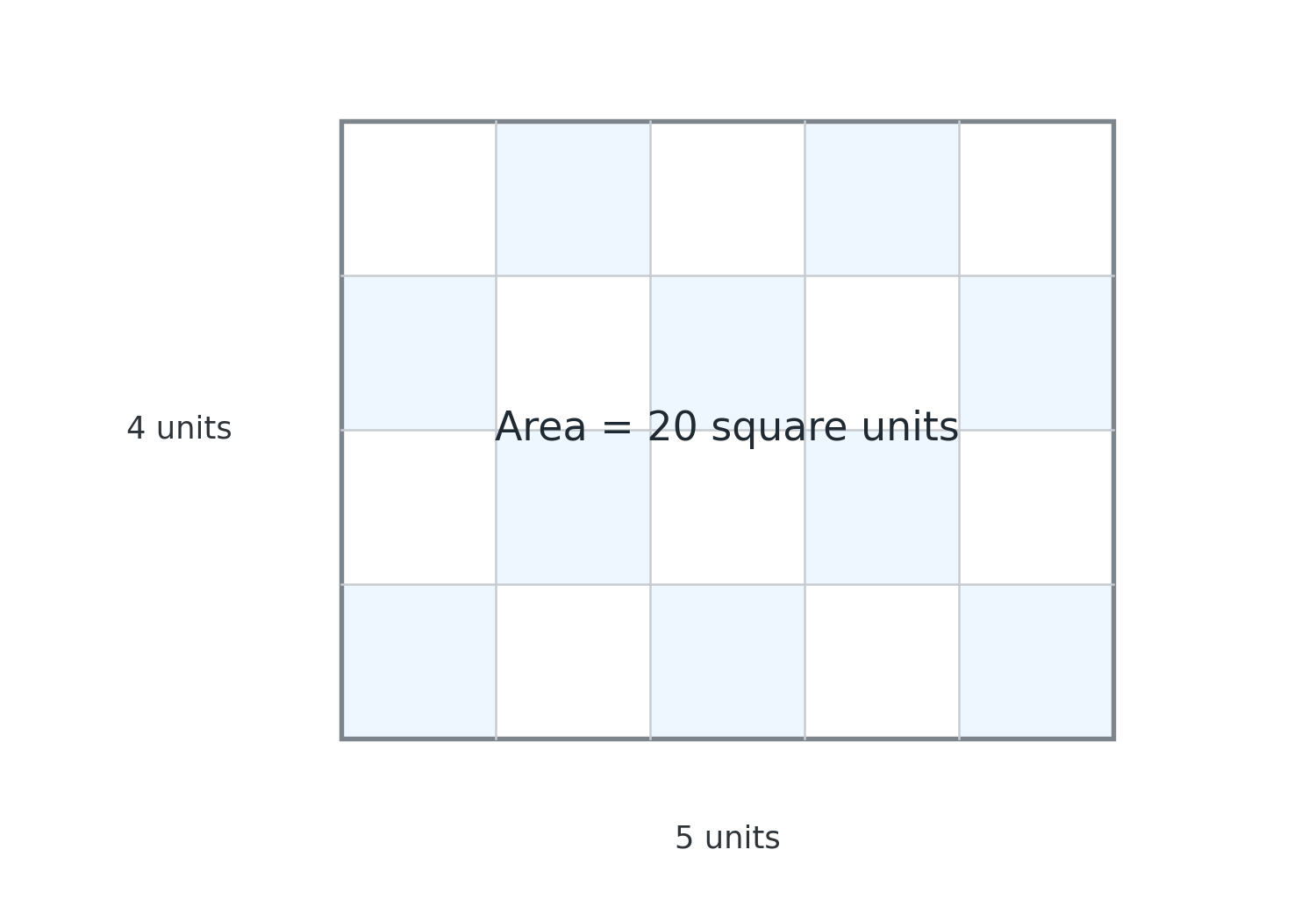
Area measures how much flat surface a shape covers. Instead of tracing the edge, we now care about everything inside that edge.
Picture laying tiles on a bathroom floor. You are not walking the border of the room — you are covering the entire floor surface. The amount of surface those tiles need to cover is the area. Area applies to any flat surface, whether it is a wall, a piece of fabric, or a sports field.
Some real-world tasks that depend on area:
- Painting a bedroom wall
- Buying enough carpet for a living room
- Spreading fertilizer across a lawn
The common thread is coverage. Whenever a task involves covering or coating a surface, area is the measurement that matters.
🧊 Volume: The Space Filled
Volume takes us from flat surfaces into the three-dimensional world. It measures how much space an object occupies or can hold inside.
Think about filling a fish tank with water. You are no longer concerned with the edges or the glass surfaces — you care about the space inside the tank. That internal capacity is the volume. Any time you deal with filling, packing, or storing, volume is the measurement to reach for.
Common situations involving volume include:
- Filling a swimming pool with water
- Determining how much gas a fuel tank can hold
- Checking whether a moving box is big enough for your books
The key idea is filled space. If something is being filled up or packed in, you are thinking about volume.
🤔 Boundary, Coverage, or Capacity?
With all three measurements in view, a quick side-by-side comparison helps keep them straight:
| Measurement | What It Describes | Physical Idea | Everyday Example |
|---|---|---|---|
| Perimeter | Distance around a flat shape | Boundary / outline | Fencing a yard |
| Area | Surface a flat shape covers | Coverage / coating | Painting a wall |
| Volume | Space inside a 3D object | Capacity / filling | Filling a fish tank |
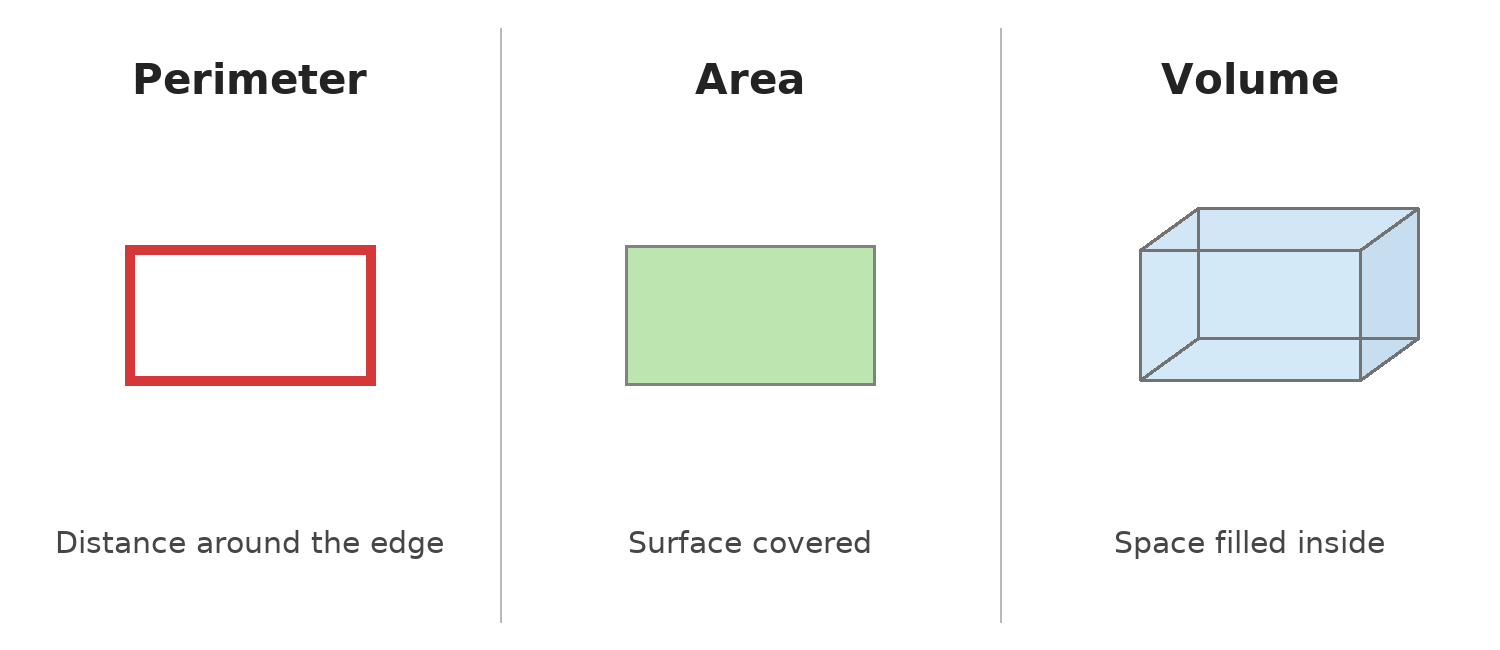
When you face a measurement question in real life, a simple test works well. Ask yourself: Am I going around the edge, covering a surface, or filling a space? That one question will almost always point you to the right measurement type.
Consider a gift box as an example. Wrapping a ribbon around the lid is a perimeter task because you follow the edge. Wrapping paper that covers the top of the box is an area task because you cover the surface. Filling that same box with packing peanuts is a volume task because you fill the space inside. One object involves three different measurements. Each one answers a different question.
Conclusion and Next Steps
In this lesson, you built a solid mental picture of the three fundamental types of geometric measurement. Perimeter tracks the distance around a boundary, area captures how much surface is covered, and volume tells us how much space is filled. Recognizing which type of measurement a situation requires is the first and most important step before any formula or calculation comes into play.
Up next, you will put these ideas into action with a set of hands-on practice activities. You will sort real-world scenarios by measurement type, explore shapes visually, and explain your reasoning in your own words. Let's see how sharp that new intuition already is!
