Display and Native Formats
Utilizing Display and Native Formats
Search caught intent; social bought audiences. Display and native run earlier still: they put your brand in front of people who aren't searching and may not follow you yet. That means most of this inventory earns its keep at the top of the funnel, building recognition and reach, then quietly re-engaging the people who almost converted. The move in this unit is to stop judging these formats by first-click sales and start matching each one to the funnel job it actually does.
Sorting Display and Native Formats by Funnel Purpose
Four formats, four jobs. A standard display (banner) ad is a static image unit that runs cheaply across the Display Network for broad reach; its job is top-of-funnel awareness, not the click. Rich media adds interactivity: video, expandable panels, animation, elements a viewer can play with. It costs more to produce but grabs attention and drives engagement, so it fits awareness-into-consideration when you need impact.
Responsive display hands the platform a set of headlines, images, and descriptions and lets it auto-assemble the best combination for each placement; its value is scale and efficiency, covering many slots without hand-building every size. Native ads match the look and feel of the surrounding editorial content, so they read as part of the page rather than an interruption. That blend makes them strong for discovery and gives them lower ad fatigue, which suits consideration and sustained top-of-funnel presence.
Notice the through-line: none of these are built to close a sale on impression one. You choose among them by how much attention you need, how much you can spend on production, and how much you value blending in versus standing out.
How Display and Remarketing Build Awareness and Re-Engage
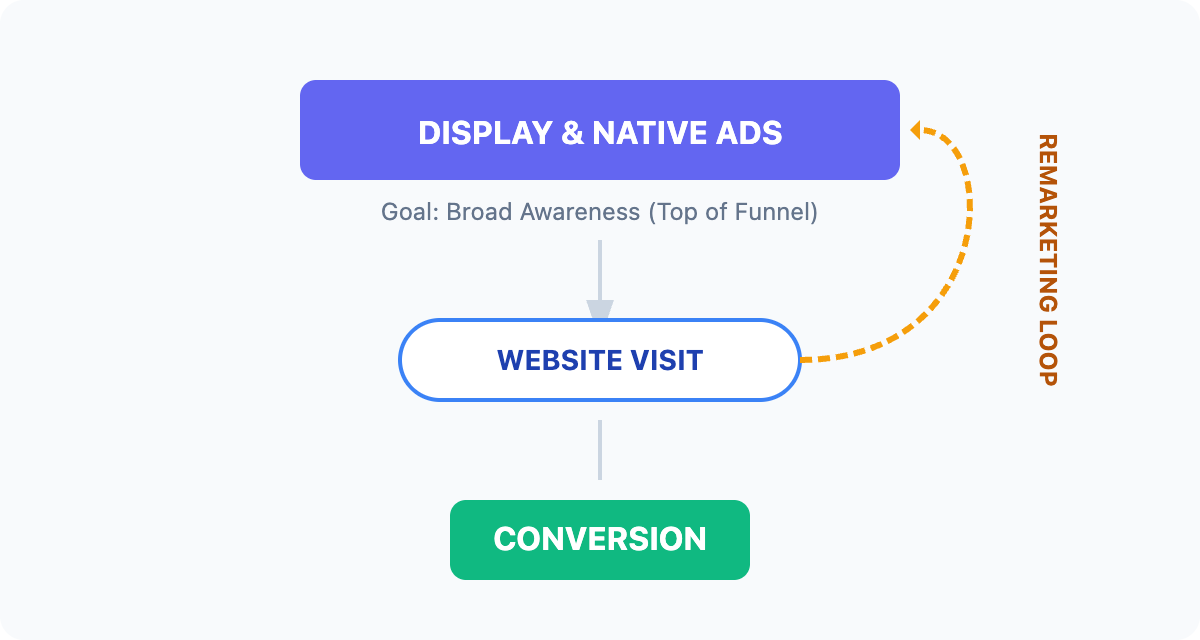
Here's the engine that makes the spend pay off. Display's first job is pure awareness: reaching a wide, cold audience who've never heard of the brand and planting the name. Those impressions rarely convert on their own, and they aren't meant to. The return shows up later, when remarketing (also called retargeting) follows the people who visited your site but left without buying, serving them tailored reminders until enough of them come back to convert.
- Chris: I keep hearing display gets terrible click-through. Why run it at all?
- Jessica: Because you're not buying clicks there, you're buying awareness. Display puts your brand in front of people who've never heard of you.
- Chris: But they don't buy off that first banner.
- Jessica: Right, and they're not supposed to. That impression plants the name; then remarketing chases the ones who visited and didn't convert, nudging them back until they do.
- Chris: So the top-of-funnel ad seeds it, and remarketing closes the loop.
Watch how Jessica reframes the metric: display is measured by reach and recall, not first-click sales, while remarketing carries the conversion weight against a warm audience.
Choosing Formats and Placements for Awareness
When the objective is brand awareness, the real decision is usually native versus rich media, and each buys you something different. Native trades spectacle for fit: it blends into feeds and articles, resists fatigue, and scales cheaply, which makes it a workhorse for reaching people in discovery mode. Rich media trades reach efficiency for impact: it's interactive and memorable, ideal when you need the brand to actually stick, but it costs more to build. Placement follows the same logic. Put native where your audience already reads and scrolls, and reserve rich media for high-visibility spots where the extra production earns its attention. A sound awareness plan often pairs the two, leaning on native for efficient reach and deploying a sharper rich-media unit where it counts.
The one idea to carry out of this unit: display and native are funnel-first formats, so you pick them by the job (awareness, discovery, or re-engagement) rather than by the immediate click. Next you'll run a quick sorting exercise matching each format to its definition and funnel purpose. Before you do, try the habit that anchors all of it: for any format on the table, ask "which funnel stage is this for?" and let the answer pick the format.
