Engaging Digital Audiences
Engaging Audiences across Social, Email, and Content
You've captured intent through search and paid ads. Now you'll keep audiences engaged across the three channels that build relationships over time: social, email, and content. The common mistake is to lead with the tactic ("let's start a TikTok") instead of the goal. Throughout this unit, you'll reverse that order every time: start with the objective or the journey stage, then pick the channel that serves it.
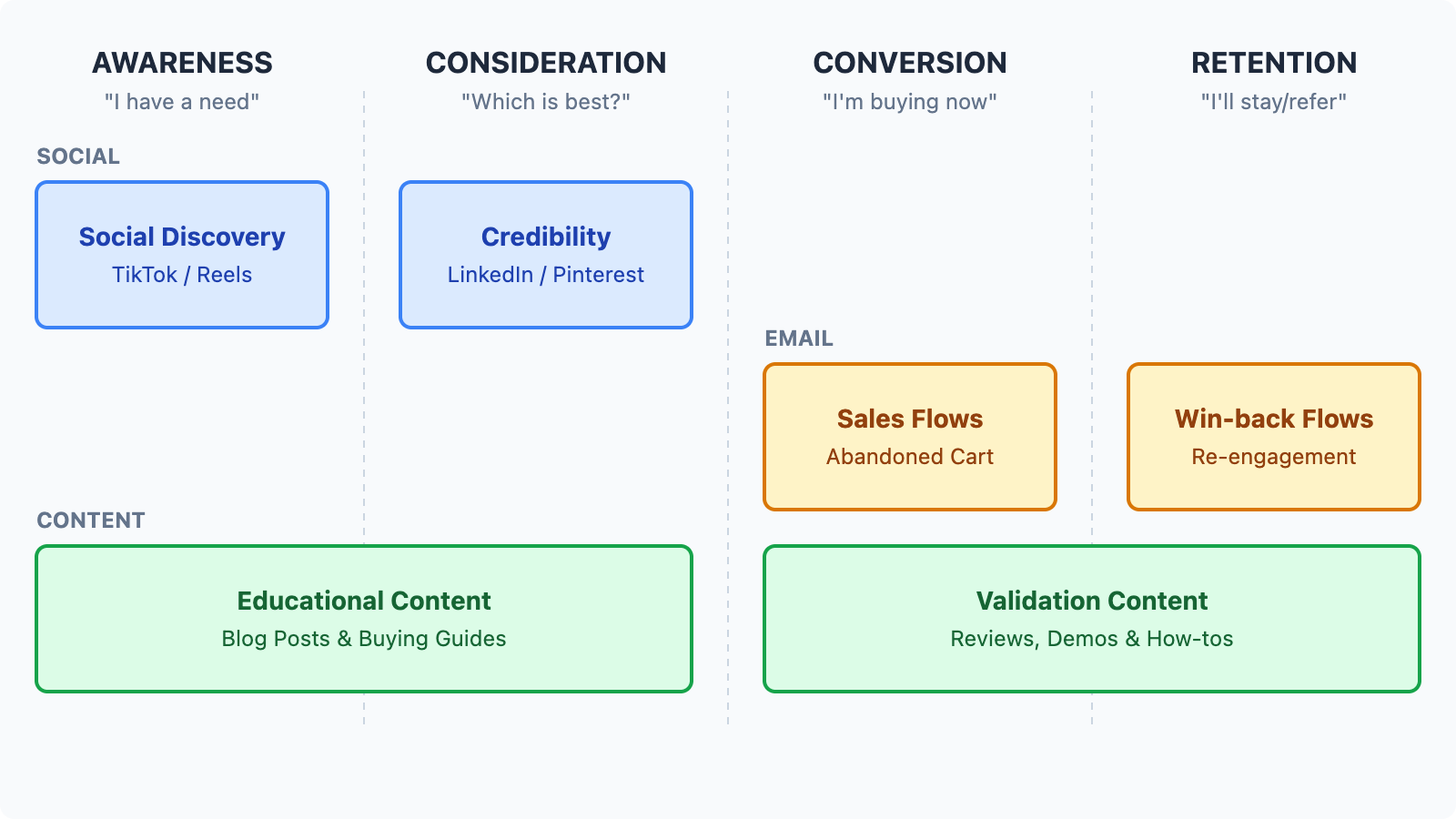
Match the platform to objective, not trend
The first move with social is to name the objective before you name the platform, because each platform rewards a different behavior. If your objective is broad awareness and discovery, short-form video platforms push your content to people who don't follow you yet. If it's visual product inspiration, Instagram and Pinterest do the heavy lifting. If it's B2B credibility and thought leadership, LinkedIn is where that audience already is. And if it's real-time conversation or customer service, a fast-moving feed like X fits better than a polished gallery.
- Chris: Everyone's saying we should be on TikTok. Should we jump on it?
- Nova: Depends on the objective. What are we trying to do this quarter, build awareness or convert people who already follow us?
- Chris: Mostly reach new people who've never heard of us.
- Nova: Then short-form video makes sense, because the algorithm pushes discovery. But if the goal were nurturing warm leads, email would beat any platform.
- Chris: So the objective picks the channel, not the trend.
Notice how Nova refuses to answer until the objective is clear. That single habit stops you from spreading thin budget across every channel.
Build email flows that trigger themselves
Email is where you turn one-time buyers into repeat customers, and the discipline is to think in flows, not broadcasts. A broadcast is a one-off send to your whole list; a flow is an automated sequence triggered by a specific customer action. The Email Marketing Uses worth designing around are nurturing, conversion, and retention, all powered by automation to build lasting subscriber relationships.
Three flows cover most needs. A welcome and nurture flow fires when someone subscribes, introducing your brand and delivering value before you ask for a sale. A conversion flow fires when intent is high (an abandoned cart, a viewed pricing page) and nudges the first or next purchase. A win-back flow fires when a subscriber goes quiet, re-engaging them before they're lost. Define each one by its trigger, its purpose, and its goal, and the system does the work while you sleep.
Develop content that delivers value at every journey stage
Content is the fuel that feeds both social and email, and the test of good content is whether it delivers value at the stage the customer is actually in. Map each piece to the journey: awareness content like blog posts and short videos attracts strangers, consideration content like buying guides and comparisons helps evaluators decide, conversion content like demos and reviews removes last-minute doubt, and retention or advocacy content like how-to tips and loyalty perks keeps customers and turns them into referrers. Plan content once and let it travel: a single buying guide can headline a social post and anchor a nurture email, so the channels reinforce each other instead of competing for output.
The thread across all three channels is identical: lead with the objective or journey stage, then choose the channel. Carry that habit into what comes next. You'll start with a quick self-check matching platforms to objectives, then draft an email flow plan you could hand straight to a developer, and finish in a live planning session building a content slate that feeds those flows. Try the objective-first move the moment someone pitches you a shiny new platform.
