Are You Sure You Show Respect?
Demonstrate Respectful Leadership 🤝
Respect is the foundation of effective leadership—yet many leaders struggle to demonstrate it consistently. Building on your expanded emotional vocabulary from the previous lesson, you'll now discover how to ensure you're truly showing respect in your daily interactions. This lesson draws from Christine Porath's research from the HBR Guide to Emotional Intelligence, which reveals a striking truth: being treated with respect matters more to employees than recognition, appreciation, or even opportunities for growth. When leaders demonstrate genuine respect, they enhance their influence, improve performance, and create environments where people thrive. The challenge is that even well-intentioned leaders often have blind spots about how their behavior impacts others.
Fortunately, showing respect is a skill you can develop systematically. Through focused feedback, honest self-assessment, and deliberate practice, you can become more aware of how you come across to others and make meaningful adjustments that strengthen every professional relationship.
Gather Feedback and Enlist Support 🗳️
Start by discovering when you're at your respectful best. Rather than jumping straight to what needs fixing, begin by understanding what you already do well. Reach out to about ten people—a mix of coworkers, friends, and family members—and ask them for specific positive examples of when they've seen you treat people particularly well. After you've collected this feedback, identify patterns by creating a table with columns for common themes, specific examples, and your personal reflections, like the one below:
| Common Themes | Specific Examples | Personal Reflections |
|---|---|---|
| Makes eye contact | "You always look at me when I speak." | I feel most present in 1:1s. |
| Remembers personal details | "You asked about my son's recital." | I do this naturally with my team. |
| Listens without interrupting | "You let me finish my thoughts." | I’m better at this in the mornings. |
You might notice that people consistently mention how you always make eye contact or remember personal details about team members. Some leaders find they're naturally more respectful in one-on-one conversations but less so in group settings, while others realize they show more respect when they're well-rested or working on projects they're passionate about. These insights become your foundation, highlighting the behaviors to reinforce and the situations where you naturally excel.
Once you understand your strengths, it's time to face the harder truth about your blind spots. Identify two or three trusted colleagues who genuinely want you to succeed and will provide honest, direct feedback. Ask them specifically: "What do I do that might make people feel less respected? What could I do better?" Then listen without defending yourself. You might hear uncomfortable truths, such as checking your phone during conversations or interrupting people when you get excited about an idea. These insights, though difficult to hear, are invaluable for your growth. To encourage honest feedback, you can institute an anonymous comment box, maintain a genuine open-door policy, or offer incentives for the most insightful critiques.
The next crucial step is enlisting your team to help hold you accountable for change. Choose one specific behavior to work on and share it openly with your team. For example, Yu, a leader who discovered they often interrupted and dominated discussions, announced in the next meeting: "I'm working on listening better without interrupting. After our meetings, I'd appreciate your feedback on whether you saw improvement." This transparency created a culture of mutual development where everyone felt safe working on their growth areas.
When you discover a shortcoming, craft a clear commitment and communicate it to your team. Here's how this conversation might unfold in a real team meeting:
- Jessica: I wanted to talk with all of you about something I've been reflecting on. Based on feedback I've received, I've realized I tend to jump in too quickly with my opinions during our discussions.
- Ryan: I appreciate you bringing this up. Sometimes it does feel like we don't get to fully explore ideas before moving on.
- Jessica: That's exactly what I want to change. From now on, I'm committing to waiting until at least three people have shared their thoughts before I weigh in. But I need your help.
- Chris: How can we help?
- Jessica: Call me out if you see me reverting to old habits. Maybe we could have a signal—like tapping the table—if I start jumping in too soon?
- Chris: I like that idea.
- Ryan: That sounds like a good idea to me. And we can check back in after meetings to see if we think it's working.
Notice how Jessica demonstrates vulnerability while maintaining her leadership presence. She acknowledges the specific behavior, commits to a concrete change, and invites the team to be partners in her development. This approach transforms potential criticism into collaborative growth.
Work With a Coach and Make Time for Reflection 🪞
Lasting change requires both external guidance and internal reflection. A skilled coach brings objectivity that self-assessment alone cannot provide. They can uncover subtle behaviors you might miss—such as defensive body language when challenged or a dismissive tone when stressed. Coaches can shadow you in meetings, interview your colleagues, and help you understand the underlying assumptions and experiences that drive uncivil behavior. More importantly, they help you develop specific strategies tailored to your unique challenges and organizational context.
Even without a formal coach, you can build profound self-awareness through regular reflection and journaling. Consider Indu, a leader who discovered through daily journaling that they became noticeably more curt in late afternoons. Starting their day at 5:00 a.m. meant they were emotionally depleted by 3:00 p.m., leading to brusque conversations and terse emails. Once they recognized this pattern, they began strategically scheduling their day, saving sensitive conversations for mornings when they had more emotional resources.
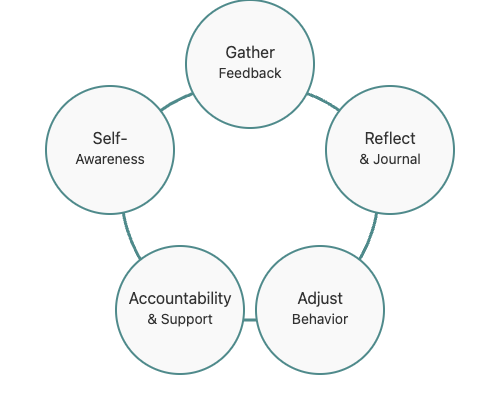
To deepen your self-awareness, consider conducting an energy audit throughout your day. Track not just what you do, but how you feel and how you treat others at different times. You might notice you're less patient before lunch, more dismissive when multitasking, or less respectful when dealing with certain topics or people. These insights allow you to structure your day strategically, scheduling difficult conversations when you're at your best and building in recovery time when you know you'll need it. By making reflection a regular practice, you can transform random experiences into deliberate learning opportunities that compound over time.
By gathering feedback, facing your shortcomings, and reflecting regularly, you build a strong foundation for respectful leadership. Small acts of respect can have a big impact across your organization. In the next practice sessions, you’ll apply these skills through interactive scenarios and develop real strategies for showing genuine respect in action.
