Overcoming Team Challenges
See Challenges as Team Problems, Not Personal Failures 🧩
Every team faces obstacles. Projects get delayed, mistakes happen, or something unexpected pops up. What matters most is how the team reacts. Instead of blaming one person, strong teams see problems as something everyone can help solve.
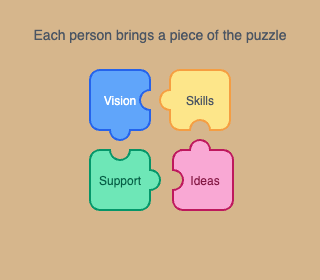
For example, if your team misses a deadline, instead of saying, “It’s Al’s fault for being slow,” you could say, “We didn’t finish on time. What can we do together to get back on track?” This way, no one feels singled out, and everyone can help find a solution.
When you talk about problems, try to use “we” instead of “you” or “they.” For example:
- Instead of: “You didn’t share the details.”
- Try: “We have a gap in our information. How can we fix it together?”
This small change makes it easier for everyone to speak up, share ideas, and work as a team. When you treat problems as something the whole team can work on, everyone feels safer to be honest and ask for help. People are more likely to share what’s really going on and come up with creative ideas together. This doesn’t mean no one is responsible—it just means that, because team projects are connected, most problems have more than one cause and need everyone’s help to fix.
🧠 Brainstorm Solutions Together
Once you agree that a problem is a team issue, the next step is to come up with ideas together. Brainstorming as a group helps you find better solutions, because everyone brings a different point of view.
Start by clearly stating what the problem is, like, “We’re falling behind on one of our key tasks.” Then, invite everyone to share ideas, no matter how simple or unusual they seem. You can go around the group and let each person share, or write ideas down and discuss them together.
Here’s how a brainstorming session might sound:
- Milo: We’re getting behind on answering emails. What ideas do we have to fix this?
- Victoria: Maybe we can set up a daily schedule so everyone takes turns checking the inbox.
- Jake: Or we could make a list of common replies to save time.
- Milo: Good ideas! Let’s try both—Victoria, can you start the list, and Jake, can you set up the schedule?
This example shows how a team can quickly generate solutions by working together and making sure each action has a clear owner. When everyone is involved, it’s easier to move forward and solve problems as a group.
After you have some ideas, choose one or two that seem most helpful and decide to try them out. It’s important to make sure each action has a specific person responsible and a clear deadline. For example, instead of saying, “Someone should make the reply list,” say, “Victoria will make the reply list by Friday.” This way, everyone knows exactly who is doing what and by when, which helps prevent confusion or tasks being forgotten. Assigning clear owners and deadlines also makes it easier to check in on progress and offer support if needed. Avoid vague statements like, “We should do this,” because when it’s not clear who is responsible, things often don’t get done. Being specific helps the team stay organized and accountable.
Keep Team Spirit Strong During Tough Times 🌈
When things get tough, keeping the team’s trust and motivation strong is key. Start by being honest about the situation, but also express confidence in the team’s ability to handle it. For example, you might say, “This is a tough situation, but I know we can figure it out together.”
Next, help the team focus by breaking big problems into smaller, manageable steps. This makes progress easier to see and keeps everyone from feeling overwhelmed. Celebrate small wins along the way, such as, “Great job getting the reply list done. That’s going to help a lot!” Recognizing these achievements helps everyone feel positive about moving forward, even if the overall problem isn’t solved yet.
Throughout the process, use language that reinforces teamwork, like, “Let’s work on this as a team,” or, “What can we try next?” If you notice someone is struggling, offer support directly: “I see you have a lot on your plate. How can I support you?” By staying honest, breaking down challenges, celebrating progress, and supporting each other, your team will stay connected and resilient during tough times.
Facing challenges as a team helps build trust, resilience, and stronger connections among members. By treating problems as shared issues, brainstorming solutions together, and offering support, your team can overcome obstacles more effectively. In the next activities, you’ll get a chance to practice what you’ve learned. You’ll work on rephrasing problem statements to use team-focused language, brainstorm solutions as a group, and assign clear responsibilities for action items. These exercises will help you build the skills to overcome challenges together and strengthen your team’s collaboration.
