Follow an Analytics-Based Decision Process
Follow an Analytics-Based Decision Process
You've learned how to frame sharp decision questions and partner effectively with data experts. These are essential skills, but they work best when embedded in a consistent, repeatable process. Too often, analytics projects fail not because the analysis was bad, but because teams jumped straight to data gathering without framing the question, or they produced beautiful insights but never actually made a decision. A simple process keeps everyone oriented and prevents the most common breakdowns.
The process you'll learn here has six steps: frame, gather, analyze, interpret, decide, and learn. It's not complicated, but it requires discipline. By following this process consistently, you'll catch problems early, keep projects focused, and actually close the loop on what you learn. Throughout this unit, you'll explore each step, identify where things typically go wrong, and discover how to keep your team aligned no matter where you are in the cycle.
Use a Repeatable Process
The HBR Guide to Data Analytics Basics for Managers emphasizes when using big data to make significant business decisions, the analytics process has six distinct phases, each serving a specific purpose:
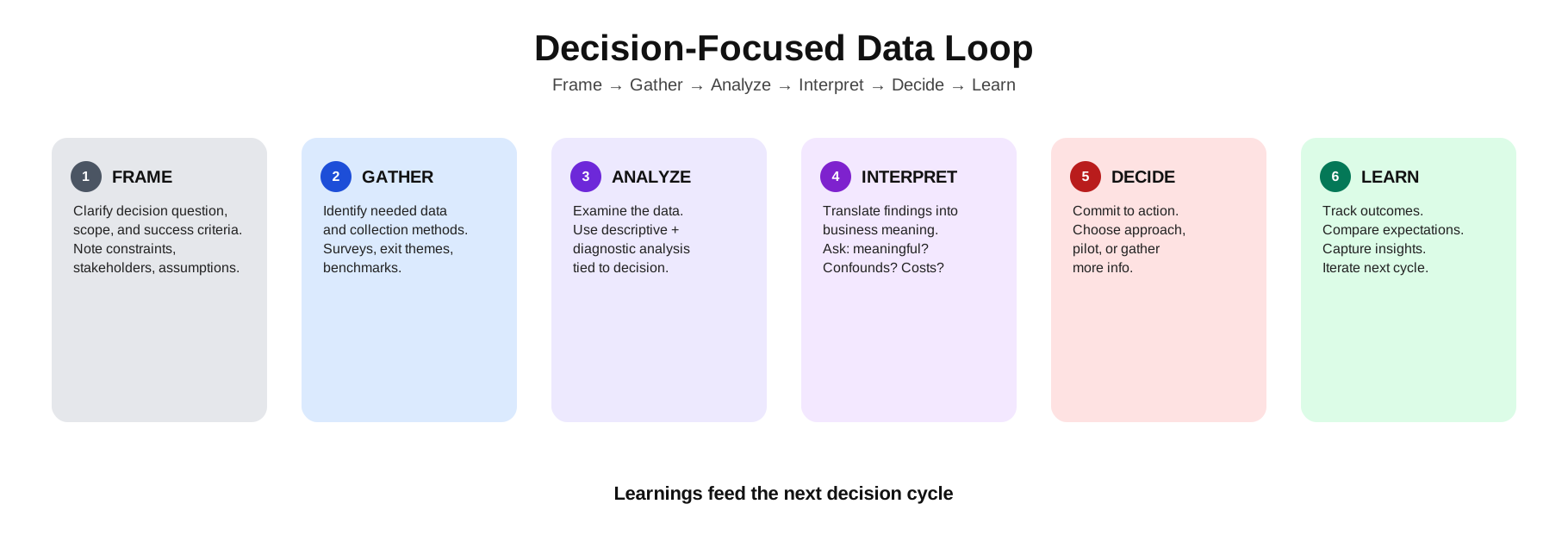
The first phase is frame, where you define the decision question, success criteria, stakeholders, and constraints. You've already practiced this in earlier lessons, and without clear framing, everything that follows is built on a shaky foundation. Be sure to name the decision, the goal, and the timeline all at once.
Once framing is complete, you move into gather, where you identify what data you need and how to get it. For a people manager wondering about the performance review cycle, relevant data might include employee survey responses about feedback frequency, exit interview themes, and benchmark data from similar organizations.
The analyze phase is where you actually examine the data. This might involve descriptive analysis like "What percentage of employees say they receive feedback often enough?" or more diagnostic work like "Is there a relationship between feedback frequency and voluntary turnover?" The key is to stay focused on the decision question rather than exploring every interesting tangent.
Now it's time to interpret your findings into business meaning. Raw numbers rarely speak for themselves. If your analysis shows that employees who receive monthly feedback have 20% lower turnover, interpretation asks what that means for your context, whether the difference is meaningful given your turnover costs, and whether other factors might explain the pattern.
Decide is where you commit to action based on the evidence. This might mean choosing one option over another, piloting a change, or determining that more information is needed before proceeding. The critical point is that a decision gets made.
After you implement the decision, you track outcomes and compare them to expectations. Reflect on what worked and what didn't. This is the learn portion of the process. This is the time to gather your insights, present your findings, and act on your results.
Spot Common Failure Points
Even teams with good intentions regularly stumble at predictable points in this process. Knowing where failures typically occur helps you prevent them.
The most common failure is skipping or rushing the framing step. When someone says "Let's just see what the data tells us" without a clear question, you're almost guaranteed to produce analysis that doesn't connect to any decision. The result is often a beautifully designed dashboard that no one uses, or a report that prompts the response "That's interesting, but what should we do?" If you catch yourself or your team jumping straight to data gathering, pause and return to framing first.
Another frequent breakdown happens between the analyze and interpret steps. Teams produce sophisticated analyses but fail to translate them into actionable meaning. A people manager might receive a report showing correlation coefficients and confidence intervals without any explanation of what those numbers imply for their hiring strategy. The fix is to always ask "So what does this mean for our decision?" after any analytical work is presented.
The decide phase is surprisingly often skipped entirely. Teams review findings, have a thoughtful discussion, and then nothing happens. The meeting ends without a clear choice, and the issue resurfaces weeks later with everyone still uncertain. Combat this by explicitly naming when you're in the decide phase and requiring a documented decision before moving on.
Perhaps the most neglected step is learn. Once a decision is made and implemented, attention shifts to the next urgent issue, and no one circles back to see whether the initiative actually worked. This means the same mistakes get repeated, and the team never builds genuine analytical capability. Build learning into your calendar by scheduling a brief review 30, 60, or 90 days after major decisions.
Additionally, watch for iteration without progress, or cycling endlessly between gathering and analyzing without ever reaching interpretation or decision. Sometimes this reflects genuine complexity, but more often it reflects discomfort with uncertainty or fear of making the wrong call. Recognize when "we need more data" has become an avoidance strategy rather than a legitimate need.
Keep Teams Aligned on Steps
When multiple people are involved in an analytics project, confusion about which phase you're in creates friction and wasted effort. Someone might be deep in analysis while another person is still questioning whether the framing is right. Explicit alignment prevents this problem from derailing your work.
Start meetings and project check-ins by naming the current phase. You say something like: "We finished gathering last week—today we're in the analyze phase, and I want to walk through preliminary findings." This simple statement prevents people from relitigating decisions made earlier or jumping ahead to conclusions before the analysis is complete.
Moreover, create visible markers for phase transitions. When you move from frame to gather, document the agreed-upon decision question and success criteria so everyone can reference them. When you move from analyze to interpret, summarize the key findings before discussing what they mean. When you reach decide, capture the decision in writing along with the rationale. Be willing to call out when the team is in the wrong phase. If someone starts debating options during what was supposed to be a framing discussion, gently redirect and restate the current agreed-upon phase of analysis.
Here's an example of how this alignment conversation might unfold between two colleagues reviewing employee engagement data:
- Jake: The survey results are in—only 58% of employees feel they get enough feedback. I think we should move to quarterly check-ins immediately.
- Jessica: Hold on. We've done the analysis, but have we actually interpreted what this means for us specifically?
- Jake: What do you mean? The number seems pretty clear.
- Jessica: Well, is 58% low compared to our benchmark? And does feedback frequency actually correlate with the retention issues we're trying to solve? We need to understand what this means before jumping to a solution.
- Jake: You're right—I was skipping straight to decide. Let's step back and interpret these findings first.
Notice how Jessica helps Jake recognize that he's jumping from analyze directly to decide without pausing to interpret. By naming the phase they should be in, she prevents a premature decision that might not address the underlying problem. This kind of gentle redirection keeps the process on track without slowing momentum.
For complex projects, consider using a simple visual tracker. This doesn't need to be elaborate. It can be a shared dashboard with a one-line status update such as: "Performance Review Project: Currently in Interpret phase, Decide meeting scheduled Thursday." The visibility keeps everyone oriented without adding unnecessary bureaucracy.
In the upcoming role-play session, you'll practice these skills by reviewing a past initiative with a teammate. Together, you'll map what happened to each step of the analytics process and identify where steps were skipped or rushed, building the diagnostic muscle that helps you run better processes in the future.
