Know the Trade-Offs
See What You Gain and Give Up ⚖️
Whenever you make a decision, you’re choosing between different options—and each one comes with things you get and things you give up. This is called a trade-off. Trade-offs are a normal part of life, and noticing them helps you make better choices.

Instead of thinking, “Which option is perfect?” try asking, “What do I gain and what do I give up with each choice?” This way, you won’t be surprised by downsides later, and you’ll know why you picked one thing over another.
Imagine you’re deciding whether to spend your weekend working on a project or relaxing with friends. If you choose to work on the project, you gain progress and might finish early, but you give up time to relax and have fun. If you decide to relax with friends, you gain rest and good memories, but you give up the chance to get ahead on your project.
By thinking about both sides, you can pick what matters most to you right now.
🛑 Spot Possible Risks Before You Decide
Before you choose, it’s smart to ask, “What could go wrong if I pick this option?” This isn’t being negative—it’s being prepared. A risk is anything that could make your choice turn out worse than you hope.
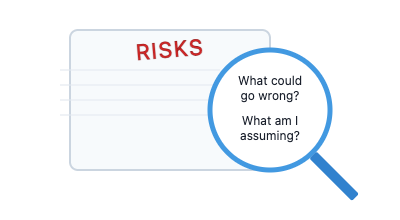
To find risks, try these questions:
- What’s the worst thing that could happen if I choose this?
- Am I assuming something will be easy or go smoothly?
- Have I or someone I know had a problem with a similar choice before?
Consider this example of risk identification in an everyday scenario. Imagine you're deciding whether to host a dinner party at your small apartment or at a restaurant. For the apartment option, risks might include not having enough seating for everyone, the kitchen being too small to prepare everything on time, and cleanup taking hours afterward. For the restaurant option, risks could involve the noise level being too loud for good conversations, the cost running higher than planned, or someone having dietary restrictions the restaurant can't accommodate.
By naming these risks, you can decide if you want to take them, avoid them, or find ways to make them less likely. Either way, you're making a more informed decision because you took the time to think through what could go wrong.
Focus on What Matters Most to Make the Best Choice 🎯
Trade-offs and risks are easier to handle when you know what’s most important to you in this decision. Ask yourself, “What is my main goal here?” This helps you stay focused and not get distracted by things that don’t really matter.
Let’s say you’re choosing between two job offers. If your main goal is to learn new skills, you might choose the job that offers more training opportunities, even if it pays a little less. On the other hand, if your main goal is to earn more money, you might pick the higher-paying job, even if it’s not as interesting to you.
When you know your main goal, you can explain your choice to yourself and others:
“I chose this option because it helps me reach my main goal, even though it means giving up something else.”
Here’s a conversation that shows how this works in real life:
- Chris: I’m trying to decide whether to buy a new car or a used car. I’m not sure which is better for me.
- Victoria: What are the trade-offs? What do you gain and give up with each option?
- Chris: If I buy a new car, I get a warranty and peace of mind, but it costs a lot more. If I buy a used car, I save money, but I might have to deal with repairs or hidden issues.
- Victoria: That makes sense. What matters most to you right now?
- Chris: Honestly, I want to avoid surprise repair costs. I’d rather pay more up front if it means less stress later.
- Victoria: Then maybe the new car is worth the extra money, since it gives you the peace of mind you care about most.
Notice how Victoria helped Chris work through the key steps: first, clearly stating the trade-offs, then identifying what matters most, and finally using that priority to guide the decision. The goal isn’t to find an option with zero downsides, since that almost never happens. The goal is to choose the option whose downsides you’re most willing to accept in exchange for its upsides.
Now that you understand how to identify risks, compare trade-offs, and stay focused on your main goal, you're ready to put these skills into practice. In the upcoming activities, you'll complete sentences that capture trade-offs, write a recommendation based on identified risks, and have a conversation where you explain what matters most in a decision you're making. These exercises will help you build the habit of thinking through trade-offs before you commit—so your choices are intentional rather than impulsive.
