Physical Grounding and Breath Control
Physical Grounding and Breath Control
In the previous lesson, you learned that recognizing the fight-flight-freeze response is the first step toward regaining control. While anxiety reappraisal is a cognitive tool for the gap between sensation and reaction, we must also address the physical sensations directly.
In this unit, you will learn three techniques to intervene in your body's stress response: Box Breathing, Foot-to-Floor grounding, and the One-Breath introduction. These tools lower your heart rate and sharpen focus. They are immediate, repeatable actions for high-stakes moments—from team standups to executive presentations—rooted in biology rather than willpower.
When your nervous system spikes, Box Breathing (or four-square breathing) is a reliable way to reset. Used by Navy SEALs and elite athletes, it activates the parasympathetic nervous system by regulating your exhale, signaling to your brain that the threat has passed.
The technique follows a four-phase cycle:
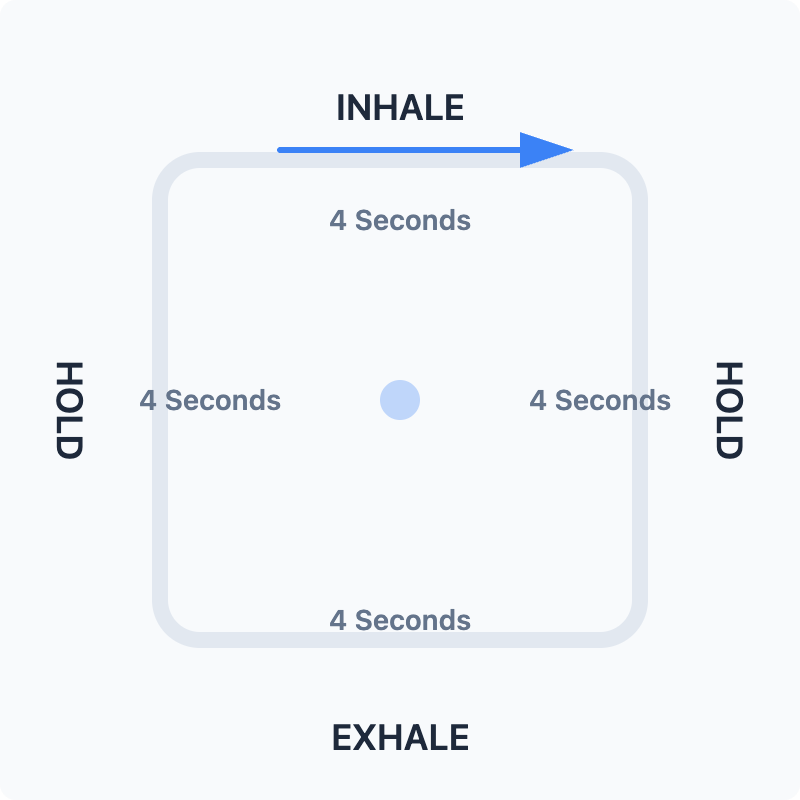
- Inhale slowly through your nose for four counts.
- Hold that breath gently for four counts.
- Exhale through your mouth for four counts.
- Hold again at the bottom of the exhale for four counts.
The key is rhythm. Three to four cycles—roughly one minute—are usually enough to lower your heart rate and quiet mental chatter. For a people manager, this is a "physiological fire drill." If you practice it daily—before checking email or starting a meeting—your nervous system will recognize the pattern and respond faster during actual high-pressure moments.
Using "Foot-to-Floor" Grounding to Center Focus
While breathing addresses internal arousal, Foot-to-Floor grounding anchors your attention. When anxiety spikes, focus often scatters into imagined future failures. This technique pulls you back into the present through sensory anchoring.
While seated or standing, press your feet firmly into the floor. Notice the texture—carpet, hardwood, or the soles of your shoes. Silently describe the sensation: "I can feel the floor. My weight is balanced. I am here."
By directing attention to a concrete physical sensation, you give your brain a real-time data point to focus on. This interrupts the anxiety loop; you cannot fully attend to the feeling of the floor and worry about a future scenario simultaneously. This tool is invisible, making it ideal for use during a meeting when a conversation becomes heated or unexpected.
To see what this combination looks like in practice, consider the following exchange between two people managers right before a leadership review meeting.
- Jessica: I can't stop my hands from shaking. The VP is going to be in this meeting and I have to present our team's quarterly numbers. My mind is already going blank.
- Dan: Okay, let's slow down. Before we even think about the presentation, press your feet into the floor right now. Feel the ground underneath you. What do you notice?
- Jessica: I… I can feel the carpet through my shoes. My weight is mostly on my left foot, actually.
- Dan: Good — that's the point. Your brain was spinning out into the future, and you just pulled it back to right now. Next, let's do a round of Box Breathing. Inhale for four counts, hold for four, exhale for four, hold for four. I'll count with you.
- Jessica: Alright… that actually helped. My chest doesn't feel as tight. I'm still nervous, but I can think again.
- Dan: That's all you need. The nerves don't have to disappear — you just need your focus back. Now when you stand up to speak, take one full breath before your first word, and you'll be steady.
Notice what Dan does here. He does not tell Jessica to stop being nervous. Instead, he walks her through a physical sequence—grounding to reclaim focus, then breathing to settle her heart rate. Jessica still feels nervous, but her composure has returned because her body and attention are back under her control.
Managing the "One-Breath" Introduction
The hardest part of speaking is often the opening sentence. If you rush or mumble your first words, your inner critic takes over. The One-Breath introduction ensures your opening lands with deliberate authority.
Before you speak, take one full, intentional breath. Inhale through the nose, then exhale. Only then begin your first sentence. This steadying breath ensures your lungs have enough air for a resonant voice and creates a brief, intentional pause. To an audience, this pause communicates composure and control, rather than a scramble for words.
Embrace the silence. A two-second pause before speaking signals that you are choosing your words. Practice this in team meetings: pause, breathe, and respond. It becomes a micro-ritual that tells your brain, "We are ready."
To tie all three techniques together, consider building a brief pre-speaking sequence. Start with two or three rounds of Box Breathing to reset your heart rate, then press your feet into the floor to anchor your focus, and when it is your turn to speak, take one deliberate breath before your first word. This entire sequence can happen in under two minutes, and no one in the room will see anything but a composed, confident manager who seems remarkably calm under pressure. In the upcoming role-play session, you will practice walking through this grounding and breathing sequence out loud, narrating each step as you prepare for a high-pressure moment — turning these techniques from knowledge into muscle memory you can count on.
