Judging People and Initiatives
Judging People and Initiatives 🤝
The last lesson had you testing a forecast. This one turns the lens on your judgment of people you respect and initiatives that already have history behind them. These biases can hide behind loyalty, blame, and the comfort of agreement, so naming them is the first step toward a fairer decision.
In this lesson, you will learn to:
- Recognize the halo effect, fundamental attribution error, sunk cost, and groupthink in a review
- Run the People-and-Commitment Audit to judge an initiative on its forward merits
- Write a clear continue, change, or stop call that weighs future value against future cost
Four Biases in a Review 🎭
Before you can run the audit, you need to recognize these four distortions as they happen. Use the table below to spot how each bias typically sounds in a professional review:
| Bias | What It Distorts | Example |
|---|---|---|
| Halo effect | A person’s reputation becomes evidence about an unrelated initiative. | “Hoa is excellent, so this project must deserve another phase.” |
| Fundamental attribution error | A situational problem is treated as a character flaw. | “The program officer failed,” without checking the launch conditions. |
| Sunk cost | Past investment becomes a reason for future investment. | “We have spent $1.8M, so we cannot stop now.” |
| Groupthink | Pressure for agreement keeps dissent from being heard. | “Everyone seems aligned,” after one confident voice speaks first. |
These biases can appear together. A respected champion can make a struggling initiative look stronger than its numbers, while past spend and premature consensus make it harder for the group to change course.
Running the People-and-Commitment Audit 📋
The People-and-Commitment Audit makes four deliberate separations:
- Separate results from reputation. Judge what the initiative delivered, not how much you admire its champion.
- Test conditions before assigning traits. Check the launch window, staffing, and constraints before blaming a person.
- Compare future value with future cost. Past spend is unrecoverable. The live question is whether the next dollar earns its return.
- Collect independent views before discussion. Let dissent surface before the group follows the loudest early opinion.
Here, Dan and Tom are reviewing whether to continue a rollout. Dan raises the past investment, and Tom helps move the decision back to the forward-looking evidence.
- Dan: We have put eight months and most of the budget into this rollout. We cannot just walk away now.
- Tom: Let’s set the past spend aside. If we were deciding today, would the next phase earn its next dollar?
- Dan: The reach is still low, but Milo is the sharpest operator we have.
- Tom: Milo’s record matters, but it is not evidence about this initiative. What did the people outside this room see?
- Dan: Finance thinks a smaller pilot would tell us more before we commit further.
The audit keeps the decision on future merits: results, conditions, next cost, next value, and the dissent that might otherwise be lost.
Writing the Continue, Change, or Stop Call ✍️
A strong recommendation begins with a clear call and then explains it using forward-looking evidence. State whether to continue, change, or stop. Compare future value against future cost, explicitly set past spending aside, separate the initiative’s performance from its champion’s reputation, and record the strongest independent dissent even when you do not fully agree with it.
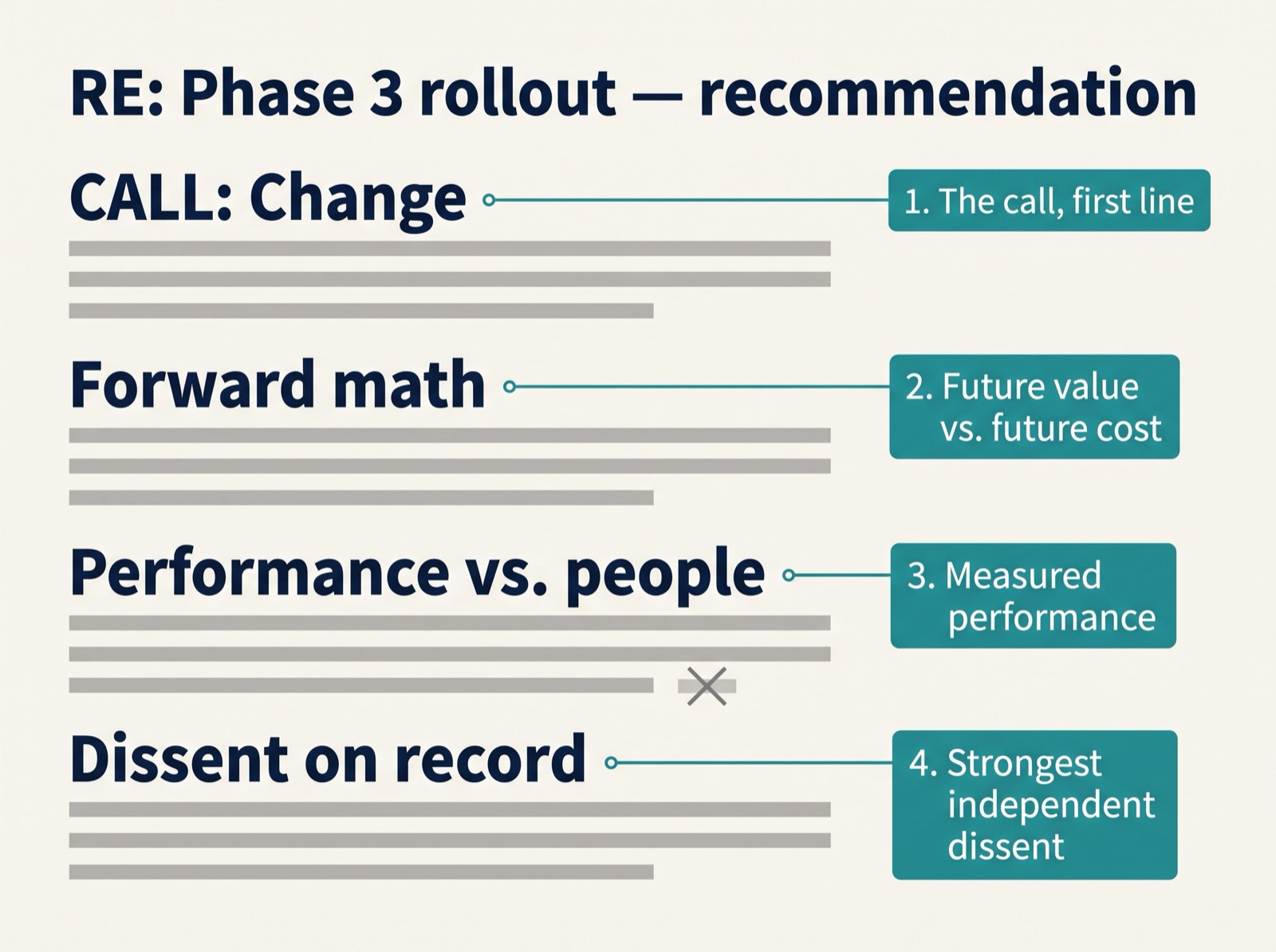
The People-and-Commitment Audit ensures you judge initiatives on their forward merits instead of letting reputation, history, or the pressure for agreement cloud your vision. You’ll now practice spotting these biases in action before leading a review and writing a recommendation that clearly documents the logic behind your call.
