Activation Functions in C++
Introduction
Welcome to our exploration of "Understanding Activation Functions". In this lesson, we will investigate activation functions — essential components in neural networks that determine the output of a neuron. We will focus on the theory and C++ implementations of five activation functions. Let's begin our journey into the world of neural networks using C++.
Theoretical Understanding of Activation Functions
Activation functions play a crucial role in neural networks by determining the output of each neuron. You can think of them as gates: they decide whether a neuron should be activated or not, based on the input. In this lesson, we will explore five types of activation functions.
Step Function
Mathematical Formula:
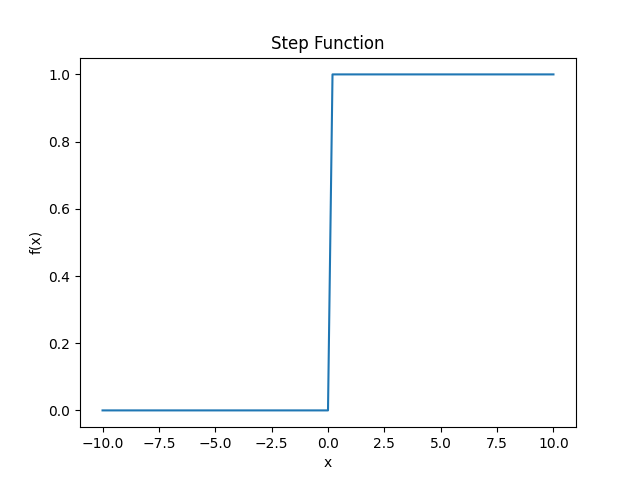
Let's start with the step function, also known as the threshold function. This simple activation function acts like a switch: if the input value is greater than or equal to a threshold (commonly 0), the function returns 1; otherwise, it returns 0.
C++ Implementation:
Step Function Visualization
To visualize the step function in C++, you can use the matplotlibcpp library, which provides plotting capabilities similar to those in other languages. Here is an example of how you might plot the step function:
This code generates and saves a plot of the step function:
Sigmoid Function
Mathematical Formula:
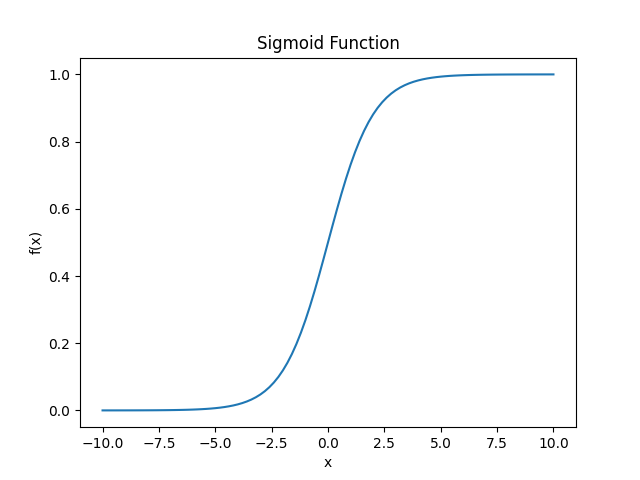
The sigmoid function maps any real value to a value between 0 and 1, producing an S-shaped curve. It is often used when the output needs to represent a probability.
C++ Implementation:
Sigmoid Function Visualization
You can visualize the Sigmoid function in C++ using matplotlibcpp as before:
ReLU Function
Mathematical Formula:
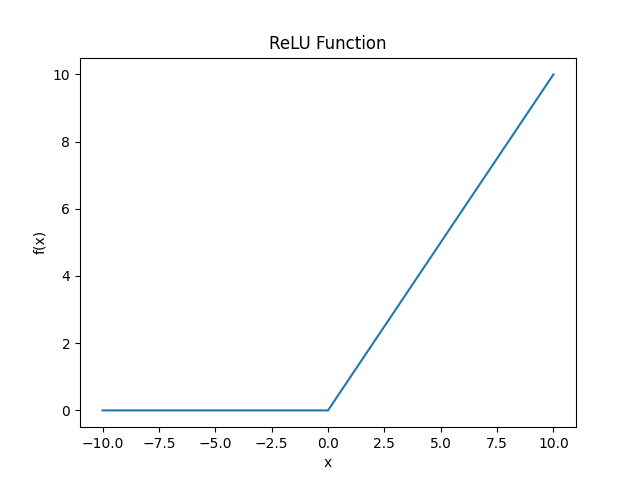
The ReLU (Rectified Linear Unit) function returns the input value itself if it is positive; otherwise, it returns zero. It is widely used in neural networks due to its simplicity and effectiveness.
C++ Implementation:
ReLU Function Visualization
You can visualize the ReLU function in C++ using matplotlibcpp as before:
Tanh Function
Mathematical Formula:
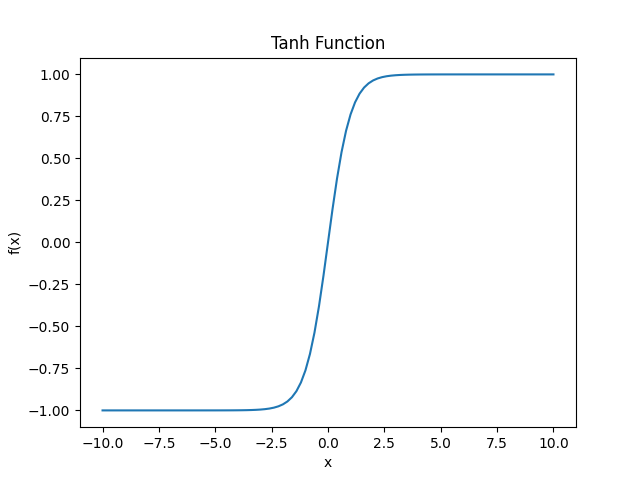
The tanh (hyperbolic tangent) function is similar to the sigmoid function but maps input values to a range between -1 and 1. It is useful when you want the output to represent both positive and negative values.
C++ Implementation:
Tanh Function Visualization
You can visualize the tanh function in C++ using matplotlibcpp as before:
Softplus Function
Mathematical Formula:
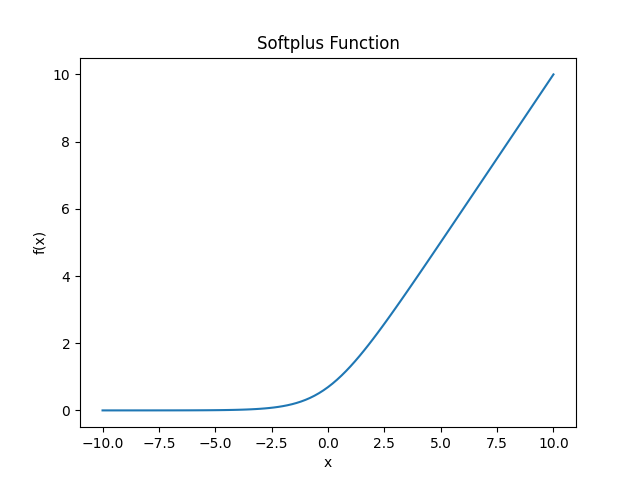
The softplus function is a smooth approximation of the ReLU function and is differentiable everywhere. It is defined as the natural logarithm of (1 + exp(x)).
C++ Implementation:
Softplus Function Visualization
You can visualize the Softplus function in C++ using matplotlibcpp as before:
Lesson Summary and Practice
In this lesson, we explored the theory and C++ implementations of several important activation functions: step, sigmoid, ReLU, tanh, and softplus. You have learned how to implement these functions, their mathematical formulas, and how to visualize them using C++ and the matplotlibcpp library.
By mastering these activation functions, you are building a strong foundation for understanding and constructing neural networks in C++.
