Surfacing Core Issues
Ask Questions That Surface Core Issues
Navigating conflict isn’t just about stating your perspective—it’s about uncovering what truly matters to both sides. In this unit, you’ll learn how to use thoughtful questions to move beyond surface complaints and reveal the real drivers of tension. Mastering this skill will help you resolve issues faster, build trust, and create more productive working relationships.
Building on your foundation of direct communication, you're now ready to add a transformative element to your conflict resolution toolkit—strategic curiosity. While being direct helps you address issues clearly, curiosity allows you to understand the deeper dynamics at play.
Why Curiosity Changes the Conversation
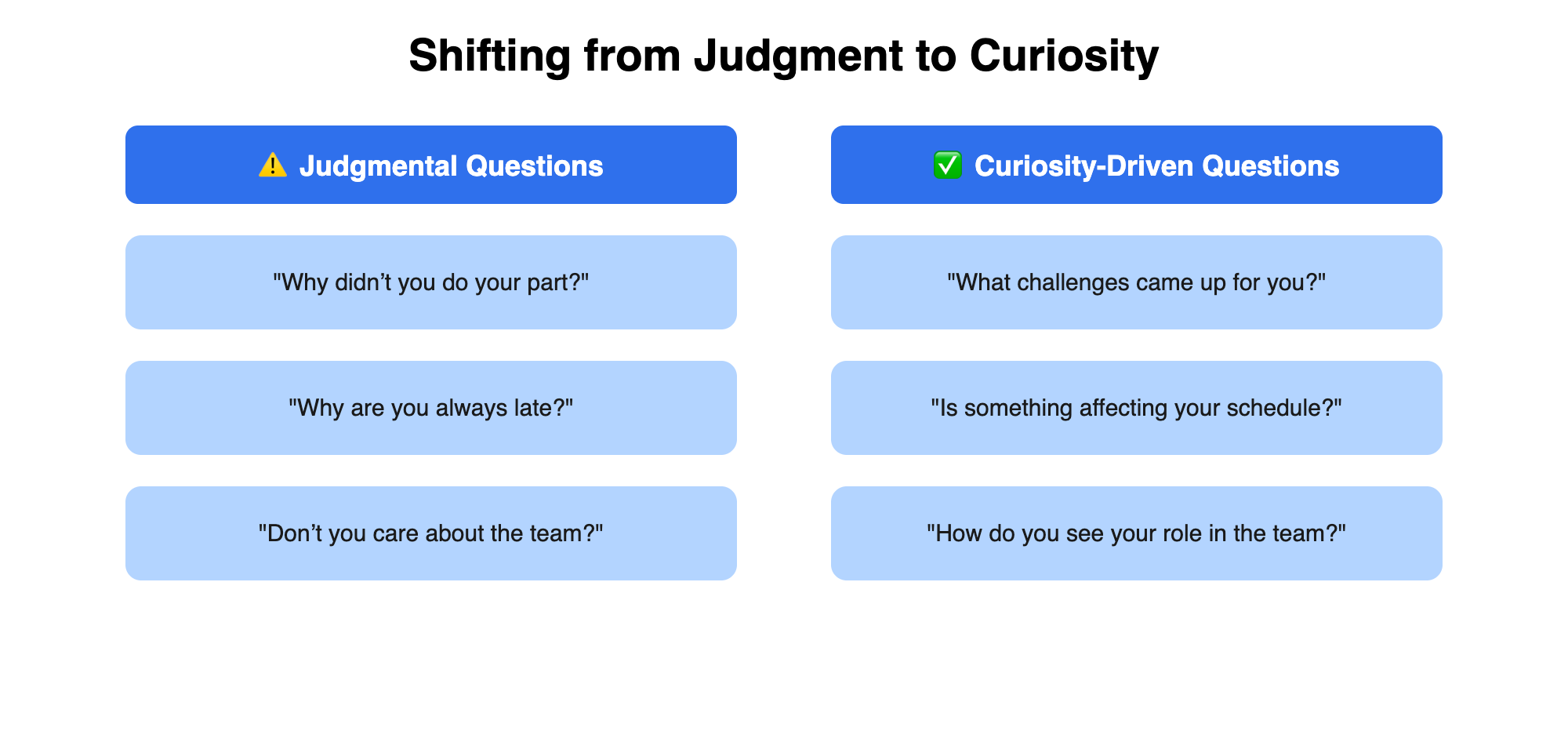
When disagreements arise, it’s tempting to defend your position or focus on what went wrong. However, genuine curiosity can transform the conversation. By asking open-ended questions, you invite the other person to share their needs and concerns, which often leads to unexpected insights and solutions. For example:
Techniques for Asking Deeper Questions
To surface core issues, focus on questions that are open, non-judgmental, and aimed at understanding—not winning. Begin with curiosity rather than assumptions. For instance, rather than: "Why didn’t you do your part?", try "What challenges came up for you on this project?" This signals that you’re interested in their experience, not just assigning fault.
It’s also helpful to explore what’s important to the other person. A question like "What’s most important to you about how we work together on deadlines?" can reveal priorities you might not have considered. If you sense frustration, gently invite more detail: "Can you help me understand what’s feeling most frustrating right now?" These types of questions encourage openness and help both parties move past surface-level complaints.
Some of the most effective conflict questions include: "What’s at the heart of this for you?", "How has this situation affected your work or motivation?", and "What would a good outcome look like for you?" Each of these prompts the other person to reflect and share, making it easier to find common ground.
- Natalie: Jake, I feel like I’m always the last to know when project priorities shift.
- Jake: Thanks for telling me, Natalie. Can you share a recent time when you felt out of the loop?
- Natalie: Last week, the client meeting was rescheduled and I only found out after everyone else.
- Jake: I see how that would be frustrating. What’s most important to you about how we communicate these changes?
- Natalie: I just want to be able to plan my work and not feel blindsided.
- Jake: That makes sense. What would a good outcome look like for you if this happens again?
- Natalie: Just a quick message or heads-up would help a lot.
In this exchange, Jake uses open-ended, curiosity-driven questions to move beyond the initial complaint and uncover what Natalie truly needs. Notice how he avoids defensiveness and instead focuses on understanding her experience and priorities.
As you continue, you’ll have the chance to practice these questioning techniques in a realistic role-play scenario. This will help you build confidence in using curiosity to resolve real workplace tensions.
