Communicating Calibrated Confidence
Welcome to the Course 🎉
Welcome to Judgement Under Uncertainty! It is one thing to think critically about a problem, but now comes the harder part: standing behind a call when someone who outranks you wants a certainty you honestly don't have. This course is about deciding and communicating well under real uncertainty, when the stakes are high, the evidence is mixed, and a skeptic is waiting to poke holes.
In this lesson, you will learn to:
- Recognize overconfidence and state calibrated confidence as a range or probability with its basis
- Hold the range when someone pushes you for one certain number
- Put a Calibrated Recommendation in writing that leadership can act on
The Weakness of Loud Confidence 💪
When your boss asks "are we going to hit the number?", what does your gut want to say? For most managers it's "yes, absolutely." It feels like leadership. But ask yourself: is that answer describing reality, or describing how badly you want to sound decisive?
Overconfidence is expressing more certainty than your evidence actually supports. The antidote is Calibration: matching your expressed confidence to how often you're actually right. A calibrated statement uses a range or a probability with its basis attached ("70% likely, landing between X and Y") rather than a single confident number you can't stand behind.
Here's the provocation worth sitting with: a round, certain number is not stronger than a range. It's just less honest. The range tells your listener exactly how much to trust the estimate and what could move it. The certain number tells them nothing except that you're willing to be wrong loudly.
- Dan: The sales review is in an hour. Are we hitting Q3 or not?
- Chris: Honestly, it's looking solid, but I won't pretend it's a lock. My best read is somewhere between 4.2 and 4.6 million, and I'd put us at about 70% to clear 4.3 — that's where the evidence actually sits right now.
- Dan: Seventy percent? So you're guessing.
- Chris: No, I'm telling you what the evidence supports. Two big renewals are still unsigned. If they close by Friday, I'd move to 85%. If they slip, we're at the bottom of that range.
- Dan: Fine. Put the range in the deck, and flag the renewals.
Notice Chris never got louder and never caved to a single figure. The range plus the trigger was more useful to Dan than false precision would have been.
Holding the Range When Someone Pushes for One Number 📊
The pressure to collapse into a single certain figure is real, and it usually comes disguised as impatience: "just give me a number." Treat that as a test, not an order. The move is to give a genuine number, but keep it calibrated.
A defensible verbal statement has three parts:
- The range and your confidence in it - lead with a genuine estimate and how sure you are, like "70% we land between 4.2 and 4.6 million." This matters because it commits you to a real, testable number instead of a vague "it depends," while still signaling honestly how much to trust it.
- The largest uncertainties driving that range - name the two or three things that actually move the outcome, plainly: "the swing is traffic, conversion, and markdown timing." This matters because it shows the range is not hand-waving; it is the direct result of specific unknowns, so your listener sees exactly where the risk lives.
- What would move the estimate - state the objective signals that would raise or lower it: "if conversion holds through week two, I go up; if it softens, I come down." This matters because it turns your forecast into something the other person can track with you, so the next update reads as new evidence arriving rather than you quietly changing your story.
When someone says "so you're not sure?", don't apologize for the range. Reframe it: the range is the certainty. You're being precise about how much you know. A manager who can say exactly what would tighten the estimate looks more in control than one who blurts a number and defends it on pride.
Putting Calibration in Writing That Leadership Can Act On ✍️
Spoken calibration is fragile — it disappears the moment the meeting ends. When a decision goes upstairs, the number often gets stripped of its context and treated as a promise. A Calibrated Recommendation protects against that by traveling with its reasoning attached.
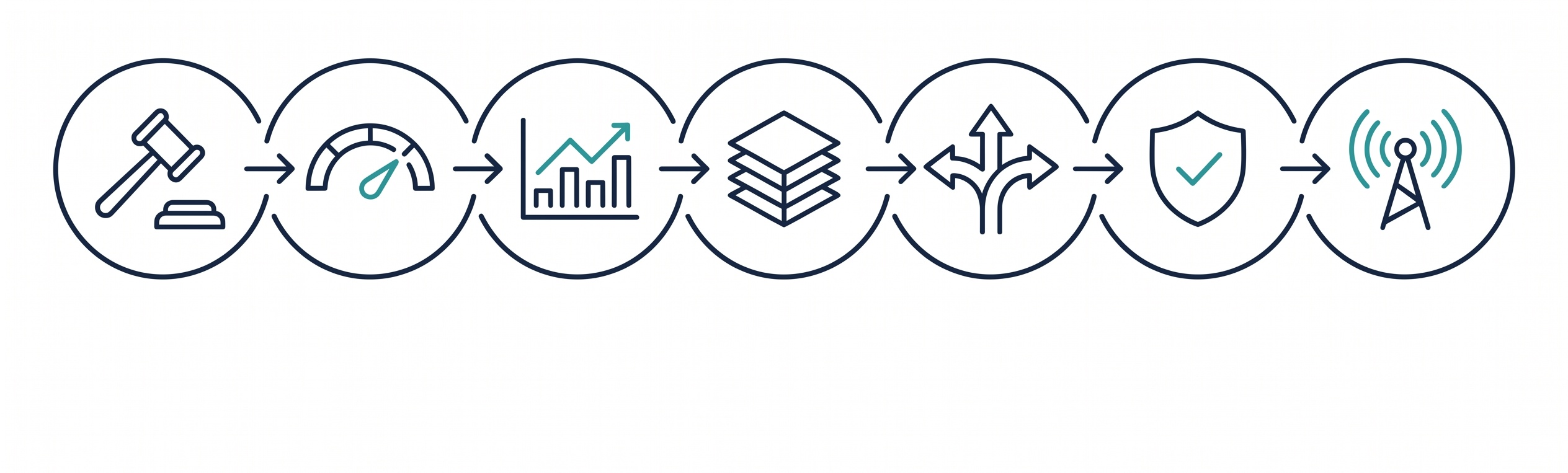
Seven elements make it defensible:
- Decision - the call you are making.
- Confidence range - the range and how confident you are in it.
- Strongest evidence - the data behind the number.
- Critical assumptions - what the number rests on.
- Credible alternative - a realistic other outcome, so no one thinks you've considered only the upside.
- Downside contingency - a safeguard so a miss isn't a catastrophe.
- Update triggers - the objective signals that would raise or lower the number.
That last piece is what turns a forecast from a bet you defend blindly into a living estimate leadership can revisit without anyone losing face.
The takeaway for this lesson is blunt: calibrated confidence is a strength you assert, not a weakness you confess, and the range with its triggers beats the confident number every time. In the upcoming practice activities, you will move from recognizing that idea to defending it. You'll start with a quick self-check to spot which statements are genuinely calibrated and which just sound sure, then face a skeptic pressing you for "one confident number" out loud, and finally put a calibrated recommendation in writing. So the question to carry in: the next time you're tempted to say "absolutely," what number would you actually bet on, and what would move it?
