Binary Tree Traversals
Lesson Overview
Get ready to embark on an exciting journey through the woods — the binary woods, that is. A Binary Tree is a fundamental data structure in which each node has at most two children, referred to as the left child and the right child. Traversing such a structure involves visiting each node in a specific order. With its strong type system and modern features, Kotlin provides a safe and efficient way to navigate these hierarchical structures.
Binary Tree Definition
Before diving deeper into the traversals, let's define a structure for a binary tree node in Kotlin. Each node in a binary tree will have a value, a reference to its left child, and a reference to its right child.
Here’s how you can define a TreeNode class in Kotlin using a primary constructor:
In this TreeNode class:
valuerepresents the data stored in the node.leftandrightare properties that point to the node's children.- We use the
?symbol to declare these properties as nullable (TreeNode?), allowing them to benullif a child does not exist. - By providing default values of
null, we can easily create nodes without children.
Quick Example
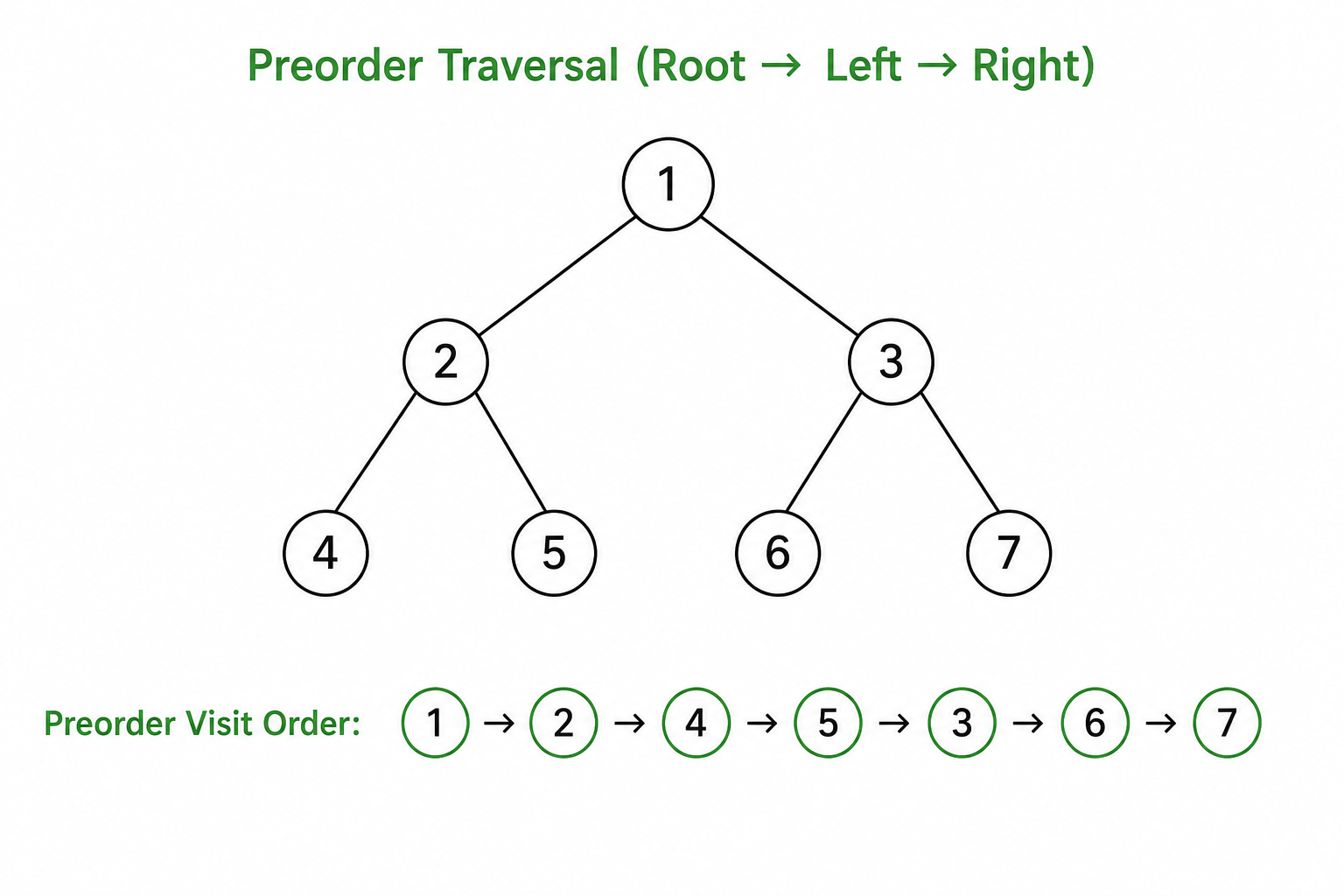
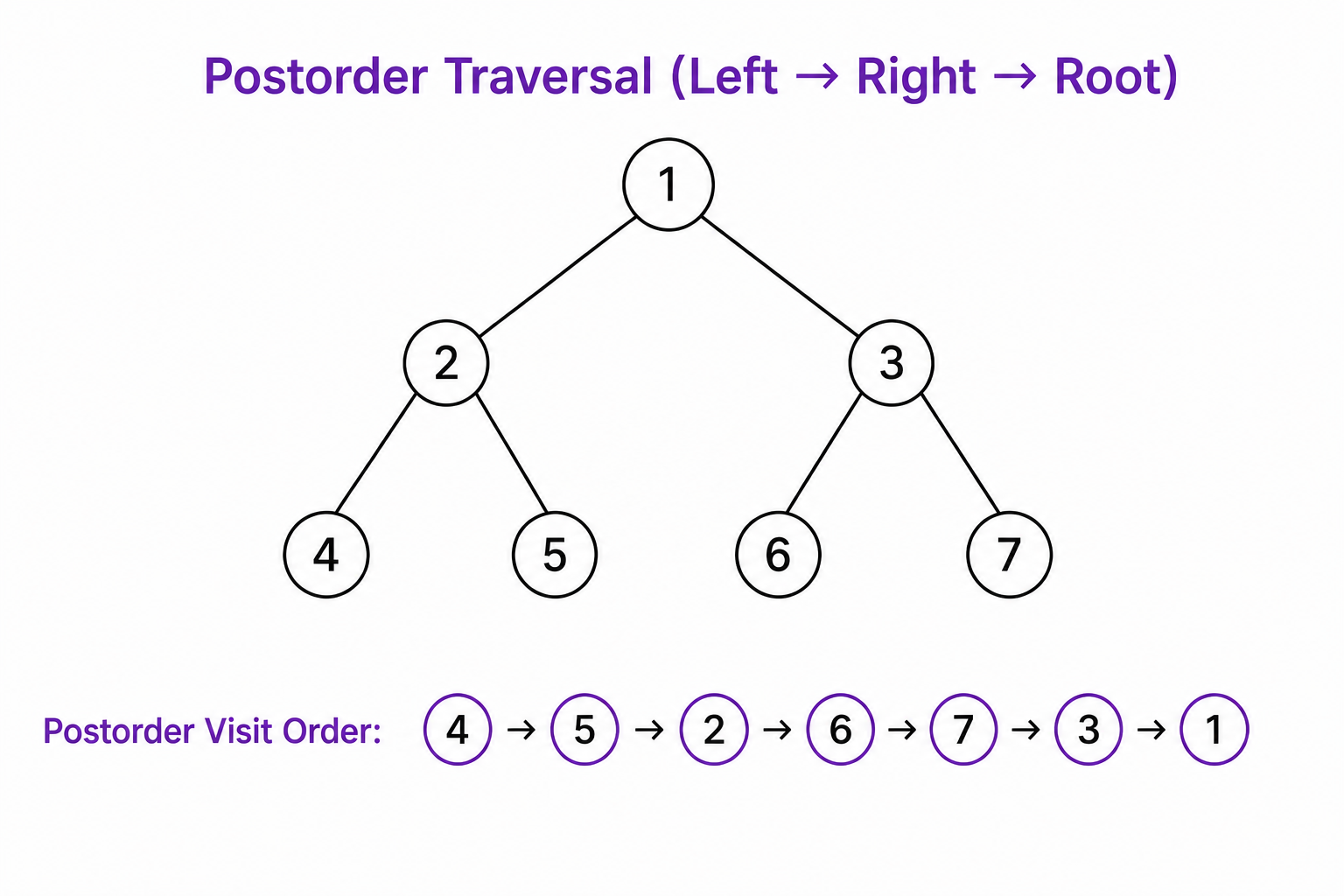
We have three primary ways to traverse a binary tree: Inorder (Left, Root, Right), Preorder (Root, Left, Right), and Postorder (Left, Right, Root).
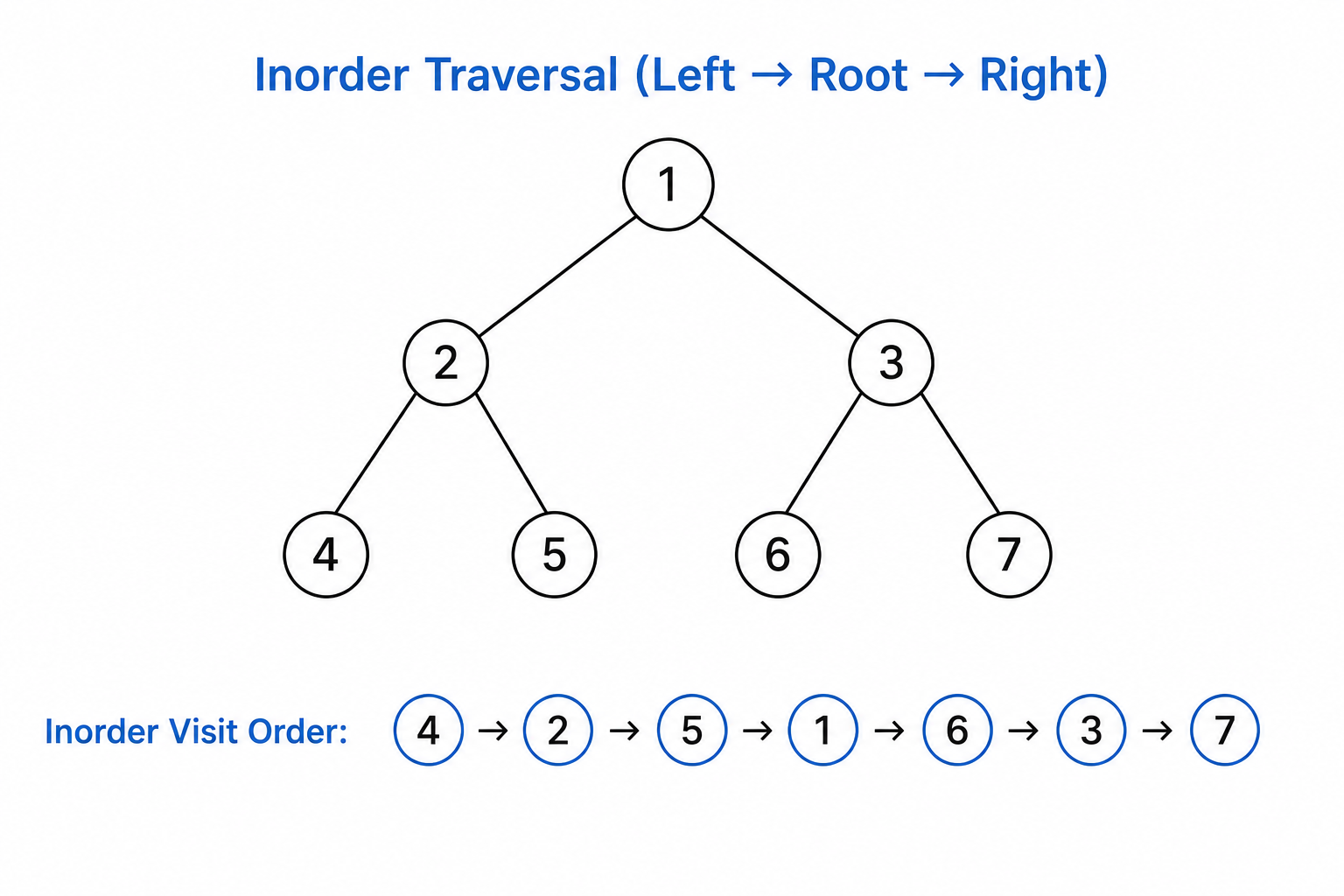
One common method is the recursive Inorder traversal. If a node exists, we first recursively traverse the left subtree, then visit the current node's value, and finally, recursively traverse the right subtree.
In Kotlin, we can implement this efficiently by using a MutableList to collect the values as we visit them:
This approach uses a nested helper function (traverse) to keep the list modification encapsulated while providing a clean List<Int> as the final result.
