Welcome to Weather and Nature Measurements, the fourth course in our learning path! In earlier courses, we practiced reading labels, measuring in the kitchen, and sizing up spaces at home. Now we step outside and learn to read the measurements that nature hands us every day. In this first lesson, we focus on one of the most common measurements you will ever encounter: temperature. By the end, you will be able to read temperatures in both Fahrenheit and Celsius, handle negative values with confidence, and connect each reading to a practical band like freezing, comfortable, hot, or dangerous.
Why Temperature Matters in Daily Life
Temperature is one of the few measurements that can change how you dress, what you eat, and whether it is safe to be outside at all. A single number on a weather app can mean the difference between grabbing a light jacket and bundling up in heavy layers.
Unlike many measurements we have explored so far, temperature can also go below zero, which sometimes catches people off guard. Building a strong sense of what the numbers mean will help you make faster, better decisions every day.
The Two Main Scales
Join the 1M+ learners on CodeSignal
Be a part of our community of 1M+ users who develop and demonstrate their skills on CodeSignal
In everyday life, temperature is measured using two scales: Fahrenheit (°F) and Celsius (°C).
The Fahrenheit scale is used in the United States, while the Celsius (also called centigrade) scale is used in most other countries.
Both scales share two key reference points: the temperature at which water freezes and the temperature at which it boils.
Here is a quick side-by-side look at those reference points:
Event
Fahrenheit
Celsius
Water freezes
32°F
0°C
Water boils
212°F
100°C
Normal body temperature
98.6°F
37°C
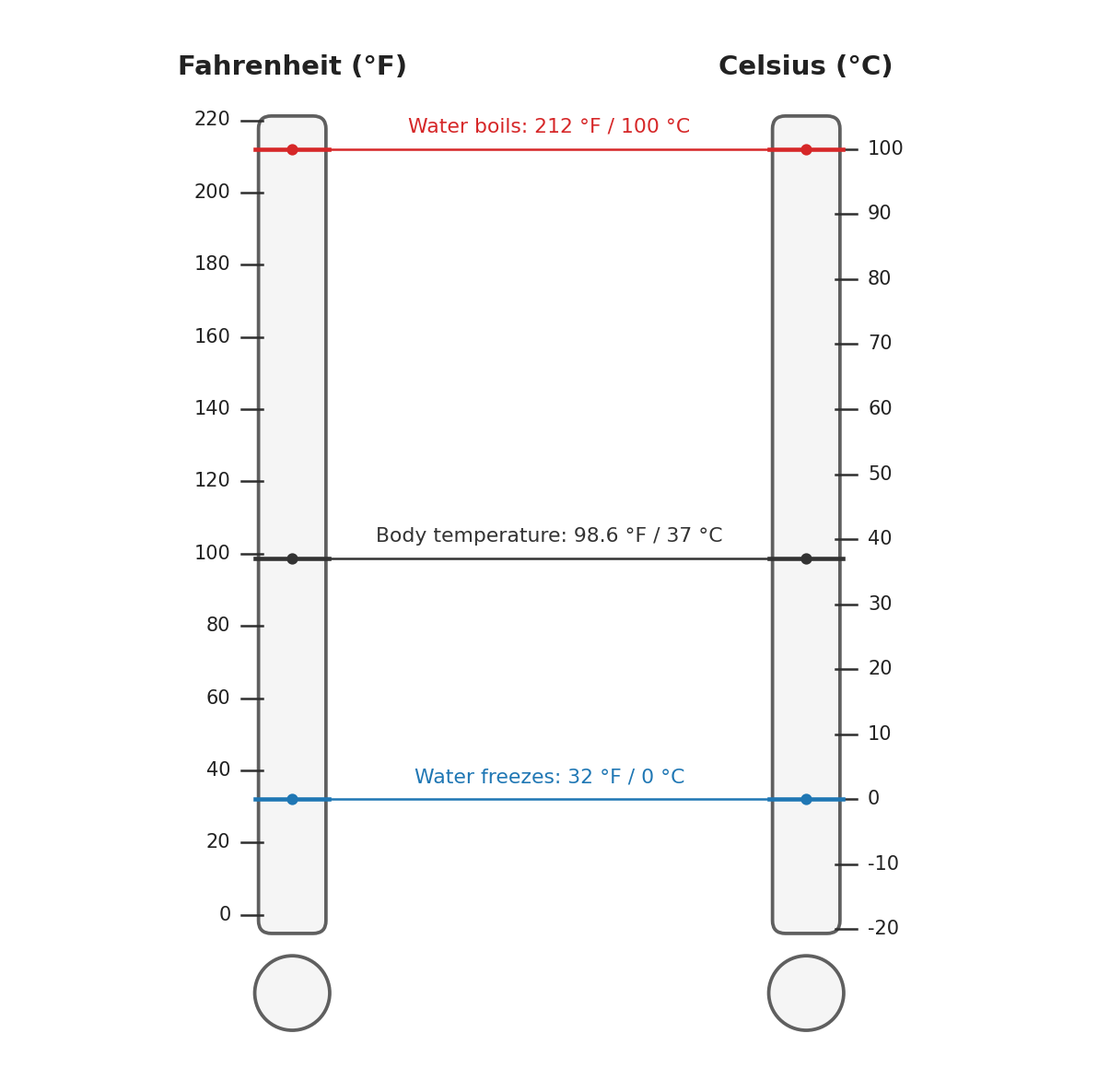
This visual places those reference points on both scales:
The Fahrenheit scale sets 32° for freezing and 212° for boiling, splitting that gap into 180 equal parts. The Celsius scale is simpler to remember: water freezes at 0 and boils at 100, with 100 equal parts in between. Keeping these anchor points in mind will help you judge any temperature reading quickly.
Reading Temperatures, Including Negatives
Practical Temperature Bands in Fahrenheit
Practical Temperature Bands in Celsius
Planning Around a Day's Forecast
Conclusion and Next Steps
In this lesson, we covered the two temperature scales you will encounter most often — Fahrenheit and Celsius — learned how to read both positive and negative values, and matched readings to practical bands that guide real decisions about clothing, safety, and timing. These anchor points and bands give you a reliable framework for interpreting any temperature you see on a thermometer, weather app, or forecast.
Up next, you will put this knowledge to work in the practice exercises: reading thermometers, comparing positive and negative temperatures, classifying readings into bands, and writing a real daily plan based on a forecast. After that, we will move on to converting between Fahrenheit and Celsius so you can switch between the two scales with ease.
Temperatures appear in many formats: on an analog thermometer with a red liquid column, on a digital weather station, or in a forecast on your phone. Regardless of the format, always look for two things: the number and the unit (°F or °C). A reading like 72 °F or 22 °C tells you both.
Temperatures can also be negative, meaning they fall below zero on the scale. A negative sign in front of the number tells you the value is below the zero mark. On the Celsius scale, any temperature below 0°C means conditions are below the freezing point of water. On the Fahrenheit scale, temperatures below 32°F mean freezing conditions, and readings can dip well below 0°F during extreme cold.
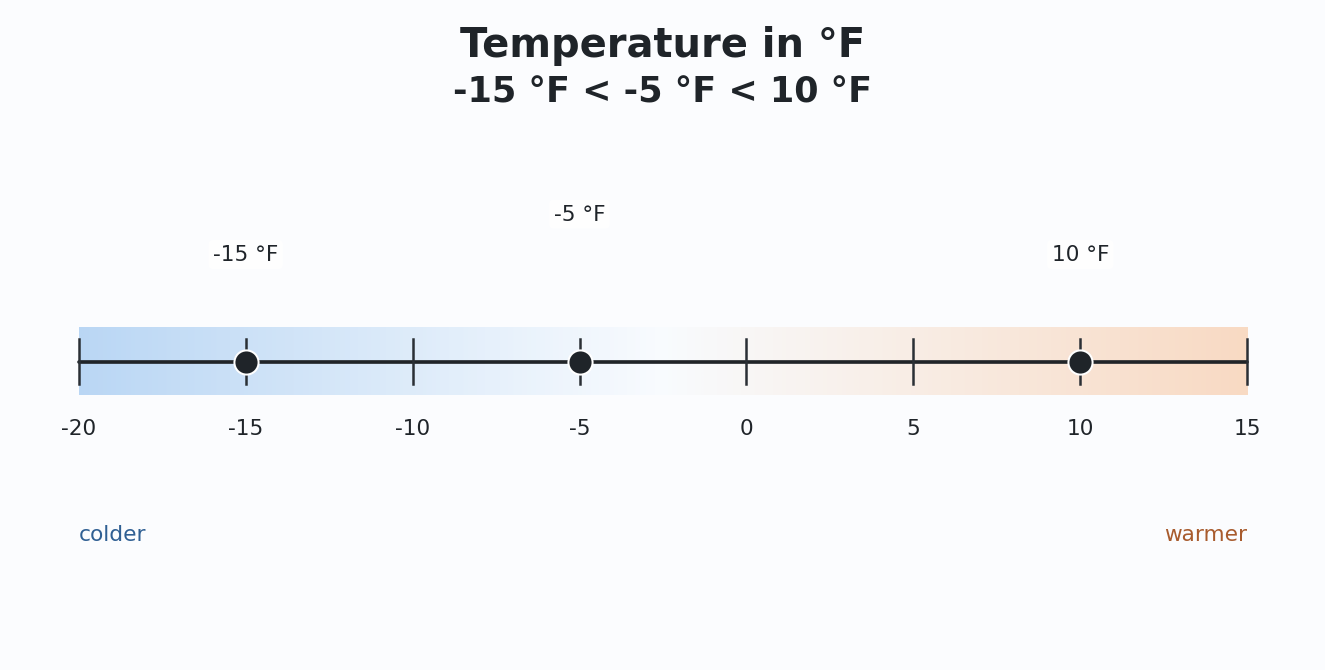
When comparing negative temperatures, remember that a larger negative number is actually colder. For example:
−15°F<−5°F<10°F
A number line makes this easier to see:
So −15°F is the coldest of the three, even though 15 looks bigger than 5. This is the same number-line logic you use with any negative number: the further left (more negative), the smaller and colder the value.
Knowing the number is only half the job. The real skill is connecting a reading to what it feels like and what action to take. Below is a set of practical temperature bands in Fahrenheit that cover most everyday situations.
Band
Approximate °F Range
What to Expect
Dangerous cold
Below 0°F
Frostbite risk on exposed skin within minutes; stay indoors if possible
Freezing
0 to 32°F
Water and roads can freeze; heavy winter gear needed
Chilly
33 to 55°F
A jacket or layered clothing is necessary
Comfortable
56 to 80°F
Light clothing; pleasant for most outdoor activities
Hot
81 to 99°F
Stay hydrated; limit strenuous outdoor activity
Dangerous heat
100°F and above
Heat-related illness is a serious risk; seek shade and water
A handy mental anchor: most people feel comfortable indoors around 68–75°F, which sits right in the middle of the comfortable band. At the extremes, keep in mind that hypothermia can set in not only in very cold weather but even at temperatures above 40°F if you are wet from rain, sweat, or cold water.
If you are reading a forecast in Celsius, the same bands translate like this:
Band
Approximate °C Range
What to Expect
Dangerous cold
Below −18°C
Extreme frostbite risk; limit time outdoors
Freezing
−18 to 0°C
Ice forms; winter clothing essential
Chilly
1 to 13°C
Jacket weather
Comfortable
14 to 27°C
Pleasant for most people
Hot
28 to 37°C
Stay hydrated and take breaks in shade
Dangerous heat
38°C and above
High risk of heat-related illness
Notice that the Celsius freezing threshold is easy to remember: anything at or below 0°C means ice can form. A comfortable indoor temperature is typically around 20–22°C, so those numbers make a great mental anchor for the middle of the comfortable band.
Now that you know both scales and all six bands, let's walk through the kind of thinking you will do every time you check a forecast. Imagine you see these readings for a winter day:
Morning:18°F — Falls in the freezing band (0 to 32°F), so roads may be icy and you would need heavy layers.
Midday:34°F — Just above freezing, sitting at the low end of chilly. A solid jacket is still essential.
Evening:25°F — Drops back into the freezing band.
With this information, you might plan outdoor errands around midday when conditions are mildest, and dress warmly for the morning and evening.
Now consider a summer day reported in Celsius:
Morning:22°C → Comfortable
Midday:38°C → Dangerous heat
Evening:30°C → Hot
Here, midday is the time to stay inside or at least seek shade and drink plenty of water, while morning offers the best window for outdoor activity. In both examples, the process is the same: read the number and unit, place it in a band, and let the band guide your decisions.