Understanding And Versus Or
Introduction
Welcome to Solving Compound Inequalities, the fifth course in your learning path! In this first lesson, we lay the groundwork for everything that follows. By now, you have built a solid foundation: you can interpret inequality symbols, solve one-step and multi-step inequalities, and express solutions with interval notation and number lines. That toolkit is about to become even more powerful.
Here, we will explore what happens when two inequality conditions are combined into a single statement using the words "and" or "or." Understanding the difference between these two connectives is the key to everything else in this course, so let's make sure the idea is crystal clear before we move on to solving.
When One Condition Isn't Enough
In everyday life, rules and requirements often involve more than one condition. Think about boarding a roller coaster: you might need to be at least 48 inches tall and at least 8 years old. Both conditions must be met before you can ride. Now think about a store coupon that says "valid for seniors or members." Meeting just one of those conditions is enough to use the coupon.
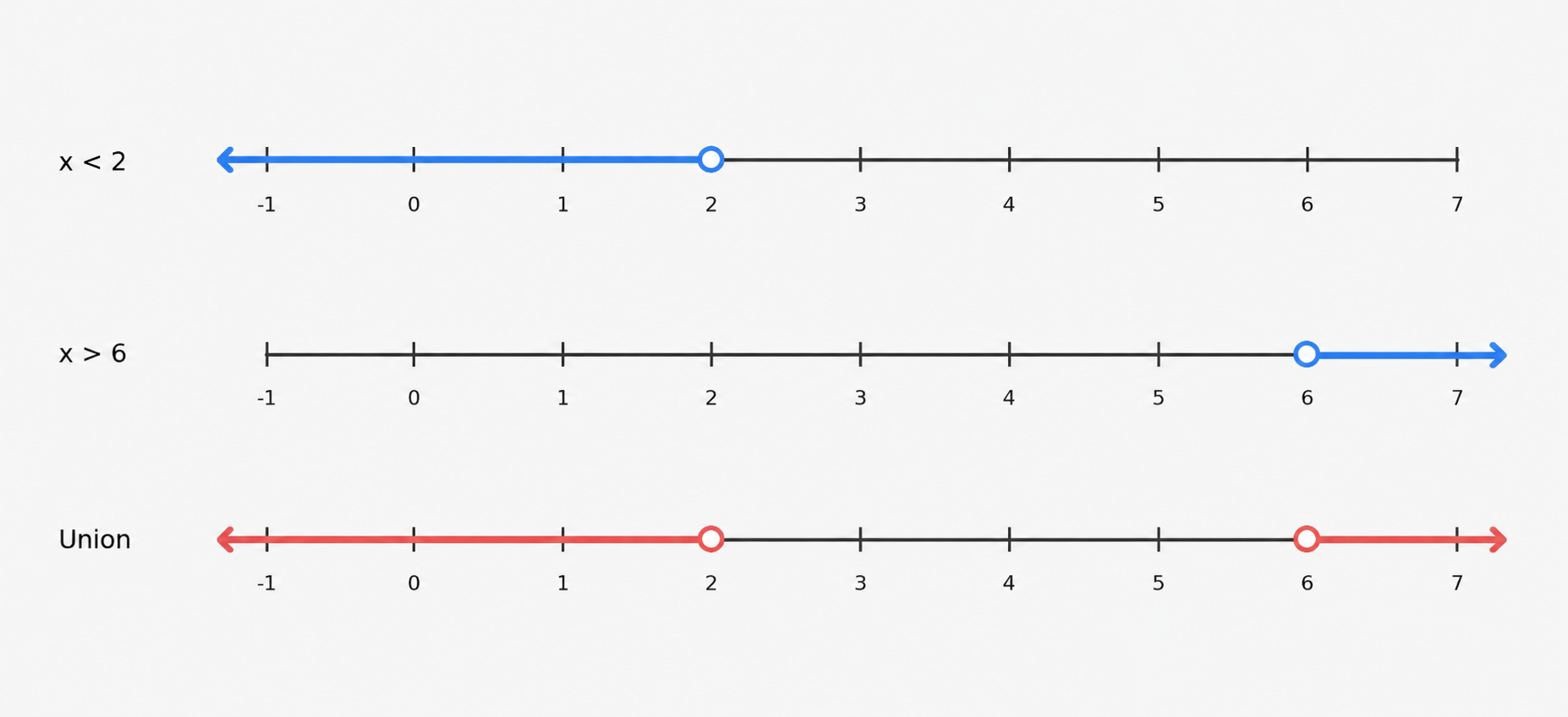
Mathematics works the same way. A compound inequality is simply two inequalities linked by the word and or the word or. Which word we use completely changes which values count as solutions.
Compound Statements with "And"
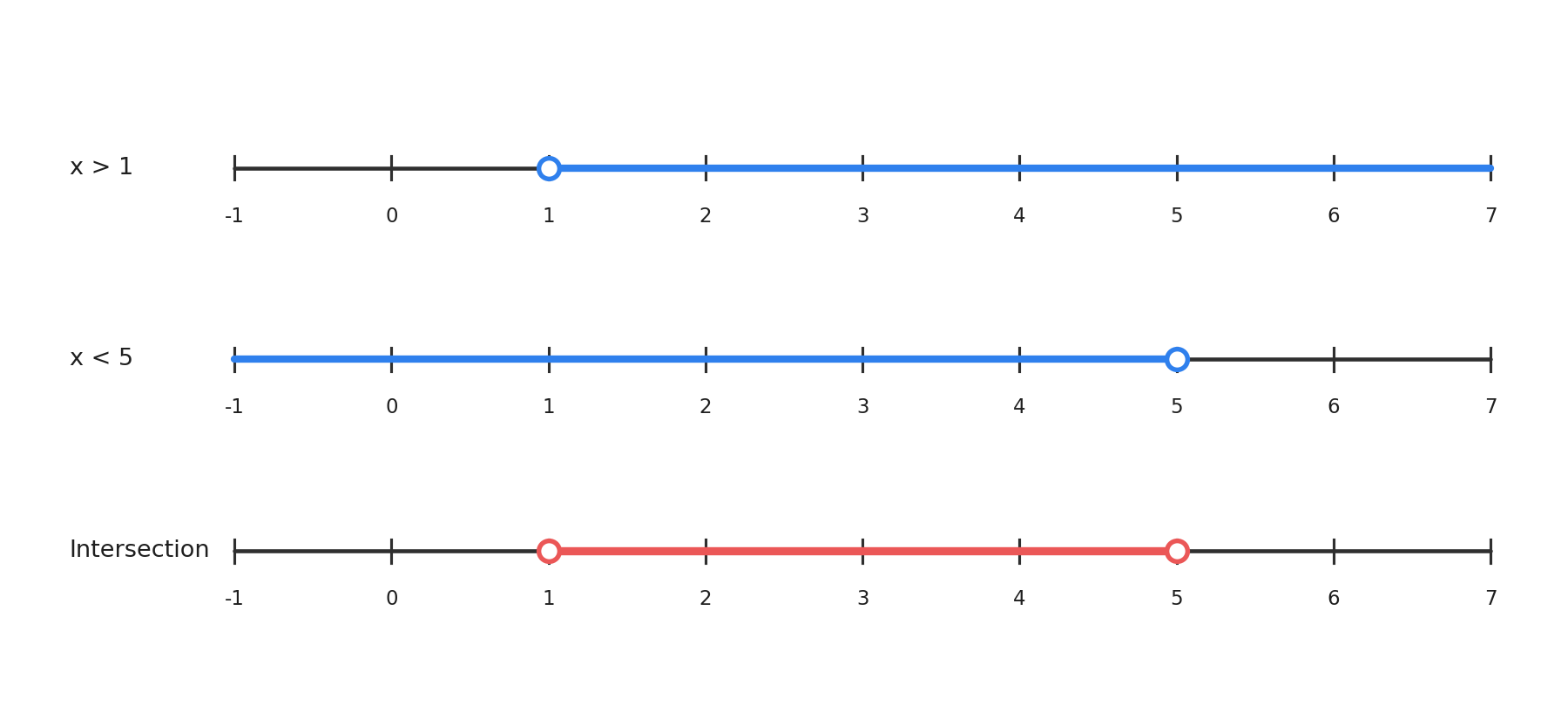
When two conditions are joined by "and," a value must satisfy both conditions at the same time. Consider the compound statement:
A number like works because is true and is true. However, does not work: although is true, is false. Since one condition fails, the "and" statement is not satisfied.
The solution set of an "and" statement is the intersection of the two individual solution sets. You can picture this as the overlap between two regions on a number line — only the values that live in both regions at once make the cut.
Compound Statements with "Or"